


Meet the richest content creators in the US and here’s how much they earn1

From Nation, For Nation - Pulse of the Nation
Zero Mile

"From Colonial Zero Mile to Karaundi's Ashoka Pillar – Tracing the Shifting Geographical Heart of Independent Modern India"
Flag

"Pingali Venkayya: The Visionary Behind India’s Tricolour Legacy"
Pingali Venkayya (2 August 1876/78 – 4 July 1963) was a distinguished Indian freedom fighter and a devoted Gandhian who holds the historic distinction of designing the flag that laid the foundation for the Indian National Flag. A man of profound intellect and patriotism, his contribution became a timeless symbol of India’s unity, struggle, and sovereignty.
Beyond his role in the freedom movement, Venkayya was a multifaceted personality, a lecturer, geologist, agriculturist, educationalist, author, and polyglot. His diverse expertise and unwavering commitment to national service reflect the spirit of a true nation-builder whose legacy continues to inspire generations of Indians. →
Beyond his role in the freedom movement, Venkayya was a multifaceted personality, a lecturer, geologist, agriculturist, educationalist, author, and polyglot. His diverse expertise and unwavering commitment to national service reflect the spirit of a true nation-builder whose legacy continues to inspire generations of Indians. →
From Globe, For Globe - Pulse of the Planet
Vande Mataram
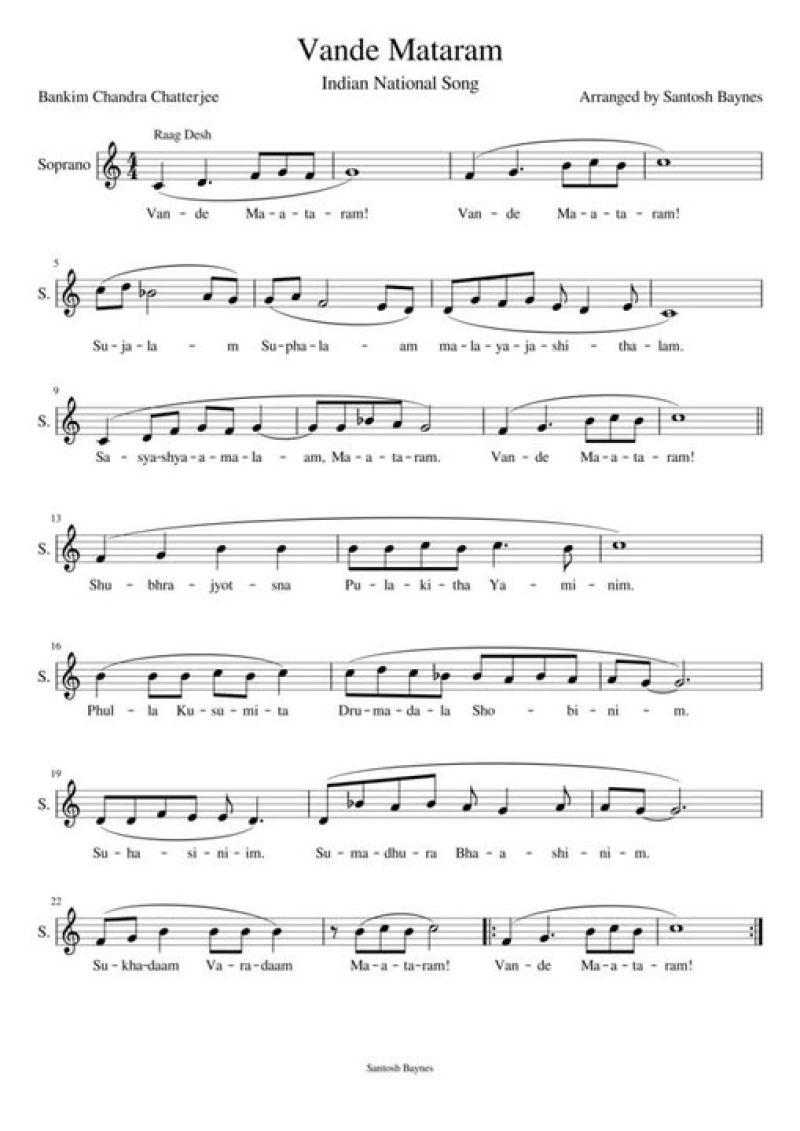
Vande Mataram: A Timeless Tribute to the Nation. Sanskrit poem penned by Bankim Chandra Chatterjee.
Vande Mataram, a revered Sanskrit poem penned by Bankim Chandra Chatterjee, was originally featured in his 1882 Bengali novel Anandamath. The powerful verses were first rendered publicly by Nobel laureate Rabindranath Tagore at the 1896 session of the Indian National Congress.
On this day in 1950, the Constituent Assembly of India officially adopted the first two stanzas of Vande Mataram as the National Song, etching it permanently into the cultural and patriotic fabric of the nation.
→
