


Monday, 24, November, 2025

Tiranga with Dignity: Know the Right Way to Fly Our Pride – Uphold the Honour, Respect the Code, Celebrate the Spirit of India1

→

Tiranga with Dignity: Know the Right Way to Fly Our Pride – Uphold the Honour, Respect the Code, Celebrate the Spirit of India
From Nation, For Nation - Pulse of the Nation

Flag
Flag

"Pingali Venkayya: The Visionary Behind India’s Tricolour Legacy"
Pingali Venkayya (2 August 1876/78 – 4 July 1963) was a distinguished Indian freedom fighter and a devoted Gandhian who holds the historic distinction of designing the flag that laid the foundation for the Indian National Flag. A man of profound intellect and patriotism, his contribution became a timeless symbol of India’s unity, struggle, and sovereignty.

Beyond his role in the freedom movement, Venkayya was a multifaceted personality, a lecturer, geologist, agriculturist, educationalist, author, and polyglot. His diverse expertise and unwavering commitment to national service reflect the spirit of a true nation-builder whose legacy continues to inspire generations of Indians.
→

News
News

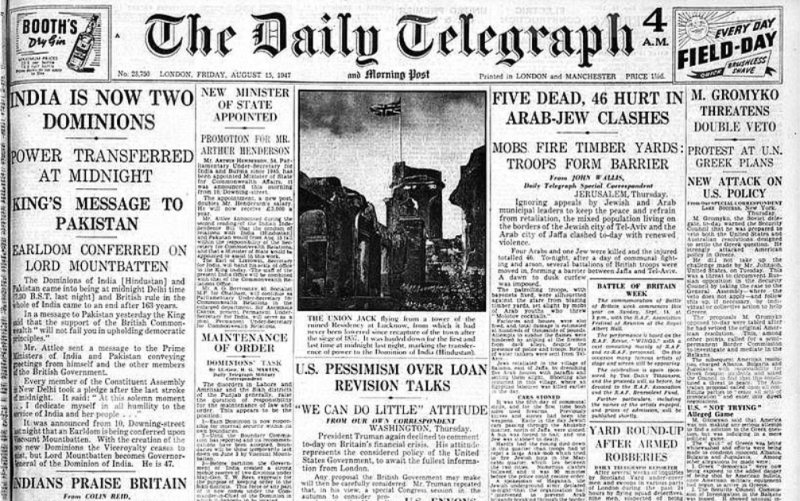
Newspaper headlines on August 15, 1947

On the historic day of India’s independence, The Daily Telegraph, a prominent London-based newspaper, marked the moment with a subdued yet significant front-page headline: “India is now two dominions.” Positioned on the extreme left of the front page, the headline underscored the gravity of the subcontinent’s division, referencing the simultaneous birth of two nations, India and Pakistan. Rather than celebrating the dawn of freedom alone, the coverage reflected the geopolitical complexity of the moment, highlighting the bittersweet reality of independence intertwined with the pain of Partition. →
From Globe, For Globe - Pulse of the Planet
Zero Mile
Zero Mile
"From Colonial Zero Mile to Karaundi's Ashoka Pillar – Tracing the Shifting Geographical Heart of Independent Modern India"

Geographical Centre of Historic and Modern India
Nagpur is historically known as the geographical centre of India, marked by the iconic Zero Mile Stone. Erected by the British, this sandstone monument features a pillar and four majestic horses, and was used to measure distances across colonial India. The pillar has carvings of distances to major cities, reinforcing Nagpur’s central importance.

Centre of Modern India – Karaundi
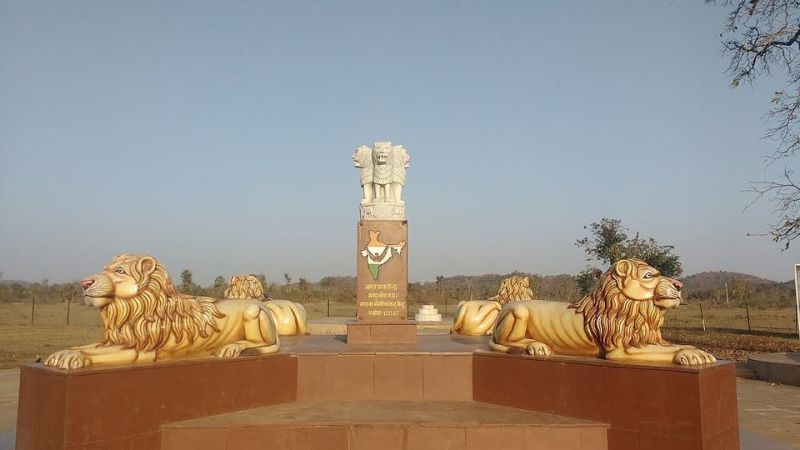
Following the Partition, India’s topography changed, and the geographical centre shifted from Nagpur to Karaundi in Madhya Pradesh. Located at 23.48°N, 80.12°E with an elevation of 386 meters, Karaundi now represents the modern heart of India. An Ashoka Pillar monument, featuring four lions facing each direction, stands tall in a field, signifying this updated central point.

→
