


Eels to Orchestras: Ripley's Guide to Holiday Pies
From Nation, For Nation - Pulse of the Nation
Have You Heard of the OG of All Vampires, Elizabeth Bathory?
Eels to Orchestras: Ripley's Guide to Holiday Pies
The Weirdest Pies
Pies date as far back as ancient Egypt, with the very first pies having their crusts made out of reeds, which weren’t eaten, but instead just held the filling in place. As pie fervor spread throughout Europe, the ancient Romans wrote down the very first pie recipe, which was for a rye-crusted goat cheese pie. Since then, pies have appeared in many shapes and sizes.
Lamprey Pie
Lampreys are jawless blood-sucking tubes filled with teeth. Who knew they’d be such popular pie ingredients? Lampreys have existed relatively unchanged for close to 5-million years. Their conic rows of sharp, twisting teeth are the things of nightmares, but apparently, they taste like tender steaks when cooked, so… Bon appetit.
Lamprey pie has been popular in England since the Middle Ages, especially with the Royals. Every Jubilee and Coronation ceremony has been celebrated with an eel-filled pie from the people of Gloucester.
One reason Kings and Queens loved the pie so much was for the very fact that it was a fish. Dietary restrictions imposed by the church meant “meat” was a no-go during periods like Lent, making the tasty lamprey incredibly desirable. When King Henry I died in 1135 from food poisoning, he was noted to have been eating a ton of lamprey pies just before.
Alphabet Pie
Perhaps the least loved pie in the world, alphabet pie seems to have made no friends since its debut by the Culinary Arts Institute in 1941.
A tradition for no one, this pudding-style pie calls for a half-cup of alphabet noodles to be boiled with hard red candy. A grotesque combination of letters and fluorescent red, this pie is perfect for anybody who is enamored with bright colors or has trouble reading.
Surprise Pie
Less for eating, more for entertaining these pies host a special surprise inside. Starting in the Middle Ages, birds and other animals were placed inside pies, popping out at dinner time for a dazzling dinner-time surprise.
Not ones for subtlety, the wealthy elite wanted more than just birds in their pies. French engineer Philip le Bon managed to cram a 28-person orchestra into a pie during a banquet. In 1626, Charles I was presented with a dwarf-filled pie. Dubbed “Lord Minimus,” the dwarf emerged wearing a full suit of armor.
This practice eventually made its way to cakes, with the very first case involving murder!
Illegal Mince Pie
At one point in England, pie-eating went underground with soldiers busting down gates and doors to enforce a country-wide ban on mince pies.
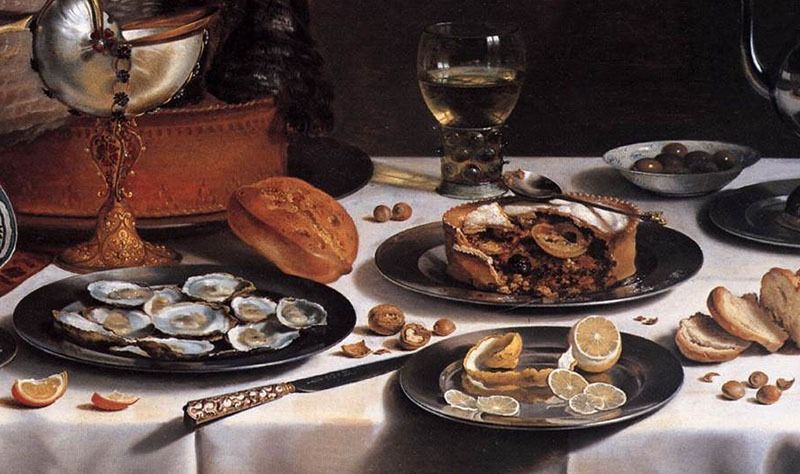
Mince pies are filled with “mincemeat,” which-despite the name-is usually just a mixture of dried fruits and spices.
Using the spices obtained by English Crusaders, these pies quickly became centerpieces of celebrations and festivals. Seen as a staple during the Roman Saturnalia, pagan celebrations, and Catholic events; mince pie-also called Christmas pie-earned the ire of anti-Catholic Puritans.
This distaste led to it being seen as too gluttonous for clergymen, and was outright banned by Oliver Cromwell’s government as a means to discourage and punish such religious sects. Now labeled as a blasphemous treat “cooked by the scarlet whore of Babylon,” Anglican churches were wholly against mince pie.
Some historical accounts even claim that 3,000 soldiers were ordered to break down the Canterbury City Gates to enforce the ban. Underground pie-eating and baking rings opened up in secret to avoid the ban, but citizens were eventually freed from culinary tyranny in 1660.
Parole Day Pie
While connoisseurs may argue the definition of a pie versus a cake when it comes to cheesecake, we don’t think you’ll care much in the big house.
Specifically created to use ingredients obtainable behind bars, this Parole Day Cheesecake can make your cell mate’s release day extra special.
The recipe includes pre-packaged cookies available at the commissary as well as individual packets of cream cheese and honey. Take advantage of French-vanilla coffee creamer if you have it and use Sweet’N Low if you’re worried about calories. Feel free to use the Kool-Aid color of your choice, but the book Prison Ramen suggests you avoid yellow and green unless you want to eat with your eyes closed.
→
From Globe, For Globe - Pulse of the Planet
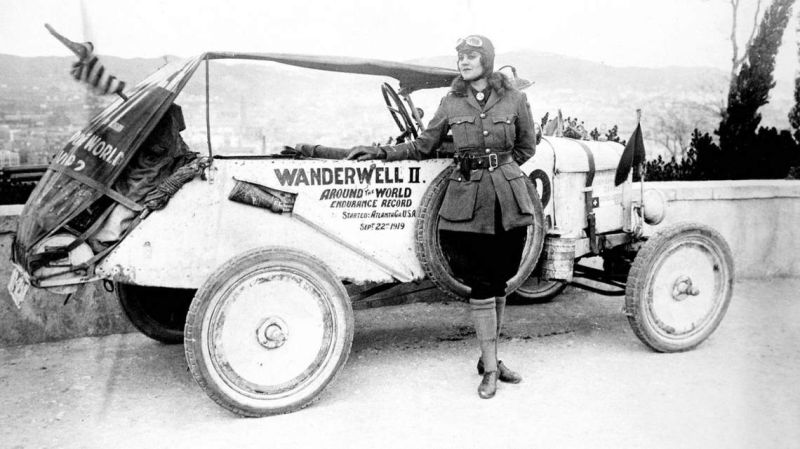
The first woman to circumnavigate the globe by car, Aloha greased the differential on her Model T with crushed bananas…
Aloha Wanderwell
Aloha Wanderwell loved record breaking. In the 1920s, she traveled 380,000 miles across 80 countries becoming the first woman to circumnavigate the globe in a Ford Model T. Just 16 years old at the time, the epic journey took seven years to complete. A female Indiana Jones, she was the first woman to fly Brazil’s Mato Grosso and document the Bororo people of Brazil.
But the Canadian-American explorer’s life swirled with scandal and mystery. Her husband’s murder aboard a yacht remains one of the greatest cold cases in US history. Aloha earned the nickname “the Rhinestone Widow” because of her emotionless demeanor. Read on to learn more about this figure of controversy, self-invention, and legend.
Answering the Call to Adventure
Aloha was born Idris Galcia Welsh on October 13, 1906. She grew up on a steady diet of adventure tales by W.H.G. Kingston, Rudyard Kipling, Edgar Rice Burroughs, and more. Her stepfather died in combat at Ypres in 1917. Aloha and her sister were sent to a strict French convent school. Meanwhile, her mother visited the front searching in vain for her husband’s body. In the convent, Aloha chafed against its self-denying rigors. She longed to run away, to explore the world she’d read so much about.
By 1921, “Captain” Walter Wanderwell (né Valerian Johannes Pieczynski) made adventure his calling. Competing in the Million Dollar Wager-a global endurance car race-Walter determined to win by visiting the most countries of any team. Known affectionately as “Cap” by his friends, Walter was a controversial figure. He served time in US federal prison during World War I as a suspected German spy. But that didn’t stop the media from falling in love with his life of wanderlust.
By 1922, Walter needed a French translator, driver, and secretary for his Million Dollar Wager. He placed a newspaper announcement advertising for, “Brains, Beauty & Breeches-World Tour Offer for Lucky Young Woman…. Wanted to join an expedition… Asia, Africa…” Aloha answered the call, charming her way into Walter’s party.
Driving Around the World
Walter rechristened Idris, Aloha Wanderwell, and she became the star of his expedition. Each endurance team funded their trip through public speaking, the sale of souvenir pamphlets, and screenings of films they made en route. Ironically, the Wanderwell Expedition’s main competition came from a team led by Walter’s ex-wife, a Broadway chorus girl named Nell. Talk about awkward!
Besides acting as translator, secretary, and driver, Aloha took on the duties of actress, photographer, cinematographer, salesperson, vaudeville performer, film editor, interpreter, negotiator, and even mechanic. Over the course of seven years, the public grew weary of the Million Dollar Wager, but Aloha kept the adventuring spirit alive with her charisma and good looks.
The expedition proved grueling. Aloha used crushed bananas to grease the differential, elephant fat as engine oil, and kerosene as gasoline. The Wanderwell Team “won” the competition as a result of Aloha’s moxy and marketing. She later chronicled-and exaggerated-the exploits of the Wanderwell expedition in her book Call to Adventure (1939).
Breaking Records in Brazil
During the Wanderwell Expedition, Aloha and Walter fell in love. They married on the American leg of their journey. In 1929, they released the silent film With Car and Camera Around the World making them international exploring sensations. Aloha gave lectures describing their harrowing journeys along to screenings of the movie. They had two children together, Nile and Valri.
But marriage and motherhood didn’t slow Aloha down. Between 1930 and 1931, Aloha and Walter piloted a German seaplane to the uncharted Mato Grosso in Brazil. Setting up camp in Descalvados Ranch in Cuibá, their goal was finding the missing explorer Colonel Percival Harrison Fawcett’s Lost City of Z-aka the legendary city of Eldorado.
But when their plane ran out of fuel on the Paraguay River, the pair had to split up. Walter trekked out of the Amazonian Basin in search of help. Aloha stayed behind with the Bororo tribe. Through ingenuity and charm, she earned their trust and created films documenting their daily life. Unbeknownst to her, these reels constituted the first film footage ever taken of the tribe. After her rescue and return to the United States, Aloha edited and released the 32-minute silent film Flight to the Stone Age Bororos.
The Murder of Captain Wanderwell
The Wanderwells’ journey together came to an end in late 1932. On December 5, the day before another departure to South America, Walter was shot in the back by an unknown assailant. The murder occurred aboard his 110-foot yacht, the Carma, anchored in a harbor near Long Beach, California. Two suspects were named by police, William James Guy and Edward Eugene Fernando Montague, the Duke of Manchester’s son. Guy would later be charged with murder.
Guy, a member of the Wanderwells’ 1931 expedition to South America, despised Walter for swindling him out of money and ruining his marriage. Guy’s trial caused a media frenzy. Yet, a jury eventually acquitted him.
Many speculated Guy’s good looks and easygoing charm swayed the jury. Truth be told, Walter’s womanizing ways and shady money dealings had earned him quite the reputation as a scam artist. The line of those who wished to murder him was long. But did it include Aloha?
While never named as a suspect by police, Aloha’s strange behavior following her husband’s death left a pall on her character. Detached and unsurprised by the news, police wondered if she’d had foreknowledge of the murder plot. Her emotionless demeanor made her “the Rhinestone Widow.” In 1933, her rushed marriage to Walter Baker, one of Walter Wanderwell’s former cameramen, further tarnished the public image she had so carefully crafted during the 1920s.
The Legacy of Aloha Wanderwell
Aloha continued to travel and document her journeys with the help of her second Walter. But the notoriety associated with her first husband’s unsolved murder stayed with her for the rest of her life. Known as “the world’s most traveled girl,” Aloha carefully preserved her journals, photos, films, and artifacts of her journey for the rest of her life. She passed away on June 4, 1996, in Newport Beach, California.
→

Referred by ripleys.com - where the world’s most extraordinary stories are discovered and celebrated.