


Saturday, 18, April, 2026

Up Close & Peculiar

→

Up Close & Peculiar
From Nation, For Nation - Pulse of the Nation
Halloween
Halloween

Why Do We Go Trick-or-Treating on Halloween?

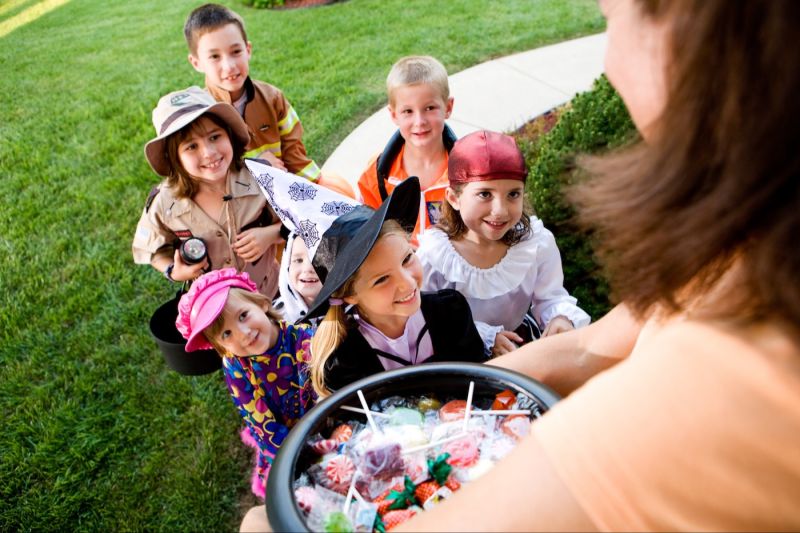
Every October 31, Halloween transforms neighborhoods into lively stages where children dressed as ghosts, superheroes, and mythical creatures go door to door collecting candy. While today’s celebration feels playful and sugar-filled, its origins are far darker and older than chocolate bars. Halloween traces back more than 2,000 years to the ancient Celtic festival of Samhain, which marked the end of the harvest and the beginning of winter. The Celts believed that on this night the boundary between the living and the dead grew thin, allowing spirits and fairies to wander freely. To protect themselves and keep peace with these otherworldly visitors, people lit massive bonfires, carved turnips into lanterns, and left food and drink as offerings—an early form of “treats” meant for spirits rather than children.
As centuries passed, these pagan traditions blended with Christian beliefs during the Middle Ages, evolving into practices tied to All Saints’ Day and All Souls’ Day. One such custom was souling, where the poor and children went from house to house asking for small spiced pastries known as soul cakes. In return, they promised to say prayers for the souls of the dead, especially those believed to be in purgatory. These exchanges of food, prayers, and blessings created a door-to-door tradition rooted in faith, remembrance, and community. Over time, songs, costumes, and small rewards became part of the ritual, laying the foundation for Halloween’s familiar knock-and-receive pattern.
By the late 19th and early 20th centuries, Halloween had shifted again, this time toward playful mischief. “Mischief Night” pranks-like soaping windows or tipping over gates-gave rise to the idea that if no treat was given, a trick might follow. The phrase “trick or treat” appeared in North America in the early 1900s, and after World War II, the end of sugar rationing helped candy replace homemade goods. What began as offerings to spirits and prayers for souls became a joyful tradition centered on children, costumes, and candy. Today’s trick-or-treating may be sweet and lighthearted, but it carries echoes of ancient rituals, medieval faith, and centuries of evolving tradition woven into every knock on the door.
→

Cliffs
Cliffs

The Burial Cliffs of Sagada and Their Hanging Coffins Taking burial traditions to new heights!

Believe It or Not!, there are cemeteries suspended from cliffs in Sagada, Philippines! They were put there by indigenous people following ancient traditions, which are said to stem from the belief that the higher the dead are to the sky, the more elevated their spirits are in the afterlife!

Because the coffins are attached and suspended at incredibly high points on the cliffs, they are seemingly unreachable and have attracted tourists from all over the world.

Six Feet… Up?
The practice dates back thousands of years but is no longer prevalent, with burials on the cliffs only taking place once every few years!

When it does occur, the body is wrapped tightly in fabric and carried up the mountain to be placed in its coffin. Some coffins are noticeably shorter; this is because it was once common practice to fold the deceased into the fetal position, sometimes breaking bones in the process, since it was believed the body should leave this world as it entered it.

→
From Globe, For Globe - Pulse of the Planet

Black Innovators
Black Innovators
Black History Month: Celebrating Black Innovators in STEM

February is Black History Month, a time to celebrate Black excellence and honor contributions across arts, culture, science, and history.
At Ripley’s Aquarium of Canada, this moment is used to spotlight inspiring Black pioneers in STEM who shaped our understanding of the world.
Their resilience, innovation, and dedication continue to inspire generations.

Trailblazers like **Dr. Roger Arliner Young**, **Dr. Ernest Everett Just**, and **Dr. Joan Murrell Owens** broke barriers in marine biology and zoology.
Despite facing racial, gender, and health-related obstacles, their groundbreaking research expanded knowledge in cell physiology, embryology, and coral classification.
Their perseverance redefined what was possible in scientific discovery.

Leaders such as **Hazel Johnson** and **Dr. Emmett W. Chappelle** transformed science into action and innovation.
From advancing environmental justice to unlocking the secrets of bioluminescence for space and medical research, their impact is far-reaching.
These stories remind us that Black history in STEM is history worth celebrating every day of the year.
→

Referred by ripleys.com - where the world’s most extraordinary stories are discovered and celebrated.