


The Appalachian Apple Hunter Who Saved 1,200 Lost Varieties

From Nation, For Nation - Pulse of the Nation
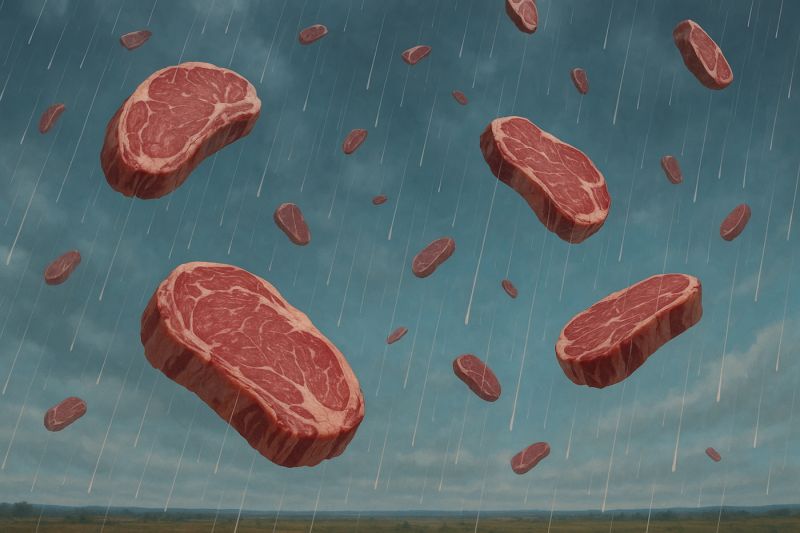
Mysterious Meat Phenomenon: The Kentucky Meat Shower of 1876
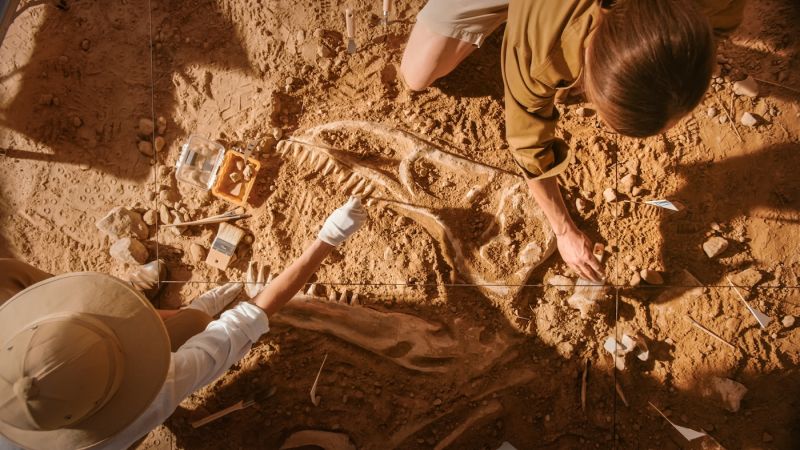
Top 5 Most Inaccurate Fossil Reconstructions
Digging up fossils and petrified bone fragments is no simple task. Neither is piecing them back together like an ancient jigsaw puzzle. And as for making sense of the creature they once belonged to? Talk about talent! That said, it’s easy to assume science is pretty much accurate, right? Wrong! Throughout history, epic fails have plagued researchers attempting to reconstruct prehistoric creatures.
While understandable due to the nature of the work, some of these epic fails are downright hilarious. With that in mind, let’s dive into a few of the biggest mistakes scientists have made trying to piece together the fossil record.
Reconstructing Dinosaur-Age Critters
Children are fascinated by picture books and shows with reconstructions of dinosaur-age creatures. And let’s face it, many adults remain interested, too. Think Jurassic Park and Jurassic World. Using fossils that date back millennia can provide a tantalizing window into the past.
Recreations through artwork and models can even give us the sense we’ve traveled back in time. But as with any mystery, piecing together the past isn’t always as easy as you might think. And it comes with the risk of being wrong. Maybe even monumentally wrong.
To be fair, working with fossils comes with inherent issues. Science Alert observes, “Scientists have to rely on fragmentary bones, weathered footprints, impressions in rock-these don’t always capture the fine details of the complex, living breathing animal that passed through or died there.” The world’s first scientists and paleontologists didn’t have today’s technology, either. This made the task of reconstructing long-extinct species especially challenging.
1. The Missing Link That Wasn’t
In 2015, scientists announced an incredible find-the first missing link between lizards and snakes. Researchers named it Tetrapodophis amplectus (say that fast three times!). The scientific community feted the find until a new group of paleontologists stepped in, throwing shade on the discovery.
Further examination led to a declaration of the “missing link” as something far less controversial. An extinct lizard known as Dolichosaurus. In other words, it didn’t prove snake enough to build any species bridge.
2. Horns or Thumbs
Another problematic fossil that threw scientists for a loop was the Iguanodon. In the 19th century, several significant fossil discoveries made this extinct animal all the rage. It also led to an outlandish hypothesis about their appearance.
The fossil remains had two spikes, which scientists initially misidentified as horns. Why? Because they based their recreations on living species such as rhinoceros iguanas. But they couldn’t have been more wrong. As it turns out, those little spikes were thumbs.
3. Velociraptor or Big Turkey
Few creatures have incited more terror than velociraptors. In Jurassic Park, these menacing, bipedal lizards represented the ultimate killing machines. But if you thought their movie depiction was founded in hard science, think again. Instead, these Cretaceous critters were about the size of today’s domestic turkeys. And to top it off, they had feathers!
Of course, this would have turned a horror flick into Thanksgiving dinner. To keep the movie’s adrenaline-spiking vibe, filmmakers took inspiration from another dino. Known as Deinonychus, this species was much bigger and more lethal by human standards. But its name left something to be desired. As a result, they went with the more fear-inducing glorified gobbler moniker.
4. Recent Makeovers to the “Tyrant Lizard King”
Another dino whose revamped depictions continue to make waves is Tyrannosaurus Rex. Once upon a time, scientists had him pegged as a towering, bipedal wall of muscle with teeny, tiny arms. While the arms have remained the same, the rest of the animal has undergone significant changes.
Instead of walking upright, scientists now believe it stood horizontal with its massive tail balancing its head. Kind of like a seesaw. And get ready for another shocker. In youth, T. Rex would have sported feathers like Velociraptors. Whether those feathers persisted into maturity remains up for debate. So does the critter’s size. Some estimates now have individuals at up to 33,000 pounds, almost twice as big as previously thought!
5. The Buttheaded Sea Creature
Yep, you read that subtitle right. Once upon a time, scientists thought they had a small sea creature called Hallucigenia all figured out. Fossils revealed it as having “at least seven pairs of rigid spikes on its back, seven pairs of weirdly floppy ‘legs’, and what appeared to be a large, bulbous head at one end.” But boy, were they wrong.
After a whole series of fossils were found without the big, bulgy heads, scientists wondered how they all met the same headless fate. The answer came during closer examination of what scientists thought was the butt end of the animal. It revealed teeth and eyes, leading researchers to a startling realization. They had misidentified the butt as the head. So, what was the prominent “head-like” protrusion? The guts of some of the animals squeezed out as sediment and covered and crushed them.
New Tech for Better Accuracy
Today, scientists have more tools available to them for studying fragments from the past. As Smithsonian Magazine notes, “the modern study of extinct animals is being driven by cutting-edge imaging technology, 3D modeling, and virtual reconstruction and dissection-advancing our knowledge of the ancient animals but also of other species old and new.”
These new technologies should help reduce the risk of fossil gaffes like those discussed above. That said, errant hypotheses about some of the world’s oldest animals can be hilarious. They also provide invaluable lessons about the scientific method and the powers of observation.
→
From Globe, For Globe - Pulse of the Planet
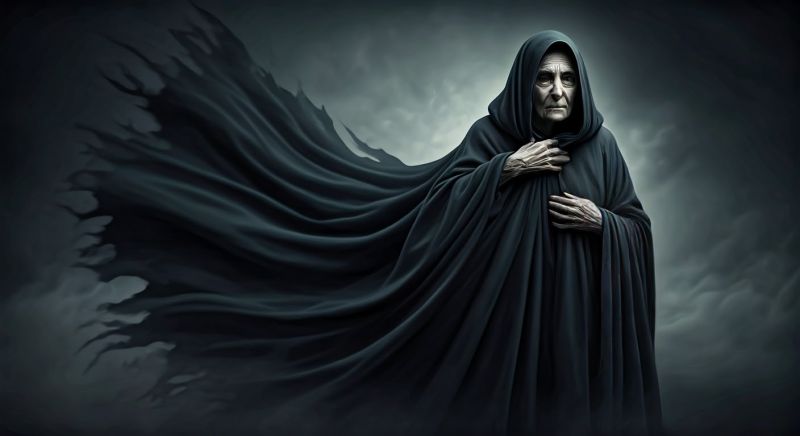
She carried an olive cane (su mazzolu) or mallet to deal deathblows as needed.
A gaunt figure with a faceless black hood and a shiny scythe. The Grim Reaper fills hearts with terror, a highly recognizable symbol of death. Thanks to pop culture, the Grim Reaper has also become international and universal. But death is a woman for residents of Sardinia, the second largest island owned by Italy.
Her name? The accabadora. Here’s everything you need to know about this menacing figure and the mystery of how real she may have been.
The Sardinian Specter of Death
The folktales surrounding the accabadora first appeared in the historical record in the seventeenth century. True crime today has nothing on these early accounts of the murderess. She roved the village at night, dealing out deathblows and seizing belongings.
The accabadora, sometimes spelled as S’accabadora, turned up repeatedly in local legends. What does the term “accabadora” mean? It has a couple of potential sources. They include the Sardinian word sacabbu, which means “the end.” There’s also the Spanish term acabar, which means “to terminate.”
As the legend goes, family members left their door open when someone was sick beyond saving. This act invited the angel of death inside to do her dark work. Sometimes, the patients themselves even requested her services.
As such, she was portrayed as an older woman veiled in black lace. She carried an olive cane (su mazzolu) or mallet to deal deathblows as needed. Roving the town at night at the behest of caregivers and family members, she existed to bring mercy to the suffering. Besides hitting victims, some accounts describe her suffocating or strangling her charges.
A Multi-Tasking “Angel of Death”
But the accabadora didn’t stick to death alone. Besides putting people out of their misery, she also dabbled in many other things. These included delivering babies as a midwife.
Some accounts also discuss her providing herbal remedies to help the sick. In other words, she cared for her community from cradle to grave. She’s also described as clearing the deceased’s belongings from a room. And some talk about her positioning a yoke under the heads of the infirm.
A Terrifying Legend with Real Implications
Here's where the mystery comes in. Some accounts describe her as actually existing. (Yes, you read that right!) And some living Sardinians agree with this assessment. They assert multiple older women filled this role over the generations. They even claim that accabadoras were bringing death into the 1970s!
But the questions don’t stop there. As author of Accabadora, Michela Murgia argues, “The mystery around her, I think, is partially because it was done in secrecy, because it had to be done in secrecy.”
Unfortunately, this secrecy means the trail of the accabadora goes cold quickly. Some researchers think she served merely as a helper at the bedsides of those dying. These people argue she passively assisted rather than actively killing patients. According to Weird Italy, accabadoras “helped in the agony and gave support, so they were respected by the whole community, but they did not kill as it seems to have happened elsewhere (in Greece).”
Symbology Behind the Role
We can only imagine the terror Sardinians felt upon seeing a black-lace-veiled woman striding purposefully towards their house, olive cane in hand. And yet so many questions remain. These include inquiries about the accabadora’s gender and religious stance. After all, Sardinia was traditionally a very conservative, patriarchal Catholic society. Euthanizing people would have been seen as a mortal sin.
Moreover, a woman fulfilling this role seems surprising at first glance. But there are many potential reasons for this. The accabadora may echo the notion of women as givers (and finishers) of life. Or she may reflect remembrances of an ancient goddess, one that existed before the Indo-European migration. In this case, she may stem from the Great Mother. Either way, she’s earned her spot in the Halloween costume scene right next to the Grim Reaper. Don’t you think?
→

Referred by ripleys.com - where the world’s most extraordinary stories are discovered and celebrated.