


World Dog Surfing Championship: Dogs Catch Waves on the California Coast

From Nation, For Nation - Pulse of the Nation

5 Weird Facts About Copenhagen (That Might Surprise You)
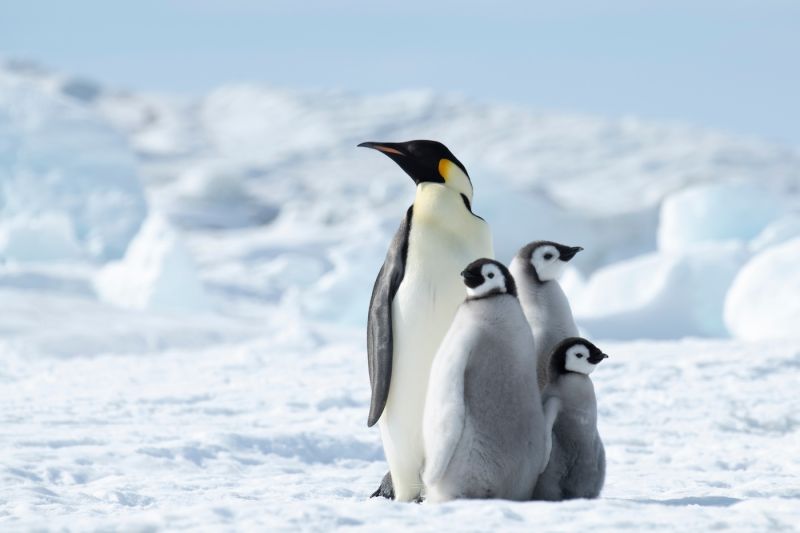
How Penguin Poop Clouds Fight Global Warming - Penguin Poop is Visible from Space.
Those lucky enough to visit Antarctica often remark upon the crisp, clean, and almost scentless nature of the landscape.
As nothing but sea and ice stretches on for hundreds of miles, there's little for human olfactory senses to register besides a few molecules of water vapor. That's, of course, barring the fishy musk from a bob of seals, the krill breath of a whale expelling hundreds of gallons of air from its lungs before another dive, or the feces of a thousand-strong colony of penguins.
Once you encounter living things, that crisp smell is supplanted with the diverse smells of life.
Just How Much do Penguins Poop?
Penguins may be the adorable, tuxedoed waddlers of the animal kingdom. But their poop—not just their charm—is making a big impact on the planet.
Large penguin colonies produce a pungent aroma thanks to their guano, which is rich in nitrogen and off-gassing ammonia. Scientists who study these colonies say the smell hits you before the penguins even come into view.
While the South African penguins found in Ripley's Aquarium of the Smokies and Aquarium of Myrtle Beach don't hail from Antarctica, they've thoroughly acquainted our husbandry staff with their fecal functions.
Our dedicated team of aquarists scrub the floor and rocks of our penguin habitats three times a day. Why? Because penguins poop every 5-15 minutes.
According to Ripley's Husbandry, they can even project their poop up to three feet! →
From Globe, For Globe - Pulse of the Planet
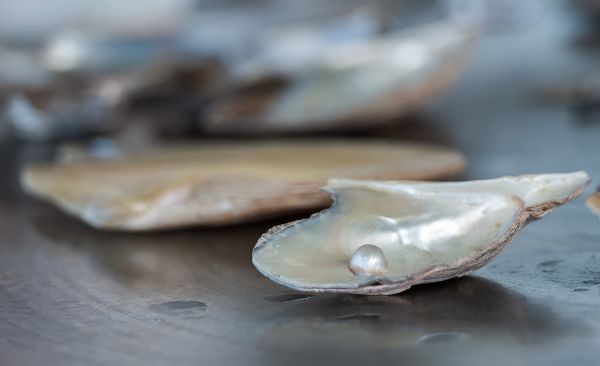
Mother-of-pearl? It's a grimy parasite.
Throughout history, the notion of an oyster’s pearl being born from a grain of sand has been the story of romance. The making of a pearl stems from a process that has been quickly popularized and, to some, may seem like common knowledge.
It would be quite a challenge to find someone who has not heard of the legendary transformation from a mere grain of sand to a valuable gem. But in reality, this isn't all true. So how exactly does a pearl come to be?
It Doesn’t Add Up
It's true that when an irritant works its way into an oyster, or any mollusk for that matter, it is gradually coated in layer after layer of richly lustrous nacre. This is the mollusk’s defense mechanism to protect its body from intruders. The process will eventually form a pearl after several years as the layers surrounding the irritant get thicker. But is the grain of sand the common irritant?
Mollusks live at the bottom of the ocean floor, a habitat covered in endless miles of sand. Through the movement of waves and other sea creatures, not only does sand coat the ocean floor, but it also floats amongst water as well. If sand were the common ingredient behind every shimmering pearl, the ocean would be filled with these prized and precious gems. It’s also quite an uncommon occurrence when debris, or any other irritant, does make its way into the mollusk’s shell, proving the pearl to be a true rarity.
The Real Culprit
Now that we know the main ingredient of a pearl is more than a measly grain of sand, we must ask, what irritant is responsible for the pearl’s beauty? The answer is a biological intruder: a parasitic organism. When an aggressive parasite manages to bore through a mollusk’s shell, it wedges itself deep within the organs and soft tissues. The mollusk is triggered to defend itself using its mantle to form a barrier against the parasite.
The mantle is a very unique secretory organ that covers the inside of the mollusk’s shell and is in charge of producing the mesmerizing pearly substance known as mother-of-pearl, or nacre. Coating the intruders with nacre, the mantle adds many layers of protection and eventually turns the grimy parasites into shimmering pearls. A mollusk can typically secrete 3 or 4 concentric layers of nacre each day, which would measure to be around one one-thousandth of a millimeter, or one micron, making the layers very thin.
It takes at least two years for a mollusk to produce a natural pearl of any substantial size, 3-5 mm. In addition to this lengthy process, the odds for the production of a natural pearl are about one in 10,000 mollusks, at best. This explains why pearls are extremely rare and can fetch very high prices.
From this interloping irritant and years of work, a precious gem from the bottom of the ocean is born. Some would wish for the simplicity of a grain of sand, but, like many things in life, the process behind a pearl is far more intricate and astounding.
The world is your oyster, so grab it by the pearl!
→

Referred by ripleys.com - where the world’s most extraordinary stories are discovered and celebrated.