


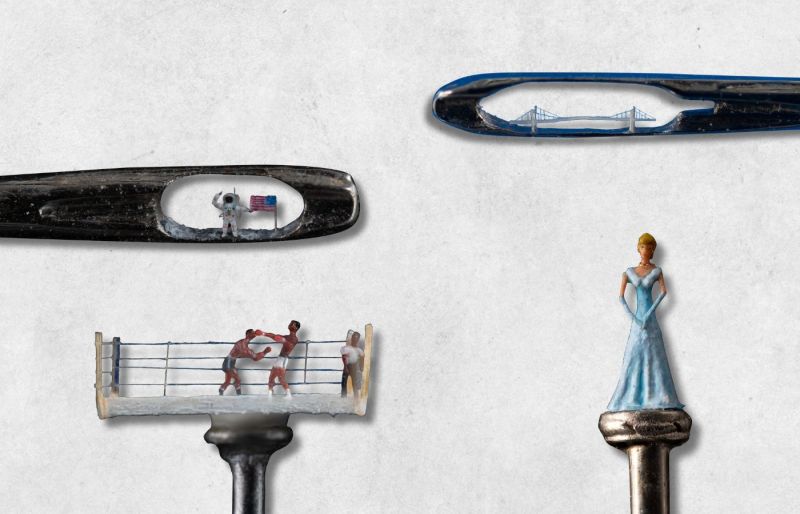
Sculpting Between Heartbeats: The Microscopic World of Dr. Willard Wigan
From Nation, For Nation - Pulse of the Nation
Cowboys In The Wild West Didn’t Wear Cowboy Hats

Legendary Olympic Victories and Comebacks
The Paris 2024 Olympic and Paralympic Games will be one of the largest athletic events ever organized in France, taking place from July 24 to August 11. During the event, the world’s best athletes will unite to crown new champions while billions of television viewers tune in worldwide. The City of Lights will also draw millions of live spectators over 19 days of competition.
However, not all Olympic athletes have an easy road to competition. Some have surmounted insane odds for a chance at the podium. Check out these amazing stories of athletes who can inspire us all.
The Road from Illness to Victory
Sebastian Coe of Great Britain was riding high after the 1980 Olympics and his win in the 1500m. He also set numerous world records in distances from the 800m to the mile. But two years later, his world fell apart. Glandular fever destroyed his health and led to an agonizing battle with toxoplasmosis. Health issues forced him to bow out of the 1983 World Championships in Helsinki, Finland.
Because of these ongoing struggles, many questioned his ability to compete in the 1984 Olympic Games in Los Angeles, California. Some in the media viciously criticized him for wanting to mount an attempt. Yet, he proved his critics wrong by performing exceptionally in the 800m and 1500m.
He earned silver in the 800m behind Joaquim Cruz of Brazil and gold in the 1500m. As a result, he became the first man in Olympic history to win successive 1500m Olympic titles.
Leading From the Rear
Billy Mills did the unprecedented at the 1964 Olympic Games in Tokyo, Japan. He charged from the rear of the competition to win the gold medal in the 10,000m, becoming the only man in the Western Hemisphere to win a gold medal in that event.
Billy Mills grew up on the Pine Ridge Indian Reservation in southwestern South Dakota, one of the poorest regions in the United States. He competed in cross-country races at the University of Kansas and continued to train after joining the Marines. Remarkably, he refused to follow standard training advice in the leadup to the Tokyo Olympics.
Instead of resting in the days before the competition, Mills continued with his vigorous running schedule. Despite foregoing mainstream advice, he raced to a stunning victory on race day, impressing the world with his unlikely rise to victory.
Golden Girl Returns from Retirement
While Billy Mills overcame the odds to earn Olympic glory, he wasn’t the only one making history in 1964 in Tokyo. Another athlete who achieved surprising success was Betty Cuthbert, Australia’s so-called “Golden Girl.”
Despite winning three Olympic gold medals at the 1956 Melbourne Olympics, she had to retire before the 1960 Rome Games due to a torn hamstring. At the time, she considered this the end of her public career as she didn’t enjoy living in the spotlight.
But by 1962, she was back on the track, competing in the Commonwealth Games. Then, two years later, in Tokyo, she made an impressive comeback, clenching her fourth medal in the 400m. She remains the only Olympian to have ever won a gold medal in all sprint running events: 100m, 200m, and 400m.
From Hospital to Head of the Pack
During the 1960 Summer Olympics in Rome, Italy, Wilma Rudolph captured the public’s attention with her incredible athletic achievements. She garnered three gold medals in the 100m, 200m, and the 4x100m relay, becoming the first American woman to win three gold medals in one Olympic Games.
Seeing her compete in Italy, you would have never guessed the problematic nature of her childhood. Born prematurely, she battled with severe illnesses in her youth—polio, scarlet fever, and double pneumonia. Polio temporarily paralyzed her and even led medical professionals of the day to presume she would never walk again.
But by the age of 12, she bid her bulky leg brace goodbye, quickly progressing to athletic pursuits. Eight years later, she competed in her first Olympics in Melbourne in 1956, earning a bronze medal in the 4x100m relay. Fast-forward to 1960, and she achieved what many thought was impossible, representing America in dramatic fashion.
The Double Amputee Who Achieved His Olympic Dreams
When South African Oscar Pistorius was eleven months old, he underwent double amputation of his legs. The reason? A health condition he was born with impacted his lower leg bones or fibulae. Despite this setback, he proved highly athletic, trying his hand at tennis, water polo, and rugby. He relied on prosthetics along the way.
A knee injury led him to running. He competed in the 2004 Summer Paralympics and ran his first able-bodied race in 2005. In 2008, he hoped to compete in the Beijing Olympics. However, the International Amateur Athletic Federation (IAAF) overruled his participation, citing an “unfair advantage.” Although this ruling was later overturned, Pistorius failed to qualify for the games, putting his Olympic hopes on the back burner.
By 2011, he qualified for the Summer Olympics at the London 2011 World Championships and competed in 2012 as the first double-leg amputee. He took second place in the 400m race, finishing with his best time of the season: 45.44 seconds. He also ran in the 4x400m relay race, finishing the last leg to clinch the team’s best season time: 3 minutes 3.46 seconds. Pistorius carried the South African flag during the closing ceremonies.
The Greatest American Diver Overcomes Injury
Greg Louganis won two gold medals during the 1984 Olympics in Los Angeles. This paved the way for his reputation as “the greatest American diver.” Four years later, most people considered him a shoo-in at the Seoul Olympics.
But during a preliminary diving round, he hit the back of his head on the springboard. The injury left him with a concussion and a laceration on the back of his head, requiring four stitches. Despite these traumatic injuries, he went on to win gold in the 3m and 10m platform events. In the process, he became the first man to win back-to-back gold medals in both events.
→
From Globe, For Globe - Pulse of the Planet
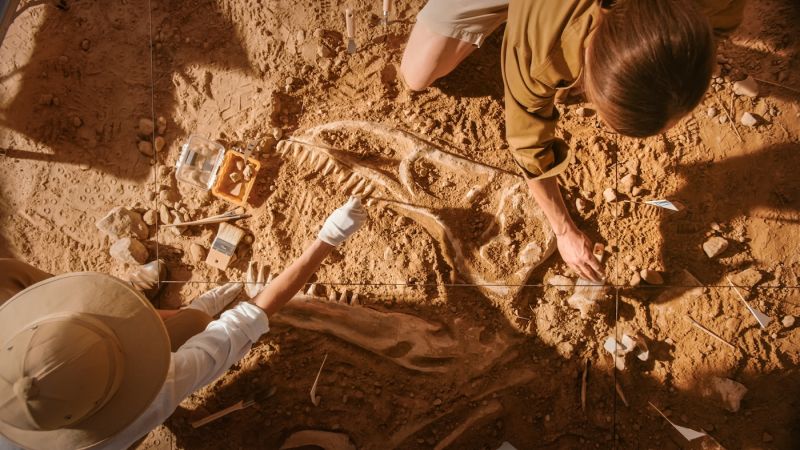
From the buttheaded sea creature to mixing up horns and thumbs, history is full of prehistoric missteps.
Digging up fossils and petrified bone fragments is no simple task. Neither is piecing them back together like an ancient jigsaw puzzle. And as for making sense of the creature they once belonged to? Talk about talent! That said, it’s easy to assume science is pretty much accurate, right? Wrong! Throughout history, epic fails have plagued researchers attempting to reconstruct prehistoric creatures.
While understandable due to the nature of the work, some of these epic fails are downright hilarious. With that in mind, let’s dive into a few of the biggest mistakes scientists have made trying to piece together the fossil record.
Reconstructing Dinosaur-Age Critters
Children are fascinated by picture books and shows with reconstructions of dinosaur-age creatures. And let’s face it, many adults remain interested, too. Think Jurassic Park and Jurassic World. Using fossils that date back millennia can provide a tantalizing window into the past.
Recreations through artwork and models can even give us the sense we’ve traveled back in time. But as with any mystery, piecing together the past isn’t always as easy as you might think. And it comes with the risk of being wrong. Maybe even monumentally wrong.
To be fair, working with fossils comes with inherent issues. Science Alert observes, “Scientists have to rely on fragmentary bones, weathered footprints, impressions in rock-these don’t always capture the fine details of the complex, living breathing animal that passed through or died there.” The world’s first scientists and paleontologists didn’t have today’s technology, either. This made the task of reconstructing long-extinct species especially challenging.
1. The Missing Link That Wasn’t
In 2015, scientists announced an incredible find-the first missing link between lizards and snakes. Researchers named it Tetrapodophis amplectus (say that fast three times!). The scientific community feted the find until a new group of paleontologists stepped in, throwing shade on the discovery.
Further examination led to a declaration of the “missing link” as something far less controversial. An extinct lizard known as Dolichosaurus. In other words, it didn’t prove snake enough to build any species bridge.
2. Horns or Thumbs
Another problematic fossil that threw scientists for a loop was the Iguanodon. In the 19th century, several significant fossil discoveries made this extinct animal all the rage. It also led to an outlandish hypothesis about their appearance.
The fossil remains had two spikes, which scientists initially misidentified as horns. Why? Because they based their recreations on living species such as rhinoceros iguanas. But they couldn’t have been more wrong. As it turns out, those little spikes were thumbs.
3. Velociraptor or Big Turkey
Few creatures have incited more terror than velociraptors. In Jurassic Park, these menacing, bipedal lizards represented the ultimate killing machines. But if you thought their movie depiction was founded in hard science, think again. Instead, these Cretaceous critters were about the size of today’s domestic turkeys. And to top it off, they had feathers!
Of course, this would have turned a horror flick into Thanksgiving dinner. To keep the movie’s adrenaline-spiking vibe, filmmakers took inspiration from another dino. Known as Deinonychus, this species was much bigger and more lethal by human standards. But its name left something to be desired. As a result, they went with the more fear-inducing glorified gobbler moniker.
4. Recent Makeovers to the “Tyrant Lizard King”
Another dino whose revamped depictions continue to make waves is Tyrannosaurus Rex. Once upon a time, scientists had him pegged as a towering, bipedal wall of muscle with teeny, tiny arms. While the arms have remained the same, the rest of the animal has undergone significant changes.
Instead of walking upright, scientists now believe it stood horizontal with its massive tail balancing its head. Kind of like a seesaw. And get ready for another shocker. In youth, T. Rex would have sported feathers like Velociraptors. Whether those feathers persisted into maturity remains up for debate. So does the critter’s size. Some estimates now have individuals at up to 33,000 pounds, almost twice as big as previously thought!
5. The Buttheaded Sea Creature
Yep, you read that subtitle right. Once upon a time, scientists thought they had a small sea creature called Hallucigenia all figured out. Fossils revealed it as having “at least seven pairs of rigid spikes on its back, seven pairs of weirdly floppy ‘legs’, and what appeared to be a large, bulbous head at one end.” But boy, were they wrong.
After a whole series of fossils were found without the big, bulgy heads, scientists wondered how they all met the same headless fate. The answer came during closer examination of what scientists thought was the butt end of the animal. It revealed teeth and eyes, leading researchers to a startling realization. They had misidentified the butt as the head. So, what was the prominent “head-like” protrusion? The guts of some of the animals squeezed out as sediment and covered and crushed them.
New Tech for Better Accuracy
Today, scientists have more tools available to them for studying fragments from the past. As Smithsonian Magazine notes, “the modern study of extinct animals is being driven by cutting-edge imaging technology, 3D modeling, and virtual reconstruction and dissection-advancing our knowledge of the ancient animals but also of other species old and new.”
These new technologies should help reduce the risk of fossil gaffes like those discussed above. That said, errant hypotheses about some of the world’s oldest animals can be hilarious. They also provide invaluable lessons about the scientific method and the powers of observation.
→

Referred by ripleys.com - where the world’s most extraordinary stories are discovered and celebrated.