


The Greatest Misquotes in History

From Nation, For Nation - Pulse of the Nation

The Tragic Collapse of the Sunshine Skyway Bridge

How Queen Victoria Made Christmas Trees Legit
Few holidays come with more trappings than Christmas. Gingerbread houses. Eggnog. Sparkling house lights. Ugly sweaters. Holiday carols. Stockings hung by the chimney. Boxes wrapped with care. You get the point… But hands down, the number one accessory remains the tree. Whether fake or real, what would Christmas be without them?
Yet, not so long ago, decorated evergreens were met with a hefty dose of “meh!” Both in the United Kingdom and the United States. How did tinsel-adorned twigs come into vogue in the Isles and States? Because of one very popular and well-loved British monarch, Queen Victoria.
The Trendsetter Who Gave Us Trees
To call Queen Victoria a trendsetter is a serious understatement. Britain’s most celebrated ruler made white wedding dresses a thing. And tiered wedding cakes. She was the first British ruler to live in Buckingham Palace. It remains one of the best spots for royal watching to this day.
Victoria spent an incredible 63 years and 216 days on the throne. This makes her the longest-reigning monarch, apart from Queen Elizabeth II. And she proposed to her husband, Prince Albert. Talk about girl power! The result? A love so legendary PBS still makes TV series about it. Queen Victoria’s even why people wear black when mourning.
Still, her biggest boss move remains popularizing Christmas trees in the English-speaking world. That’s not to say she invented the idea of decorating with evergreens. Livening up domestic interiors and temples with greenery is an ancient practice. But she modernized the trend, making it something we still do today.
German Influences Come to England
British aristocrats had toyed with the idea of Christmas trees since Queen Charlotte ruled England alongside King George III. Charlotte came from modern-day Germany, where the whole tree-in-the-house thing really took off.
During her lifetime, one guest, Miss Georgina Townshend, recounted celebrating the Yuletide at the Queen’s lodge in Windsor. She noted, “The Queen entertained the children here, Christmas-evening with a German fashion. A fir tree about as high again as any of us, lighted all over with small tapers, several little wax dolls among the branches in different places, and strings of almonds and raisins alternately tied from one to the other…”
Townshend described the tree as decorated with various gifts. These included skipping ropes, cloth for dresses, fans, handkerchiefs, and even jewelry. Topping it all off were candles. (Hello, fire hazard!) Despite the decked-out fir’s impression on guests, Charlotte’s trees never caught on in any big way. Except for among the upper crust. But her granddaughter, Victoria, changed all that.
Marrying German Means Celebrating German
One of the biggest misnomers about Christmas trees coming to England is that Prince Albert introduced them. This makes sense, considering he was a German prince. And he was in charge of royal Christmas festivities in 1840.
Nevertheless, Victoria grew up with the evergreen holiday staple thanks to Queen Charlotte. So, when her hubby suggested putting the green in English Christmas, Victoria embraced it. On Christmas Eve of 1841, she waxed on about the tradition. “The very smell of the Christmas trees of pleasant memories. To think, we have already two children now, and one who already enjoys the sight, - it seems like a dream.”
How did Victoria decorate her arbors compared to her grandmother? With candles and edible baubles. These baubles were molded from shaped and boiled sugar flavored with aniseed and caraway. Then, they were molded to resemble dolls and figurines and fitted with hooks to hang on branches.
Christmas Trees Start Trending
Of course, this begs the question. What made Queen Victoria’s Christmas trees go viral? Especially when Granny Charlotte’s remained the equivalent of one-hit wonders? Two factors should be factored in.
The first? A large middle class thirsting to keep up with the Saxe-Coburg-Gothas. (That was the royal last name before Windsor.) Second, the nineteenth century ushered in professional journalism and widely circulating publications like The London News. Remember those previously mentioned middle-class folks? They gobbled these publications up. And they sought to conform to the trends promoted in them. Like Victoria’s Christmas decorating tips.
Long story short, Christmas trees took off like wildfire. And I don’t need to tell you they remain highly popular today. Consider this. Ninety-eight percent of trees are grown on farms. In the US alone, more than 15,000 Christmas tree farms supply Queen Victoria’s ultimate Christmas accessory. That’s an impressive testament to her powers of influence. Even in a country famous for kicking her grandfather out!
→
From Globe, For Globe - Pulse of the Planet
Four Glasgow students with a burning passion for Scottish nationalism pull off the heist of the century.
It’s almost Christmas 1950, and while most folks are merrily sipping their eggnog at home, four Glasgow students with a burning passion for Scottish nationalism are about to pull off the heist of the century.
To understand how things got to that point, we need to go back a few centuries. Enter the Stone of Destiny (also known as the Stone of Scone), a 336lb slab of pale-pink sandstone that had been used in the coronation of Scottish kings for centuries. Legends about it abound - perhaps the stone is the Biblical Jacob’s Pillow, perhaps it was part of the Roman Antonine Wall.
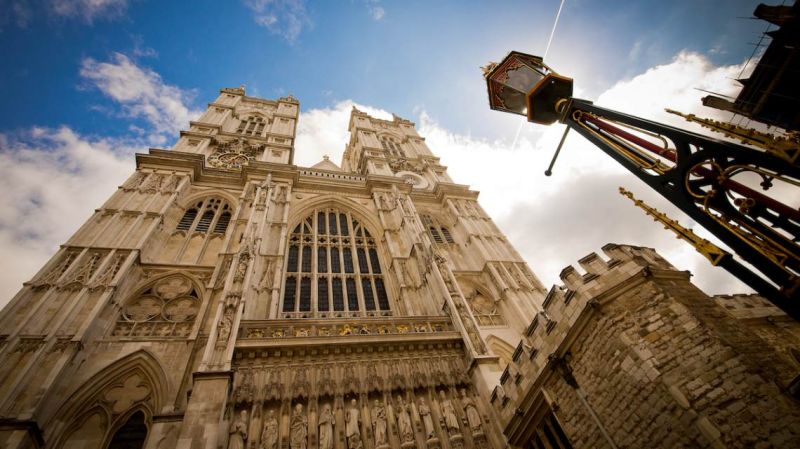
Either way, King Edward I stole it from the Scotts during the Independence Wars in the 13th century and brought it to England’s Westminster Abbey - where this unassuming block of stone was mounted under an oak coronation chair and, you guessed it, used during the coronation of English monarchs from then on.
Enter the Stone Raiders
So let’s go back to December 1950, when a team of four Scottish students (Ian Hamilton, Kay Matheson, Gavin Vernon, and Alan Stuart) set out to “reclaim” the stone and bring it back home.
This wasn’t an easy task and on the first night they tried breaking into Westminster Abbey, Hamilton was caught by a security guard - who let him off with a warning. The group returned on Christmas Day and this time, it all worked out so well, it was almost like an old Hollywood heist movie. After jimmying the Abbey’s door open in the middle of the night, the group managed to remove the stone from under the throne - only to have it break in two.
In a bit of a panic, Hamilton grabbed the smaller 90lbs piece and ran out of the Abbey - only to realize he had lost his car keys inside the Abbey. So back in he went, grabbing not only his keys but also the larger piece of stone they had left behind.
Hide and Stone-Seek
Quickly realizing the whole thing could have serious consequences, the group decided to hide the stone. The larger piece was buried near Kent, while the smaller bit found a temporary home in a Birmingham garage. Soon, police were out in force searching for the stone and looking for “a man and a woman in a Ford Anglia car… with Scottish accents.”
Despite the chaos and uproar, however, the police were not able to find any trace of it, and Hamilton and the gang eventually moved it to Scotland and gave it to the Scottish Covenant Association (an organization campaigning for a Scottish Parliament) for safekeeping.
The Association soon decided the now-repaired stone should be returned since it had already served its purpose (serve as a symbol of Scottish independence) and left it at the ruins of Arbroath Abbey, from where it was then transported back to England and eventually became part of Queen Elizabeth II’s coronation in 1953.
Thieves? More Like National Heroes
The stone was eventually returned to Scotland in 1996 and now resides in its rightful home inside Edinburgh Castle.
Despite all the trouble, the daring thieves were never charged because “no one had been harmed, even if the stone had a bumpy ride.”
Hamilton went on to become a successful criminal lawyer who continued to campaign for self-government in Scotland. He died in 2022 at the age of 97, just months before the coronation of King Charles III in May 2023. For the grand event, the Stone of Destiny traveled back to London, where it was once again placed under the coronation chair to welcome the new king - and then returned to Scottland right after the ceremony.
One can only hope this ride was a lot less bumpy than the previous one.
→

Referred by ripleys.com - where the world’s most extraordinary stories are discovered and celebrated.