


Mexican President Tweets Blurry Photo of a Mythical Mayan Elf

From Nation, For Nation - Pulse of the Nation
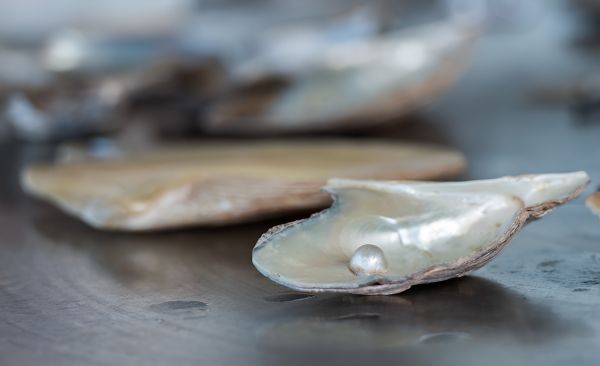
Creating a Pearl Takes Much More Than Just a Grain of Sand
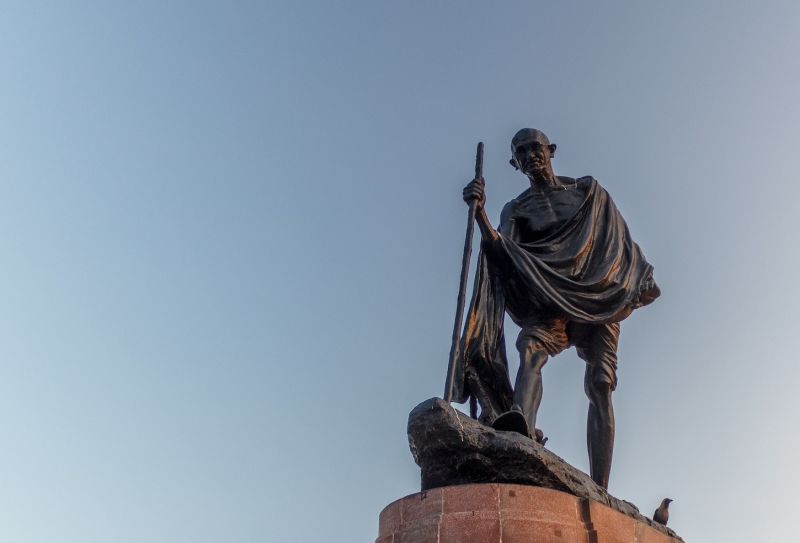
The Greatest Misquotes in History
This short, pithy quote has long been attributed to Gandhi, and although the message sounds right, the words don’t exactly sound like his. The New York Times states that the closest quote we have to this that we know was said by Gandhi is, “If we could change ourselves, the tendencies in the world would also change… We need not wait to see what others do.”
Machiavelli: “The Ends Justify the Means.”
Machiavelli certainly had this attitude in mind when he wrote his 16th-century political manifesto The Prince. Still, he didn’t actually say it, and instead, a similar quote we do have attributed to him is less ruthless: “One must consider the final result.” Another, almost identical quote can be attributed to the poet Ovid who wrote in Heroides: “The result justifies the deeds.”
Neil Armstrong: “That’s One Small Step for Man, One Giant Leap for Mankind.”
This one’s a bit weird and complicated. Neil Armstrong is often quoted as having said, “That’s one small step for man…” which, grammatically, is not what he meant to say. In this sense, the word man represents the same idea as mankind, making the quote kind of wonky.
However, Armstrong swore for years that he said the words “a man” and that people were unable to hear the word “a.” Over time, he relented, saying he might have misspoken simply because he was nervous, but in 2006, a computer programmer actually analyzed the audio and stated that the word “a” was, in fact, said.
Marie Antoinette: “Let Them Eat Cake!”
Marie Antoinette never actually said this. Instead, it came from a book titled Confessions by Jean-Jacques Rousseau, which was published in 1782-11 years before Marie Antoinette was executed. Also, the line was “Let them eat brioche,” a kind of heavy, bread-like French pastry. It’s likely the attribution to Marie Antoinette occurred because the people of France were highly incensed with the Royals, and the belief simply fueled the flames of revolution.
Gloria Steinem: “A Woman Needs a Man like a Fish Needs a Bicycle.”
Gloria Steinem herself actually credits Australian writer Irina Dunn with this phrase, which Dunn says she wrote on the door of public bathrooms when she was a student in the 70s. According to Steinem, the quote is directly related to the witticism: “God needs man like a fish needs a bicycle.”
Marilyn Monroe: “Well-behaved Women Rarely Make History.”
Marilyn Monroe never said this. Instead, it was a quote from writer and Harvard professor Laurel Thatcher Ulrich. In addition, the wording used was “Well-behaved women seldom make history.” Ulrich penned the quote in 1976 and wrote a book with the same title in 2007.
Oscar Wilde: “Be Yourself; Everyone Else Is Already Taken.”
Although this sounds exactly like something Wilde himself would say, these words are never actually a part of any of his writings. He has similar quotes, however, that we can certainly attribute to him, and one is this: “Most people are other people. Their thoughts are someone else’s opinions, their lives a mimicry, their passions a quotation.”
Patrick Henry: “Give Me Liberty or Give Me Death!”
Patrick Henry’s 1775 speech at the Virginia convention wasn’t written down, so we have no record of what exactly he said on that day. The quote comes from William Wirt’s biography of Henry, which he wrote in 1817, and which was widely discredited by his peers like Thomas Jefferson. In addition, the famous quote is also very similar to one from a play written in 1712: “It is not now time to talk of aught/But chains or conquest, liberty or death.”
→
From Globe, For Globe - Pulse of the Planet

The city sewer commissioner once staged a gator hunt.
Or Not
In today’s world many misconceptions have been perpetuated-becoming modern day “facts”-when, in reality, myths and hearsay have taken over. Sorry to burst your bubble, but in this weekly column, Ripley’s puts those delusions to the test, turning your world upside down, because you can’t always…Believe It!
Today: Do alligators live in New York City sewers?.
Sewer Gators
Since the 1930s, people have believed that alligators live in the sewers of New York City and other cities. This idea became popular in the 1950s and has continued for many years.
This urban legend was said to come from Teddy May, who was the Commissioner of the Sewers at that time. May was reported as saying several inspectors spotted alligators in the cities’ underground tunnels circa 1935.
Without any real proof of their existence, May set about to rid the city of the phantom gators. Using poison bait and luring them into the cities’ main tunnels, hunters stood on guard, rifles in hand, waiting for the massive reptiles.
Then-New York Sewer Commissioner Teddy May
No sightings of alligators in the sewers were filed during the campaign. However, in 1937, May declared the cities’ sewers were safe for rodents and waste products once again.
In the 1950s, stories of alligators in NYC sewers caught the imaginations of Americans all over again. This time, the story had changed a bit. Stories would focus on families vacationing in Florida, bringing live baby alligators with them back to New York. Once those little critters grew too large, the family would flush the gator down the toilet and into the sewer system.
As legend has it, the alligators would feast on rats and trash, growing to enormous sizes. The alligators would turn albino along the way-because of the lack of sunlight-and menace the population at large.
No concrete proof of alligator-albino or otherwise-has ever surfaced…in the sewage anyway.
Recent Sightings of Alligators in New York City
Incredible tales of alligators in New York City have persisted for over a century, fueled by sporadic sightings and popular films like “Alligator.”
The most recent discovery was an emaciated female alligator named Godzilla, found in Prospect Park. Weighing only half of what she should, Godzilla was rescued by the Animal Care Centers of New York City and is now receiving treatment at the Bronx Zoo.
These urban alligators, not native to the region, likely arrive via mail or are purchased by enthusiasts who then struggle to care for them. When discovered, they are sent to zoos or rescue organizations, where they can live out their lives in a suitable environment.
The Truth About NYC Sewer Alligators
Why? Why would it be unlikely for a gator to survive, let alone grow to massive lengths in the NYC sewer system? Primarily because alligators are reptiles, which are cold-blooded animals. Meaning they can not regulate their body temperatures on their own as humans do-via sweating to cool off or shivering to warm up.
To survive, alligators need to warm their bodies by basking in the sun or under a heating lamp for several hours. Which living in the NYC sewer system doesn’t provide. Without the warmth of the sun, alligators end up in a state called “torpor,” where primary bodily functions all but cease. Gators can survive for months without sun, like in winter, but they will eventually die without exposure to the sun.
The Reality
Why? Why would it be unlikely for a gator to survive, let alone grow to massive lengths in the NYC sewer system? Primarily because alligators are reptiles, which are cold-blooded animals. Meaning, they can not regulate their body temperatures on their own as humans do-via sweating to cool off or shivering to warm up.
In order to survive, alligators need to warm their bodies by basking in the sun or under a heating lamp for several hours. Which, living in the NYC sewer system doesn’t provide. Without the warmth of the sun, alligators end up in a state called “torpor,” where primary bodily functions all but cease. And while, they can survive several months in this state-like throughout winter-without eventual exposure to the sun, gators would eventually die.
Even in the unlikely event that an alligator did manage to survive for any length of time in the cold, darkness of a sewer, it wouldn’t turn albino. Albinism is a mutation in the genetic code that occurs during the gestation process.
Albino alligators are rare reptiles with a genetic condition that gives them white skin and pink eyes. They are often found in captivity due to their sensitivity to sunlight and the challenges they face in the wild.
At the end of the day, animals don’t lose skin pigment in the absence of light. They just get cranky and depressed.
An Urban Legacy
In a stunning revelation in October 2023, Swedish artist Alexander Klingspor unveiled “N.Y.C. Legend,” a 1,320-pound bronze sculpture celebrating the enduring myth of sewer alligators.
The awe-inspiring artwork portrays a protective alligator curled around a manhole cover, guarding a collection of urban relics. Displayed in Union Square through June, the sculpture symbolizes the resilience shared between New Yorkers and alligators, both adapting to extreme environments.
Klingspor is actively seeking a permanent home for his remarkable creation in the city, preserving the mystique of these hidden creatures in the collective imagination of New York.
By Jesse Gormley, contributor for Ripleys.com
→

Referred by ripleys.com - where the world’s most extraordinary stories are discovered and celebrated.