


Billions in Real Life Treasure Lost to History
From Nation, For Nation - Pulse of the Nation

Pele's Curse: The Hawaiian Goddess Punishes Thieves
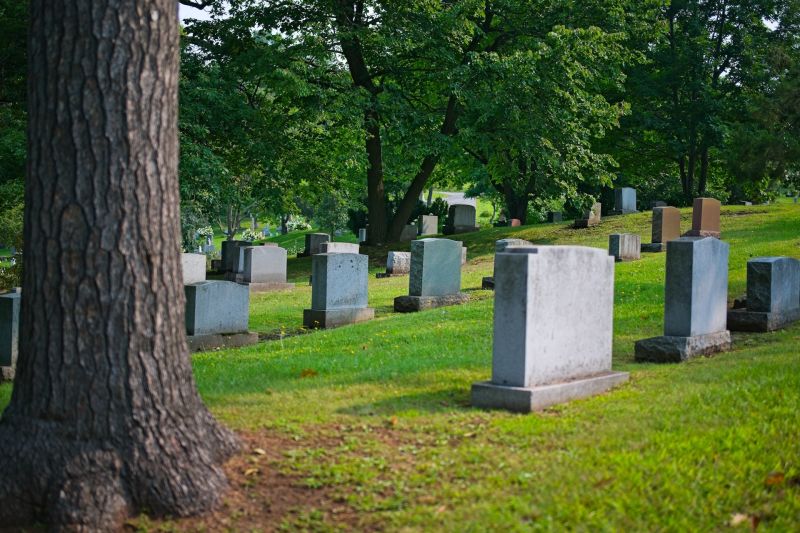
Graveyard Goodies: Gravestone Recipes, Some recipes are so good, they get taken to the grave.
How It Started
Like many, Rosie picked up baking during the COVID-19 lockdown, but unlike others, she also began studying cemeteries.
Taking daily walks through her local graveyard, she began reading the headstones as she passed. Realizing people include way more than names and dates, she decided to merge her newfound hobbies into one.
Since then, Rosie has documented herself traveling across the U.S. on a hunt for new recipes from the departed, gaining millions of views along the way. Ripley’s caught up with Rosie to learn more about her curious cooking.
Q: What was the first gravestone recipe you made?
A: The first grave I learned about was that of Naomi Miller-Dawson in Brooklyn, New York. It’s carved to be a beautiful open book with the ingredients for a spritz cookie recipe. There aren’t instructions on it, so I made it like a sugar cookie, mixing everything together and baking it in small circular shapes.
After I posted on TikTok, a lot of people commented on how their own families made spritz cookies, and I learned I needed a cookie press to properly make them. I began using a press and was surprised how well the recipe worked, so I brought a plate of them to Naomi’s grave with my mom. We had a cookie in her honor, and that started the journey of visiting these graves in person.
Q: Why do you think people put recipes on their gravestones?
A: Food is this beautiful memory tool that connects us better than just a name and date. When I think of my own grandmothers, I also think about their cooking and the meals we had together. I can still taste the yellow cake with chocolate icing my Grandma Kay used to make for my family’s birthdays. We all have that one family recipe that connects us, and so I think sharing a recipe on a gravestone is a way to continue to connect over food.
Q: What do you like about cemeteries?
A: I think cemeteries are peaceful, though I only started visiting them regularly because I interned at a Congressional Cemetery in Washington, DC. After the internship, I started seeing cemeteries as lively places, like outdoor museums that rely on their local communities to be continuously cared for and preserved.
Q: What recipe would you put on your gravestone?
A: There are so many I love! I know I’d want a savory recipe, and I think it’s a tie between a simple mac ’n’ cheese recipe or a clam pasta that I love to make for dinner parties. →
From Globe, For Globe - Pulse of the Planet
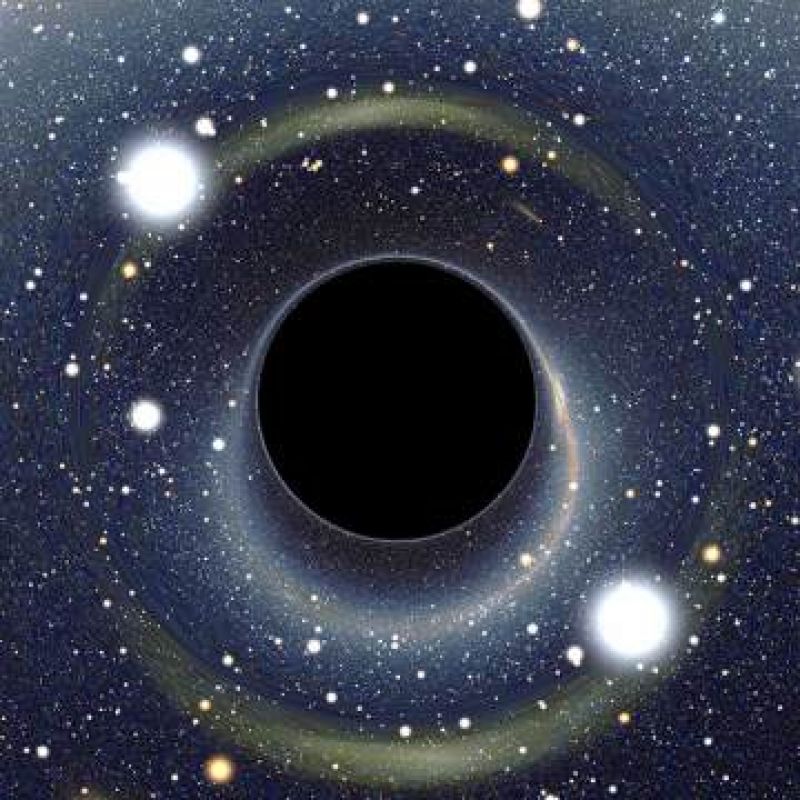
Black holes aren't holes that are black.
With a theoretical history stretching all the way back to 1784, the idea of black holes has captured the collective imaginations of the public since the last half of last century. Thought to be a body so dense that even light cannot escape from it, black holes have become a powerful plot device, used as any way necessary, for just about any kind of science fiction story to date. But, as it turns out, black holes are neither black, nor holes. So, then…what exactly is a black hole?
The Reality
The idea of a black hole can be traced back to 1784 when English clergyman John Michell wondered aloud if a heavenly body could be so dense that even light could not escape from it. While he couldn’t exactly prove the existence of black holes, using the simplistic calculations at his disposal during the 18th century, Michell was able to surmise that supermassive bodies could be detected through the gravitational effects they would have on neighboring planets, moons, etc. That effect would turn out to be a key trait for discovering black holes. By the 19th century, however, most of Michell’s musings had been discredited.
Fast forward to 1915 and Albert Einstein’s theory of general relativity. You know…that easily recognizable, but impossible to explain E=MC2 that everyone knows? Well, that theory allowed for the development of what Michell believe to be true, and would eventually become known as black holes.
Through most of the 20th century, physicists continued to work on and challenge Einstein’s theory, expanding his work in certain areas, discrediting it in others. It wouldn’t be until 1964, though, when the terms “black” and “hole” would be used together to describe the theorized phenomenon. In a piece titled “Black Holes in Space,” journalist Ann Ewing threw the words together, for the first time, in an article after attending a meeting of the American Association for the Advancement of Science. It would be three additional years later before the name would catch on, though. Physicist John Wheeler, who’s credited for coining the phrase, used the verbiage again during a lecture in 1967. Shortly thereafter the words “black hole” would draw in the public’s imagination like a black hole does light.
So, if a black hole is neither black nor a hole, then what exactly is it? Simply put, a black hole is the remains of a supermassive star that’s collapse onto itself. These remnants tend to measure only a few miles in diameter (making them unimaginably dense) yet still have a gravity field strong enough to keep light from escaping. And because of that phenomenon, if one were to look upon one of these supermassive bodies from a safe very far-away distance, it would look like…wait for it…a black hole in the middle of space.
→

Referred by ripleys.com - where the world’s most extraordinary stories are discovered and celebrated.