


All Aboard the Red Train: Your Front-Row Seat to St. Augustine’s Nights of Lights

From Nation, For Nation - Pulse of the Nation

Pele's Curse: The Hawaiian Goddess Punishes Thieves
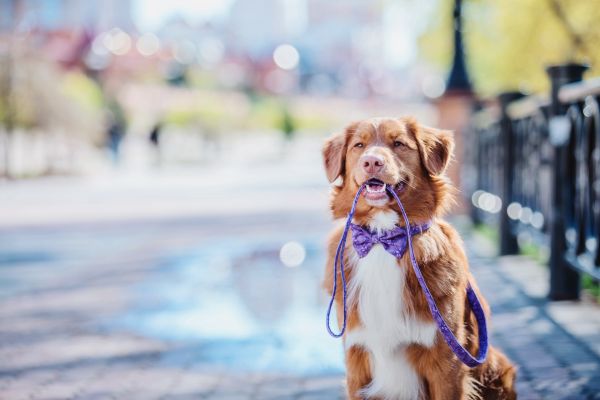
Dog Age Calculator: How Old Is Your Dog in Human Years?
Many people believe that one year in a dog’s life is equal to seven years in a human’s life. It’s easy to see why pet lovers think this calculation is valid. After all, many humans live to around 70 years old, while many dogs pass away around the age of 10.
The seven-to-one ratio appears to add up. However, it’s a bit more complex than that.
Size Matters
According to the American Kennel Club, a medium-sized dog’s first year of life is equivalent to 15 years of a human’s life. His or her second year of life equals nine years for a human. Then each subsequent human year equals about five years for the canine.
Small dogs are usually considered senior pets when they are seven years old. However, larger dogs generally don’t live as long and are often labeled senior pets when they are just five or six years old. Depending on their weight, a 10-year-old dog is equivalent to a human who is 56 to 78 years old, while a 15-year-old dog is comparable to a 76- to 115-year-old person.
A 2019 University of California San Diego study examined the DNA of 104 Labrador retrievers in order to calculate dog-to-human age and found that the best way to do so is by multiplying the logarithm of the canine’s age by 16 and adding 31. However, it involved breed-specific data, so more research is needed.
Breed Matters
A dog’s life expectancy varies greatly based on the size and breed, according to Pet MD. For example, a bulldog has an average lifespan of six years, while a golden retriever can live for 12 years. A 2013 study by Banfield Pet Hospital found that dogs weighing less than 20 pounds generally live around 11 years compared to those over 90 pounds, who live only eight years on average. Still, there are exceptions, and some pets have shorter or longer lifespans than average.
It’s critical to take the canine’s weight into consideration when calculating their average lifespan. A nine-year-old canine weighing less than 20 pounds is around 49 in human years, compared to a nine-year-old dog weighing over 90 pounds who is approximately 70 in human years. That’s a 21-year difference in two dogs who were born in the same year.
More Research Is Needed
Researchers aren’t exactly sure why smaller dogs have longer lifespans. According to Cornelia Kraus, an evolutionary biologist at the University of Göttingen in Germany, there are several theories. Large dogs may age faster or simply start aging earlier. Or they may just have a higher mortality risk.
→
From Globe, For Globe - Pulse of the Planet

Why were mothers hidden behind curtains and under cloths?
Like spirit photography and death photography, hidden mother photography was another common practice of the Victorian era that looks absolutely creepifying now.
Many mothers, hoping to have pictures taken of their children in the early 1800s, would make a guest appearance in the photographs. However, they were usually obscured or hidden with a piece of fabric strategically draped over their bodies, or sometimes just their heads. It was also common for mothers to be cropped out of the photos, standing nearby but far enough away that they wouldn’t appear in the final images.
Now Hold Still!
As these photographs ranged from looking mildly odd to extremely disturbing; it can be hard to figure out why mothers of the Victorian era wanted to be “seen,” but not seen, in images with their children.
Daguerreotypes, or the photographs of the time, required long exposure periods that could stretch from anywhere between thirty seconds and several minutes. As any parent knows, it can be hard to keep a baby motionless simply snapping a picture with your cell phone. For a solid minute of stillness, photographers were asking a lot of the tykes. So, in many cases, their mothers would have to sit for the photograph as well in order to make sure their children didn’t fidget.
The Picture-Perfect Game of Hide-And-Go Seek
But why did the mothers hide? Why not create a portrait that portrayed familial love and affection? Linda Fregni Nagler, an Italian-Swedish artist and publisher of 2013 book, The Hidden Mother, believes the trend started because parents wanted to create “an intimate bond between the child and the viewer,” thus, leaving the mother out of the equation. Another theory stems from the fact that, in the Victorian era, photographing a loved one was such a rarity. Parents wanted images of their children alone that they could use to send to family members.
Still, others wonder if this could have been part of the long tradition of erasing a woman’s work from the eyes of onlookers. Sure, some of these portraits have been found to include the occasional father, nanny, or photographer’s assistant hidden in plain sight, but the majority of the “pictured” caregivers are mothers.
In most cases, these images are of mothers appearing with their children in their laps or beside them while otherwise being clumsily concealed to look like a piece of furniture.
→

Referred by ripleys.com - where the world’s most extraordinary stories are discovered and celebrated.