


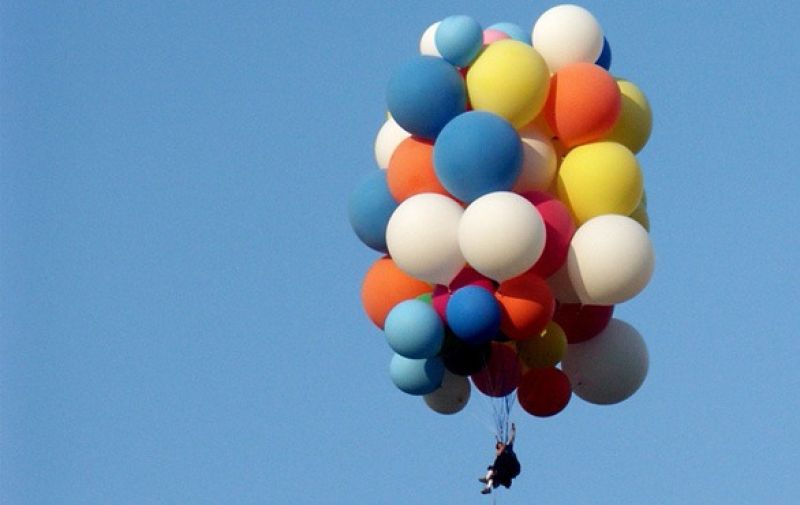
Lawn Chair Larry and His Balloon Trip to the Sky
From Nation, For Nation - Pulse of the Nation
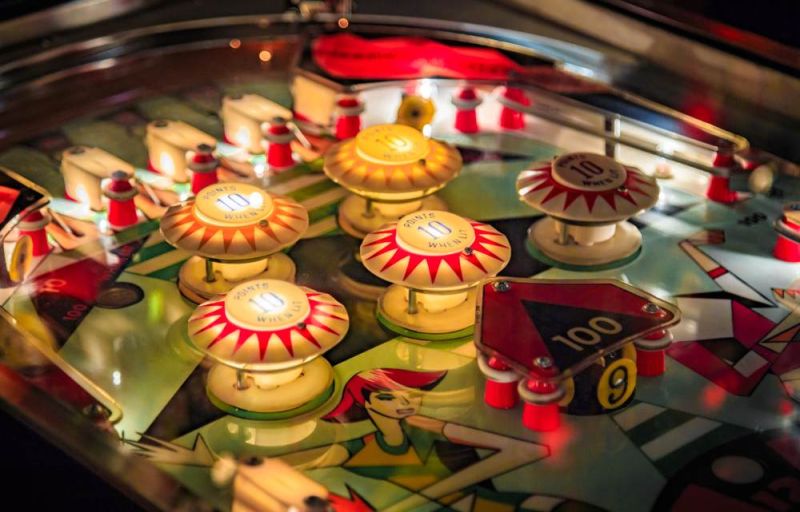
Why Pinball Games Were Once Against The Law

A Look Inside Ripley's JFK Collection
Dress to Impress
Marilyn Monroe’s dress from the birthday celebration is the world’s most expensive dress ever sold at auction. It was purchased for $4.8 million, but with taxes and fees, the dress surpassed $5 million! Believe it or Not!, the dress is currently valued at a staggering $10 million!
While this is Ripley’s most expensive item, it is only one of around 25,000 items in the Ripley’s exhibit collection valued at $125 million! Our collection includes historically significant artifacts, unique and incredible art, cultural relics, quirks of nature, pop culture memorabilia, and, of course Robert Ripley’s personal effects.
Let’s dive into some of the most fascinating artifacts of our JFK collection!
Another Year Older
Celebrating the 60th anniversary of the New York birthday event, Ripley’s possesses the Madison Square Garden birthday gala ticket from 1962! The event functioned as a fundraiser for the Democratic Party, and according to newspaper and film accounts from the evening, the birthday celebration was attended by over 15,000 guests!
Our collection also includes an original Kennedy “birthday salute” poster which served to advertise the star-studded evening to the public around New York City.
Brace Yourself
Another unbelievable item in our John F. Kennedy collection is the back brace that was used throughout President Kennedy’s time in office. President Kennedy suffered chronic back pain starting in his early twenties and underwent multiple operations with little success.
Throughout his term, President Kennedy frequented the use of back braces to combat his chronic pain. Believe it or Not!, many believe that the use of his back brace played a fatal role in his assassination, with some experts pointing to the stiffness of the brace and President Kennedy’s inability to bend his body to avoid incoming fire.
Related to the unfortunate assassination of President Kennedy, Ripley’s owns the black and chrome 1954 sedan that was used by Lee Harvey Oswald on the day he shot the President.
Oswald did not have a driver’s license and would regularly have his neighbor and close friend, Buell Wesley Frazier, drive him to work.
On the morning of November 22, 1963, Frazier drove Oswald to the Texas School Book Depository. In the back seat of the car, wrapped in paper, was the rifle that Oswald would use later that day to assassinate President Kennedy. Frazier, at the time, believed that the wrapped package was nothing more than curtain rods.
Made The Cut
Ripley’s is proud to own hair clippings from President Kennedy obtained by the White House barber, Harry Gelbart - how extraordinary is that!
The clippings were cut shortly before President Kennedy’s fateful trip to Dallas and are framed against a white canvas showcasing the former President’s reddish brown locks.
John F. Kennedy is a figure showered in intrigue and tragedy and leaves behind a legacy of extraordinary proportions. Ripley’s is proud to forward that legacy by showcasing items that were not only a part of his intrigue, but in some cases, were also a genuine part of him!
Check out our episode of Ripley’s Up Close & Peculiar where Kurtis dives behind the scenes and into detail about some of President Kennedy’s artifacts mentioned above!
→
From Globe, For Globe - Pulse of the Planet
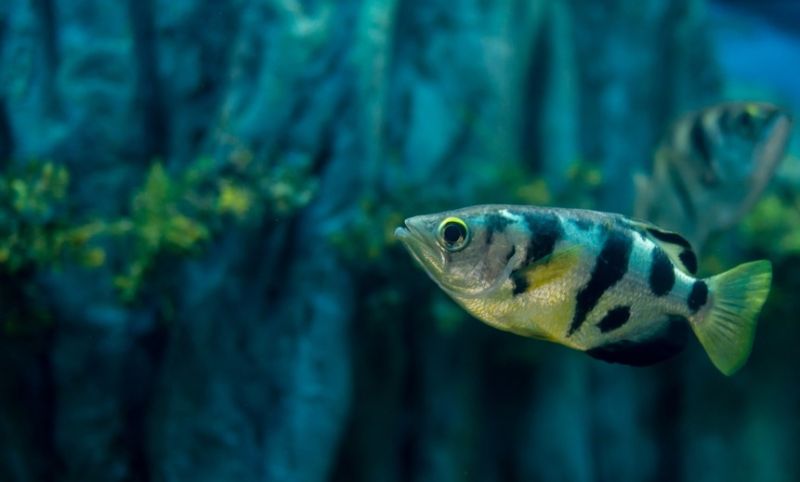
These fish have incredible aim.
The banded archerfish (Toxotes jaculatrix) is one of seven species of archerfish. These incredible fish are famous for spitting a water jet to hit their prey, such as insects.
Let's dive in and learn more about these sharp shooters.
How Vision Plays a Role
The process of spitting a jet of water requires a high level of skill. When the archerfish spits a water jet, gravity pulls the water jet downward, so they have to adjust the angle of the water pathway to hit their prey.
Additionally, light bends as it passes through water, causing the images to be refracted and the target to appear at a different location. These factors make it challenging for any animal to aim and hit prey accurately.
The archerfish use their large, moveable eyes to look forward, giving them binocular vision. This overlapping vision with both eyes provides them with a good depth perception, similar to how humans see.
Archerfish eyes have developed two different types of colour vision. When they look upwards, the cones in the bottom half of their eyes are adapted to perceive colours dominant above the water column. The cones at the top half of their eye are tuned to detect colour dominant underwater when they look down. This special characteristic allows archerfish to easily spot insects on land and small crustaceans moving underwater.
Before spitting their stream, archerfish will swim as close as possible to the surface, and with their eyes just below the waterline they will position themselves directly beneath the target.
How Do Archerfish Spit?
The banded archerfish has a deep groove at the top of the mouth, a hard and soft tissue ridge on the tongue, and a long and powerful lower jaw.
Scientists have two different takes on how their spitting method works. The first is called the “blowpipe” hypothesis, which is the idea that when their mouth claps together, the groove that fits the ridge on the tongue propels a strong water jet.
The second is known as the “pressure tank,” method. This method claims that the archerfish use their lips as a valve to build up pressure and spit the water out. The true mechanism behind their powerful spit remains under debate.
Before they spit, they position their mouth just above the water level and store a gulp of water in their mouth. Muscle energy is stored near their lower jaw, which converts the energy to propel a water jet. They also use this technique underwater, lifting sediments to find any food particles below.
How Do Mangroves Come into Play?
Banded archerfish live in brackish water, mainly found in estuaries, and use mangrove forests as hunting grounds and shelter.
Mangroves are shrubs and trees in wetlands and tidal regions of warm tropical and subtropical areas. They are adapted to high salinity environments, tolerating about 100 times more salt than other plants.
The structure of mangrove forests act as a natural barrier to protect the coastline from erosion caused by waves, wind, and storms.
Mangrove forests support diverse species, such as crustaceans, freshwater fishes, birds, and mammals, creating a high biodiversity and complex food web in mangrove forests.
As carbon sinks, mangroves can absorb four times more carbon dioxide than other plants, vital in fighting against climate change. However, mangroves have been facing severe threats due to climate change.
Mangroves Face a Threat
Climate change has caused sea levels to rise and more extreme weather. This leads to more flooding in wetlands. When mangroves stay underwater for too long, their roots can't get enough oxygen.
In the future, there will likely be stronger tropical storms. Droughts will reduce rainfall and make the soil saltier, which is harmful for mangrove growth.
Warmer temperatures in higher latitudes will cause mangroves to move further north or south, changing where certain fish, like the banded archerfish, live.
Conservation
Changes in mangrove distribution and population decline will have a significant impact on banded archerfish and many other species that call these areas home.
Protecting these habitats requires avoiding deforestation, and reducing our carbon footprint daily.
Sea These Spitting Wonders
Swim on over to Ripley's Aquarium of Canada and get up close with these incredible fish! Explore amazing exhibits and walk through the underwater tunnel for an unforgettable experience. Plan your visit today!
→

Referred by ripleys.com - where the world’s most extraordinary stories are discovered and celebrated.