


Are Unicorns Real? Where did the myth of these magical creatures begin?
From Nation, For Nation - Pulse of the Nation

5 of the Ocean's Most Unbelievable Moms, Even the moms of the deep blue deserve recognition.
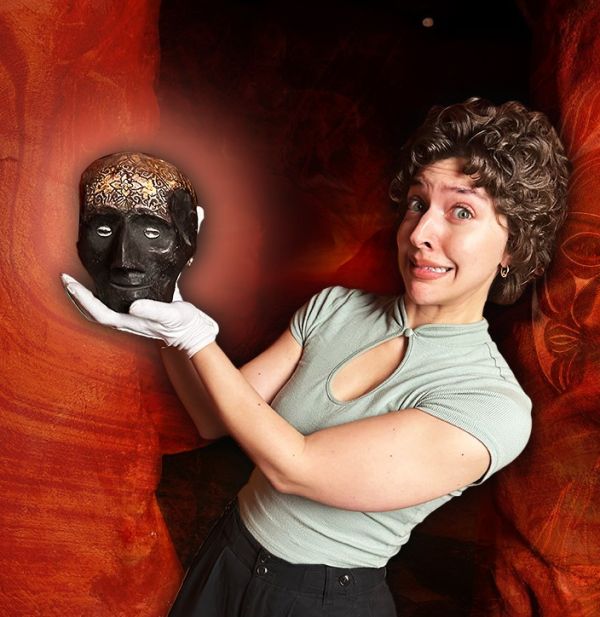
Up Close & Peculiar With a Cannibal Trophy Skull, This human skull was once worn as jewelry.
Headhunting as a Sacred Ritual
For the Dayak people, headhunting wasn’t violence for violence’s sake. It was believed that taking an enemy’s head transferred their spirit, strength, and wisdom to the victor. The skulls of defeated enemies were thought to protect the village, ensure fertile crops, and even bring in a bountiful rice harvest.
Claiming a head meant claiming power. Warriors who succeeded in battle were seen as protectors-strong, brave, and spiritually fortified.
A Symbol of Strength and Identity
Trophy skulls were highly cherished. Often preserved in bark boxes, these skulls were displayed in homes, worn in ceremonies, and even brought into future battles as talismans of strength and intimidation.
Headhunting was considered a “blood credit,” or a way to avenge a death within the tribe. It was so woven into Dayak identity that a warrior’s dowry could even include a human head, proving his ability to defend and provide for a family.
Visit This Spine-Chilling Relic in Niagara Falls
Come face-to-skull with this extraordinary relic at Ripley’s Believe It or Not! Niagara Falls. →
From Globe, For Globe - Pulse of the Planet
Why some boozed-infused dishes might give you a hangover...
Lager-spiked beef chili, beer-broiled bratwursts, coq au vin, chicken marsala, pork brined in rum. Ah, nothing says delicious quite like alcohol-saturated dishes-especially when it comes to beer or wine-infused meat: tender, moist, and downright delectable.
Of course, if you’ve ever watched a chef on TV or cracked open a cookbook to make one of these recipes, you’ve probably come across advice like, “Let the dish simmer for a few minutes to cook out any remaining alcohol.”
This begs the question: does alcohol actually evaporate out of food when cooked? Yes and no. Read on for the skinny on cooking with booze.
Why You Might Get Burned by Your Next Flambé
In 1992, a team of researchers from the US Department of Agriculture’s Nutrient Laboratory took part in an in-depth study exploring alcohol retention during food preparation. They started by examining perhaps the most iconic alcohol-based dish of them all, the flambé.
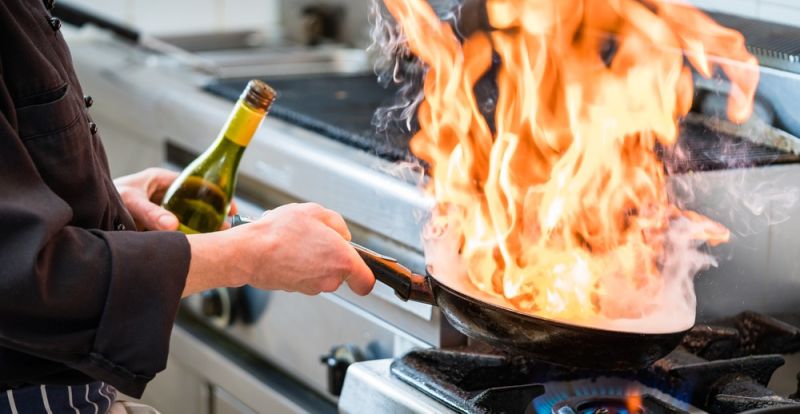
The French term flambé translates as “flamed” or “flaming” and refers to food doused with cognac, brandy, or rum and then set on fire. The technique makes for an unforgettable dinner table display-although one that could leave guests springing for the fire extinguisher. From Bourbon Shrimp Flambé to French Caribbean Bananas Flambé, and even Mangoes Flambé, plenty of dishes get prepared this way.
So, researchers wanted to study just how much alcohol evaporates while the flambé briefly combusts. To do this, they prepared the dish and took alcohol content measurements both before and after ignition. What they discovered thoroughly shocked them.
Despite being engulfed by flames, the dish maintained approximately 70 to 75 percent of its alcohol content! Now, that’s a recipe for a hangover.
But, the research didn’t stop there.
The “Buzz” About Longer Cooking Times
Scientists next turned to other forms of food preparation to study alcohol retention. They soon realized that the idea of removing alcohol from a dish through cooking does contain a grain of truth. But, it requires more than a quick scorching.
Evaporating alcohol from a dish takes hours, rather than minutes. As the US Department of Agriculture’s researchers discovered, a dish heated to boiling point and cooked for 15 minutes still retains about 40 percent of its original alcohol content.
When you up this to 30 minutes, 35 percent of the alcohol content originally present in the dish remains. All told, it takes more than two and a half hours of boiling to reduce the alcohol content of a dish to just five percent.
Does that mean foregoing your favorite recipes forever?
Not necessarily. After all, alcohol greatly enhances the flavor of many recipes while providing a mouthwatering aroma. But, you’ll need to commit to much longer cooking times than those suggested on many television shows and in numerous cookbooks. Some chefs also suggest non-alcoholic swaps such as flavored extracts, vinegars, and juices.
The Great Disappearing Alcohol Myth
Simmering a dish for five to 10 minutes won’t do much to the wine, beer, or other spirits used in the recipe; neither will setting the entire dish on fire. But if you commit to cooking recipes for hours at a time, you can preserve the delicious flavor of alcoholic enhancement without the buzz. Or, consider extracts, vinegars, and juices to mimic the flavors and aromas of wine and spirits.
No matter what you decide, remain cautious about cooking booze-infused dishes for guests. While a final alcohol content of 10 percent or less might not bother most adults, it’s a different story when it comes to children and those who abstain from alcohol for a variety of personal reasons.
And whatever you do, don’t flambé and drive!
→

Referred by ripleys.com - where the world’s most extraordinary stories are discovered and celebrated.