


Tuesday, 05, May, 2026

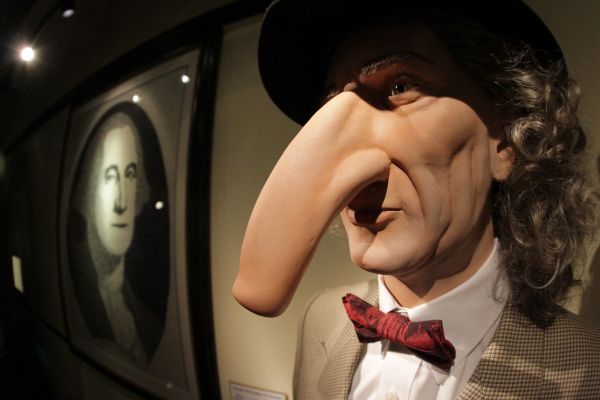
Thomas Wedders: The Man With the World’s Longest Nose, That’s one sizable snooter!
→

Thomas Wedders: The Man With the World’s Longest Nose, That’s one sizable snooter!
From Nation, For Nation - Pulse of the Nation
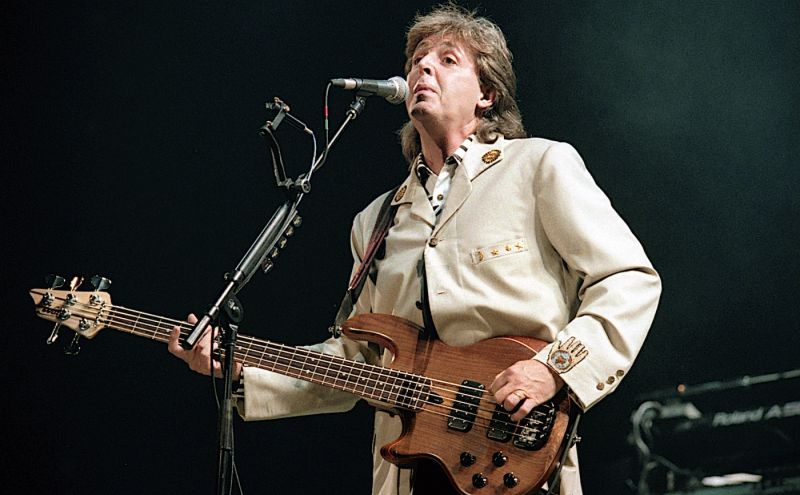
Paul McCartney
Paul McCartney

Was Paul McCartney Replaced in the 1960s? Let's dive into Beatlemania's biggest conspiracy!
Today, we are jumping into a yellow submarine and going all the way back to November 9th, 1966, the day Paul McCartney died-or at least, that’s what conspirators will have you believe. We’re going to take a closer look at one of the biggest conspiracies in music history and break down some of the core elements to finally put to rest whether Paul McCartney is alive or if the man we know and love is just a lookalike.

Music’s Biggest Conspiracy
So how did this conspiracy come about? It started on October 12, 1969, while Russ Gibb, a Detroit DJ, was hosting his radio show, when he was asked by a caller to play The Beatles (White Album) and spin the intro from “Revolution 9” backwards. When Gibb tried it on the air, he heard the words, “Turn me on, dead man.” This revelation was all Beatles fans needed to scrub for any other “secret” messages throughout their discography.

Other messages were soon discovered while listening closely and adjusting the speed of song playback. For example, at the end of “Strawberry Fields Forever,” John can be heard saying what conspirators believe is “I buried Paul.”
Now that you know how the ball got rolling, let me lay out the conspiracy of Paul’s death and jump into the connections fans have made to support the claim through the music and artwork.

Here’s how the conspiracy went: Paul died on November 9, 1966. He drove away from Abbey Road late at night and ended up wrecking his car and never making it home. He was officially pronounced dead (“O.P.D.”) on Wednesday morning at 5 o’clock. The other Beatles decided to keep the news private, so the papers did not report the accident. The band moved forward and kept Paul’s death a secret by replacing him with a look-alike.

The Fan’s Findings
So how does any of this play into the Beatles lore? Here is what fans have found, starting with Sgt. Pepper’s Lonely Hearts Club Band, the 1967 studio album. On the front cover of the album, fans noticed the funeral-esque stylization of the flowers with the band and onlookers standing almost in memorial. The most prominent discovery came when a fan decided to hold a mirror up just under the three main members of the band. The writing on the kick drum spells out what appears to be a secret message: “IONEIX HE<>DIE” read as “11/9 he die” with an arrow pointing directly to Paul.

Fans found even more to justify their conspiracy on the back cover of the album. For one, Paul is the only Beatle with his back turned. Secondly, In the same photo, George stares downwards and points his finger to a specific lyric: “Wednesday morning at 5 o’clock as the day begins” the time conspirators believe Paul to be in the accident. On the gatefold of the album, Paul is seen wearing a badge that looks as though it spells O.P.D. Fans believed the acronym meant “Officially Pronounced Dead.”

On their following studio album, The Beatles (The White Album), there are also other “clues” fans spotted. Similar to the strange phrases fans discovered when playing “Revolution 9” backwards, there was also a portion that revealed itself when played backwards on the song “I’m So Tired.” The ending of the song has John muttering what seems to be gibberish, but when reversed, it says, "Paul is a dead man; miss him, miss him, miss him.”

The Beatles' following album, Abbey Road, had fans reading over the contents of the artwork. The Michigan Daily likened the Abbey Road cover to a funeral procession: the Preacher being John in all white, the Undertaker being Ringo in black, the Corpse being Paul’s lookalike, and finally George, in blue denim, as the gravedigger.

The Lookalike
So, let’s get all this straight: if Paul died in 1966, who is the Paul McCartney we have seen nearly every year since? The answer conspirators have provided is a lookalike. Known by fans as “Faul,” is rumored to be a Canadian man named William Shears Campbell.

The idea is that Campbell underwent various plastic surgery procedures to more closely resemble Paul. Fans have gone as far as to analyze Paul’s facial features throughout his career, pointing out differences in his jawline and ears as proof that William Shears Campbell took over the role of Paul shortly after the accident.

Now, all this may sound convincing, but let’s go through and debunk some of the biggest claims. For one, John was actually saying “cranberry sauce,” not “I buried Paul,” and the “O.P.D.” patch said “O.P.P." and, believe it or not, was a gift from the Ontario Provincial Police.

Not to burst your bubble, but Paul isn’t actually dead, and really, this conspiracy theory is most interesting because it depicts one of the first widespread cultural conspiracies. Although many now consider the theory to be more of a joke and sensational, at the time, it was very widespread and even had The Beatles making public statements about the falsehoods.

During the tailspin of rumors surrounding Paul, Life magazine secretly sent reporters out to McCartney’s farm. In the November 9th cover story (“Paul McCartney Is Still With Us”), Paul added, “The Beatles thing is over.” Ultimately, it was clouded by the all-consuming conspiracies around Paul’s death. In 2009, Paul stated, “I think the worst thing that happened was that I could see people sort of looking at me more closely: ‘Were his ears always like that?’”

So, there you have it-from an early morning car accident to secret messages to a lookalike who underwent plastic surgery. One of the most interesting, less talked about facets of this conspiracy is that if the Paul lookalike were true, that would mean he actually would end up writing some of Paul’s best material! Let me know in the comments below how you think this conspiracy shifted the cultural winds and widespread prominence of other major conspiracies. Until next time, I’m Jordan Neese, and this is Ripley’s Rewind.
→

Medieval Torture Devices

5 Medieval Torture Devices That'll Make Your Skin Crawl

From shame masks to spiked collars, the Dark Ages had some unsettling punishment tactics.
The Middle Ages earned their nickname-the Dark Ages-for a reason. While modern historians argue the era wasn’t as bleak as it seems, a quick look at the torture devices of the time makes it easy to understand how the label stuck.

From humiliating punishments to brutal pain-inducing contraptions, these devices reveal just how far societies have gone in the name of justice, control, and confession. Some were real. Some were exaggerated. And some might have been created purely to scare.
Here are five of the most chilling Medieval torture devices from the pages of history-and from the Ripley’s collection.

1. The Brank Mask: Public Humiliation in Iron
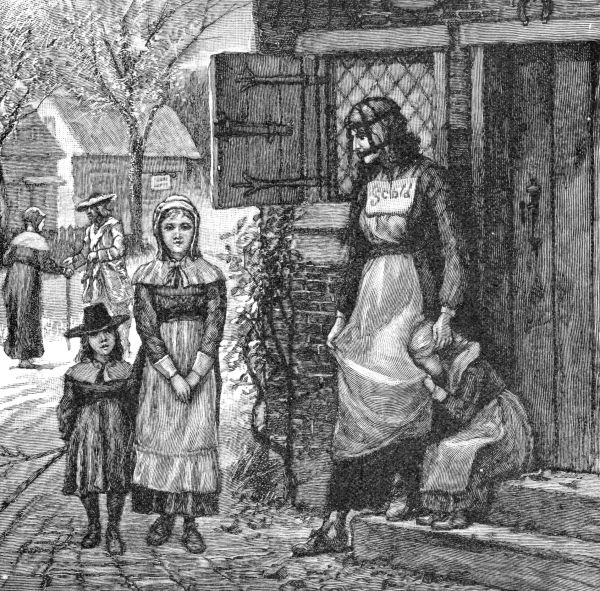
Sometimes called the “scold’s bridle,” the Brank Mask was used to punish those-often women-accused of gossip, slander, or other “nuisance” behavior. The heavy iron mask clamped over the head often featured grotesque designs to reflect the accused’s supposed crime.
Wearing it wasn’t just uncomfortable-it was humiliating. The wearer would be paraded in public, a walking symbol of shame.

2. The Pillory: A Medieval Time-Out… With Rotten Tomatoes
The pillory, or stocks, didn’t draw blood, but it did break spirits. Locked in place by wooden boards, victims had their heads and hands immobilized in public squares-free for passersby to mock, spit at, or pelt with food and trash.
Reserved for petty crimes, the real punishment was humiliation. Some unlucky offenders were left for days, rain or shine, as a warning to others.

3. The Spiked Collar: Stay Still-Or Else
A terrifying twist on prisoner transport, the spiked collar was a circular iron band lined with inward-facing spikes. As long as the wearer stayed still, they were relatively safe. But any sudden movement-like trying to run-meant the spikes would pierce deep into the neck or throat.
This device was less about restraint and more about control-built on the threat of pain rather than the act itself.

4. The Torture Glove: Confession by Fire
Used during the Inquisition, the torture glove was filled with burning coals and locked around a victim’s hand. If they confessed, the glove might come off. If they didn’t? The fire kept burning.
This device wasn’t just designed to hurt-it was intended to cleanse the accused of sin through suffering. Pain, after all, was seen as purifying.

5. The Iron Maiden: Fact, Fiction, and Fear
Easily the most infamous of all torture devices, the Iron Maiden is a towering iron coffin lined with sharp spikes-positioned to pierce, but not kill... at least, not right away.
The most legendary version-the Iron Maiden of Nuremberg-is said to have been built around 1800, long after the medieval period had ended. Historians debate whether it was ever used or simply created to terrify and attract paying spectators. Regardless, the myth of the Iron Maiden looms large.

Some accounts say it was modeled after the Schandmantel, or "shame cloak," a barrel-like punishment device. Others link its origins to even older legends, like the Apega of Nabis-a spiked mechanical statue from Ancient Greece-and the gruesome Brazen Bull, which allegedly roasted victims alive inside a brass sculpture.
Believe It or Not!, Robert Ripley acquired an Iron Maiden during a trip to Germany and brought the eight-foot-tall device back for his collection. With 13 iron spikes and a legacy as mysterious as it is macabre, the Iron Maiden still haunts the halls of Ripley’s today.
→
From Globe, For Globe - Pulse of the Planet

Mateo Drottz
Mateo Drottz
Spin Class With a Violin? Meet Mateo Drottz’s Unbelievable Workout

Ripley’s has always celebrated the wonderfully weird, and this story, well, strikes a chord... literally.
In Henderson, Nevada, fitness trainer Mateo Drottz is reimagining spin class with a surprising twist. While riders pedal hard on indoor bikes, Mateo plays the violin live, swapping pounding bass drops for soaring classical strings. The result? A workout that’s intense and oddly calming all at once.

A Workout That Hits Different
Most spin classes are built on loud, fast playlists designed to push riders to their limits. Mateo’s violin flips that script.
Mateo’s music brings focus and flow to the room, helping riders find rhythm in their movement and maybe even forget how hard they’re working (at least for a moment).
But this isn’t about perfect technique or sculpted six-pack abs.

More Than Fitness
For Mateo, his mashup of music and motion is about confidence, connection, and community. Riders come as they are, move at their own pace, and share a one-of-a-kind experience that feels more like a collective performance than a competition. It’s proof that fitness doesn’t have to be intimidating to be powerful.

A spin class led by a violinist might sound unbelievable, but that’s exactly why it belongs at Ripley’s. This incredible story is just one of the many real, strange, and inspiring features you’ll find inside our brand-new Ripley’s annual book.
→

Referred by ripleys.com - where the world’s most extraordinary stories are discovered and celebrated.