


The Science of Fear: Understanding the Psychology of Fear, Science explains why you love a good haunted house!

From Nation, For Nation - Pulse of the Nation
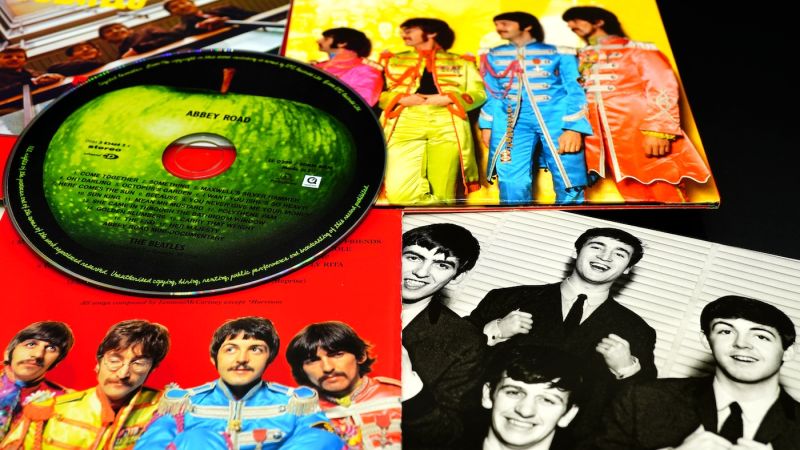
When Muhammad Ali Tried to Reunite the Beatles, The heavyweight boxer was a confessed Beatles fan!
6 Strange Flowers You Won’t Believe Actually Exist
Spring is in full swing! And while most of us are familiar with tulips and daffodils, much more fantastical flora is hidden away in lush rainforests, bogs, and even deep underground.
Have you ever met a 10-foot-tall flower that smelled like a corpse? Or one that resembled big, juicy red cartoon lips?
Here are six flowering plants that would give the Little Shop of Horrors’ Audrey II a run for her money.
1. Corpse Flower (Amorphophallus titanium)
Native to the rainforests of Sumatra and Indonesia, the Corpse Flower is a towering single-leafed plant with a flower that smells like rotting flesh.
The foul-smelling odor and red and purple hues mimic the characteristics of a decaying corpse, which the plant uses to attract flies and beetles, its primary pollinators.
2. Hot Lips (Palicourea elata)
Pucker up! Palicourea elata, commonly known as the Hot Lips plant, is a tropical plant that grows throughout Central and South America. While this plant looks like your run-of-the-mill shrub for most of the year, it grows a modified set of leaves that resemble thick red lips right before it blooms from December to March.
While they might seem silly to us, the Hot Lips plant uses its plump pout to attract pollinators like hummingbirds and butterflies.
3. Black Bat Flower (Tacca chantrieri)
While the dark and mysterious might not be everyone’s aesthetic, Halloween lovers are guaranteed to adore the Black Bat Flower. Also called Cat’s Whiskers or the Devil Flower, this peculiar plant hails from Southeast Asia. The glossy black flowers, resembling bat wings, are held aloft by slim green stems.
Dozens of long, green whiskers, or bracteoles, drip from the flowers. Scientists have yet to determine the purpose of the Black Bat Flower’s drooping bracteoles, though some speculate they have photosynthetic properties.
4. Naked Man Orchid (Orchis italica)
Orchids, synonymous with vibrant colors and intricate petals, are popular wedding and anniversary gifts. However, most people would not be thrilled to receive an arrangement of Naked Man Orchids. The long, lobed lips of each flower resemble a tiny naked dude. And with numerous flowers blooming at a time, you’d think you were at a miniature nudist colony.
In Italy, some believe that eating the Naked Man Orchid promotes virility.
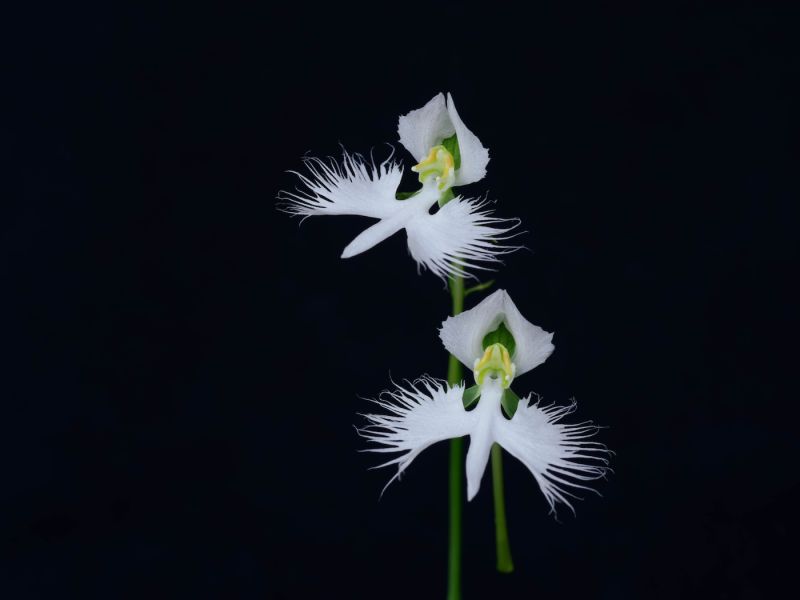
5. White Egret Orchid (Pecteilis radiata)
Another odd orchid on our list is the White Egret Orchid. Found throughout China, Japan, Korea, and Russia, this plant has fragile, fringed flowers that resemble the fanned wings of a white egret.
6. Jackal Food (Hydnora africana)
The last flower on our list is truly the stuff of nightmares. Native to Southern Africa, the Jackal Food plant is among the top primitive flowering plants. It grows mainly underground and cannibalistically feeds on the roots of neighboring plants.
The only visible part of the Jackal Food is its large, fleshy flower, which looks like the mouth of the man-eating worms in Tremors.
From the stench of rotting flesh to petals that promote masculinity, these six flowers show that the natural world is often stranger than fiction. →
From Globe, For Globe - Pulse of the Planet

These athletes overcame unbelievable odds to achieve the seemingly impossible at the Olympics.
The Paris 2024 Olympic and Paralympic Games will be one of the largest athletic events ever organized in France, taking place from July 24 to August 11. During the event, the world’s best athletes will unite to crown new champions while billions of television viewers tune in worldwide. The City of Lights will also draw millions of live spectators over 19 days of competition.
However, not all Olympic athletes have an easy road to competition. Some have surmounted insane odds for a chance at the podium. Check out these amazing stories of athletes who can inspire us all.
The Road from Illness to Victory
Sebastian Coe of Great Britain was riding high after the 1980 Olympics and his win in the 1500m. He also set numerous world records in distances from the 800m to the mile. But two years later, his world fell apart. Glandular fever destroyed his health and led to an agonizing battle with toxoplasmosis. Health issues forced him to bow out of the 1983 World Championships in Helsinki, Finland.
Because of these ongoing struggles, many questioned his ability to compete in the 1984 Olympic Games in Los Angeles, California. Some in the media viciously criticized him for wanting to mount an attempt. Yet, he proved his critics wrong by performing exceptionally in the 800m and 1500m.
He earned silver in the 800m behind Joaquim Cruz of Brazil and gold in the 1500m. As a result, he became the first man in Olympic history to win successive 1500m Olympic titles.
Leading From the Rear
Billy Mills did the unprecedented at the 1964 Olympic Games in Tokyo, Japan. He charged from the rear of the competition to win the gold medal in the 10,000m, becoming the only man in the Western Hemisphere to win a gold medal in that event.
Billy Mills grew up on the Pine Ridge Indian Reservation in southwestern South Dakota, one of the poorest regions in the United States. He competed in cross-country races at the University of Kansas and continued to train after joining the Marines. Remarkably, he refused to follow standard training advice in the leadup to the Tokyo Olympics.
Instead of resting in the days before the competition, Mills continued with his vigorous running schedule. Despite foregoing mainstream advice, he raced to a stunning victory on race day, impressing the world with his unlikely rise to victory.
Golden Girl Returns from Retirement
While Billy Mills overcame the odds to earn Olympic glory, he wasn’t the only one making history in 1964 in Tokyo. Another athlete who achieved surprising success was Betty Cuthbert, Australia’s so-called “Golden Girl.”
Despite winning three Olympic gold medals at the 1956 Melbourne Olympics, she had to retire before the 1960 Rome Games due to a torn hamstring. At the time, she considered this the end of her public career as she didn’t enjoy living in the spotlight.
But by 1962, she was back on the track, competing in the Commonwealth Games. Then, two years later, in Tokyo, she made an impressive comeback, clenching her fourth medal in the 400m. She remains the only Olympian to have ever won a gold medal in all sprint running events: 100m, 200m, and 400m.
From Hospital to Head of the Pack
During the 1960 Summer Olympics in Rome, Italy, Wilma Rudolph captured the public’s attention with her incredible athletic achievements. She garnered three gold medals in the 100m, 200m, and the 4x100m relay, becoming the first American woman to win three gold medals in one Olympic Games.
Seeing her compete in Italy, you would have never guessed the problematic nature of her childhood. Born prematurely, she battled with severe illnesses in her youth—polio, scarlet fever, and double pneumonia. Polio temporarily paralyzed her and even led medical professionals of the day to presume she would never walk again.
But by the age of 12, she bid her bulky leg brace goodbye, quickly progressing to athletic pursuits. Eight years later, she competed in her first Olympics in Melbourne in 1956, earning a bronze medal in the 4x100m relay. Fast-forward to 1960, and she achieved what many thought was impossible, representing America in dramatic fashion.
The Double Amputee Who Achieved His Olympic Dreams
When South African Oscar Pistorius was eleven months old, he underwent double amputation of his legs. The reason? A health condition he was born with impacted his lower leg bones or fibulae. Despite this setback, he proved highly athletic, trying his hand at tennis, water polo, and rugby. He relied on prosthetics along the way.
A knee injury led him to running. He competed in the 2004 Summer Paralympics and ran his first able-bodied race in 2005. In 2008, he hoped to compete in the Beijing Olympics. However, the International Amateur Athletic Federation (IAAF) overruled his participation, citing an “unfair advantage.” Although this ruling was later overturned, Pistorius failed to qualify for the games, putting his Olympic hopes on the back burner.
By 2011, he qualified for the Summer Olympics at the London 2011 World Championships and competed in 2012 as the first double-leg amputee. He took second place in the 400m race, finishing with his best time of the season: 45.44 seconds. He also ran in the 4x400m relay race, finishing the last leg to clinch the team’s best season time: 3 minutes 3.46 seconds. Pistorius carried the South African flag during the closing ceremonies.
The Greatest American Diver Overcomes Injury
Greg Louganis won two gold medals during the 1984 Olympics in Los Angeles. This paved the way for his reputation as “the greatest American diver.” Four years later, most people considered him a shoo-in at the Seoul Olympics.
But during a preliminary diving round, he hit the back of his head on the springboard. The injury left him with a concussion and a laceration on the back of his head, requiring four stitches. Despite these traumatic injuries, he went on to win gold in the 3m and 10m platform events. In the process, he became the first man to win back-to-back gold medals in both events.
→

Referred by ripleys.com - where the world’s most extraordinary stories are discovered and celebrated.