


Will a Penny Falling From a Skyscraper Kill You?

From Nation, For Nation - Pulse of the Nation

Exploring Devil Rays: Diving Deep Into the Mysterious Creatures, Don't be fooled by those horns!
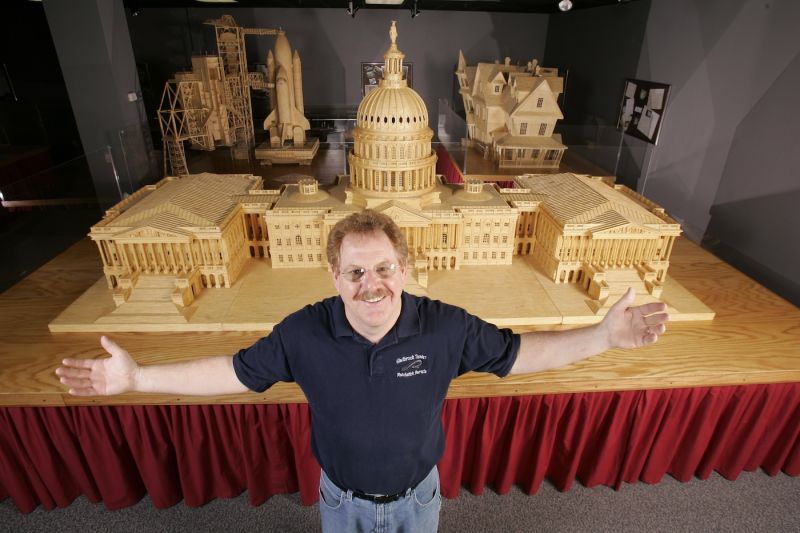
Matchstick Art: Crafting Intricate Masterpieces
Matchsticks, simple, everyday objects, are usually meant to spark a flame. But in the hands of a visionary artist, they can ignite something even more powerful: imagination.
The Intricate World of Matchstick Art
Matchstick art is a meticulous craft in which thousands-sometimes millions-of tiny wooden sticks are transformed into jaw-dropping creations. Artists use matchsticks to build everything from miniature landmarks and fantasy castles to full-sized machines and detailed sculptures.
One of the most astonishing examples in Ripley's collection comes from artist Pat Acton.
Planes, Trains, and Automobiles
Master matchstick artist Pat Acton has added no shortage of unbelievable creations to the Ripley's collection.
From a train constructed with over 1,000,000 matchsticks to a half-sized Dodge Charger, Acton is the living embodiment of thinking outside the box.
Believe It or Not!, Acton's locomotive model-known as Plane Loco-took 14 months, 3,000 hours, and 35 gallons of wood glue to complete.
Plane Loco is more than a static sculpture. It features interactive controls, including a working throttle, brake, and forward levers. It even has whimsical wings, inviting visitors to imagine flying or riding in this one-of-a-kind machine.
Built One Matchstick at a Time
What makes matchstick art so remarkable isn’t just the final product-it’s the process. Every single stick is carefully placed by hand. Some are cut, bent, or sanded to fit just right. The craft demands intense focus, creativity, and an eye for design.
Pat Acton has spent years pushing the boundaries of matchstick construction, creating everything from fantasy castles and dragons to ships and even spaceships-all crafted from humble matchsticks.
Acton has even brought the wizarding world to life with a matchstick recreation of Hogwarts School of Witchcraft and Wizardry, made famous by J. K. Rowling’s Harry Potter series. The sculpture took three years to complete and is composed of over 500,000 matchsticks.
Back to the Future... in Matchsticks
But that’s not all! Acton has recently recreated the entire setting of the 1985 film Back to the Future!
This massive model showcases the town square of Hill Valley, California, just as it appeared when Marty McFly traveled back to 1955. Pat spent just over two years building this detailed diorama, complete with interactive features.
With the push of a button, the time-traveling DeLorean speeds down the street. Lights flash, thunder rumbles, and the whole model springs to life-mimicking the iconic scene where Marty returns to the year 1985.
Small Pieces. Big Possibilities.
From miniature wonders to massive builds like Plane Loco, matchstick art reminds us that even the smallest materials can be used to create something extraordinary-one stick at a time.
So what are you waiting for? Visit Ripley's Believe It or Not! Gatlinburg and witness the Hogwarts matchstick model up close and personal!
→
From Globe, For Globe - Pulse of the Planet
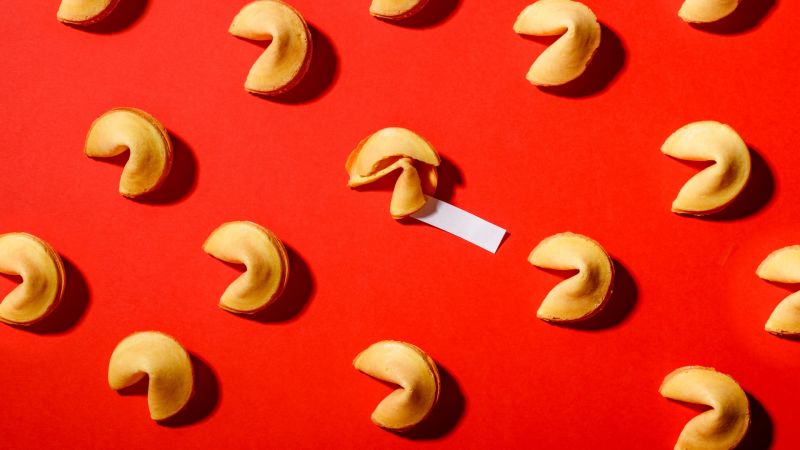
Fortune cookie manufacturing changed when Japanese-Americans were imprisoned during World War II.
Who Invented the Fortune Cookie?
Believe It or Not!, the tasty fortune cookies that come with your Chinese take-out weren’t invented in China. The concept for the tiny after-dinner desserts actually originated in Japan and spread to America at the turn of the century!
Some bakeries outside Kyoto, Japan, make what look like bigger, darker-colored fortune cookies that have messages inside their creases. These senbei, or “crackers” were invented in the late 19th century-if not earlier-and are still being made in Japan today.
In the early 1900s, Japanese immigrants in San Francisco and Los Angeles, California, made senbei at their bakeries. A few local Chinese restaurants lacked desserts on their menu, so they started procuring the Japanese crackers to sell to their own customers. It is believed the cookies were first produced in America sometime between 1907 and 1914.
Their popularity took off following World War II when veterans returned to the west coast after the conflict and asked for the treat when they visited their favorite Chinese eateries.
According to researcher Yasuko Nakamachi, fortune cookie production was likely taken over by Chinese-owned manufacturers during the war when Japanese bakeries closed and many of their owners were sent to Japanese-American internment camps.
When Japanese-Americans were interred during the war, many businesses were abandoned.
By the late ‘50s, dozens of Chinese bakeries and fortune cookie companies were making an estimated 250 million cookies every year. In the ‘60s, a man named Edward Louie founded Lotus Fortune in San Francisco and created an automatic fortune cookie machine.
Despite their Japanese origin, fortune cookies became an iconic treat because of the Chinese-Americans who popularized them over the years. As of 2008, three billion fortune cookies were produced each year almost entirely in the United States. China does not serve them, but countries such as Britain, Mexico, Italy, and France do.
Wonton Food Inc., based in Queens, N.Y., produces an estimated 4.5 million fortune cookies per day. In the early ‘90s, Wonton tried to expand its business to China but failed. Some Chinese were so unaware of the cookies and their purpose they accidentally ate the fortunes.
Wonton employs a Chief Fortune Writer to come up with new fortunes each year. Back in the ‘80s, fortune cookies typically resembled horoscopes, i.e., “You will be successful.” They evolved and these days often feature sayings that make people happy, such as “You have a natural grace and great consideration for others” and “Every exit is an entrance to new experiences.”
There’s a team of Wonton Food employees that approves the fortunes before they’re released. The company also receives a lot of feedback, both good and bad, about its fortunes. One man thanked Wonton for a cookie that promised a new opportunity was coming his way (he landed a new job).
Another customer criticized Wonton after her husband opened a fortune that suggested he would find love on his next business trip. In 2005, over 100 lottery players won $19 million after playing the “lucky numbers” on the back of Wonton fortunes, which resulted in an investigation.
Regardless of where fortune cookies originated, they are a delicious treat. But what we want to know is how do they get the messages into the tiny treats? Wonton isn’t spilling. It is an “ancient Chinese secret,” according to the company.
→

Referred by ripleys.com - where the world’s most extraordinary stories are discovered and celebrated.