


Spending a Night at the Haunted Pennhurst Asylum

From Nation, For Nation - Pulse of the Nation

Was Civil War Surgery Really Performed Without Anesthetic?
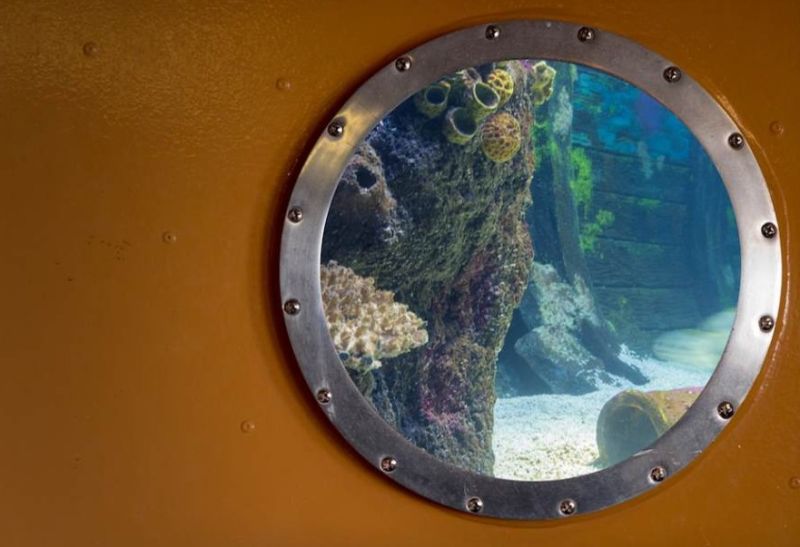
A Florida Professor is Living Underwater for 100 Days
University of South Florida (USF) associate professor Joseph Dituri, also known as “Dr. Deepsea,” is in the middle of spending 100 days underwater while conducting research and teaching a biomedical engineering class. The 55-year-old hopes to break the record for spending the longest stint underwater, surpassing the 73-day record set by two people in 2014.
Under The Sea
Dituri’s habitat is 30 feet below the surface. He is living in a 100-square-foot structure located in Key Largo at Jules’ Undersea Lodge, according to a university press release. He will spend part of his time recording his body’s long-term exposure to extreme pressure. He explained on Instagram that he is experiencing about 1.6 times the pressure people encounter on the earth’s surface!
Medical personnel have been monitoring Dituri’s health, which includes blood panels, ultrasounds, electrocardiograms, and stem cell tests. He also undergoes psychosocial and psychological tests. Since he will be confined underwater in isolation for such a prolonged period (conditions similar to space travel), a psychologist and psychiatrist are on hand to assess his health.
A previous study concluded that exposing the body to increased pressure for five days may increase longevity and prevent age-related diseases. Dituri’s research will expand on this data, and he thinks he may emerge from the sea as “super-human.” “This study will examine every way this journey impacts my body, but my null hypothesis is that there will be improvements to my health due to the increased pressure,” Dituri believes.
Looking For Answers
Dituri, a former U.S. Navy saturation diving officer, earned his doctoral degree at USF in order to study traumatic brain injuries, which have affected many servicemen and servicewomen in our country. “I knew well that hyperbaric pressure could increase cerebral blood flow and hypothesized it could be used to treat traumatic brain injuries,” he noted. “I hypothesize that applying the known mechanisms of action for hyperbaric medicine could be used to treat a broad spectrum of diseases.”
Ditrusi is also fielding questions from teachers and their students about life underwater as part of his STEM outreach. When asked how he showers and if he feels like his body is being squeezed from the pressure, he explained that he uses fresh water piped down from the surface, and “as far as the squeezing, the body is mostly made of water which is incompressible so I really don’t feel anything different.” When asked how the habitat stays anchored, Dituri explained that it contains “about 80,000 lbs of positive buoyancy in this facility….it weighs more than that.”
He also makes time for fun, such as playing Rock, Paper, Scissors with a group of divers that stopped by (outside his porthole) for a visit.
More Than Meets The Eye
Dituri has many projects to keep him occupied. For example, he is testing an artificial intelligence tool aimed at screening a body for illness and choosing appropriate treatments. Other scientists have also visited the habitat.
If you have a hankering to spend some time underwater and you are a certified scuba diver, you too can stay overnight at Jules’ Undersea Lodge and explore the marine environment. Just be prepared to pay $1,687.50 per couple for one night. The accommodations include a pizza delivery and plenty of other snacks.
That’s not all though, there is also another way you can tap into underwater abilities. If you’re a musician and are interested in playing songs while submerged, the Denmark-based band AquaSonic is seeking a new drummer. The group’s concerts, dubbed “submerged musical performances,” feature five performers in glass tanks playing instruments and singing completely underwater. The music is described as “eerily melodic and powerfully resonant.” Qualifications for the position include having a “nerd-gene” and “nerding drumming technique.” You must also be physically strong, tolerant of spending long periods working in water, and be able to hold your breath for extended periods.
→
From Globe, For Globe - Pulse of the Planet
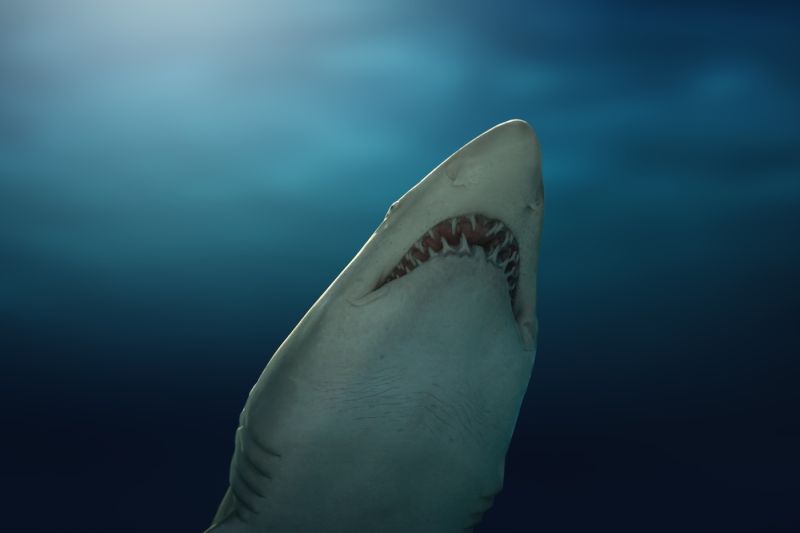
Science you can sink your teeth into!
Sharks have a pretty unique way of showing love. Instead of holding hands or going on dates, male sharks bite onto females to stay close while mating!
This might sound a little rough, but it’s a natural process. Scientists will often use these bite marks to figure out when and where sharks are mating-without even seeing them in the act!
In honor of Valentine's Day, let's dive into the deep blue and take a closer look at how sharks show their love.
Shark Wound Detectives
One type of shark, the sand tiger shark, helped scientists create a system to track these love bites over time.
Scientists studied a female shark in an aquarium after she got a deep mating bite. The scientists watched as her wound healed through four stages:
Stage 1: Full-thickness wound: A fresh, deep bite that exposes muscle.
Stage 2: Healing: The wound starts to close up after about two weeks.
Stage 3: Closure: The skin comes together after three to six weeks.
Stage 4: Scar revision: The wound fully heals but leaves a scar, which lasts for 35 weeks or more!
Shark Romance in North Carolina?
Scientists also used this system to study wild sand tiger sharks near shipwrecks in North Carolina!
By looking at digital photos from the Spot A Shark USA database, they found that female sharks had fresh bite wounds in late spring and early summer. That means… North Carolina might be a hot spot for sand tiger shark mating season!
So if you happen to see a shark with scars, it might just be a sign of shark romance in action.
Sea Our Sharks
Looking for more? Check out our story on Rip, the sand tiger shark. In March 2022, Ripley’s Aquariums made history with the birth of Rip, the first successful birth by artificial insemination of a sand tiger shark.
Want to meet some of our fin-credible sharks? Visit Ripley’s Aquarium and get up close with the amazing world of the deep blue!
→

Referred by ripleys.com - where the world’s most extraordinary stories are discovered and celebrated.