


Up Close & Peculiar with The Menendez Brothers, This basketball card is hiding the truth behind a murder.

From Nation, For Nation - Pulse of the Nation

Up Close & Peculiar With a Shrunken Torso, This rare torso is one of only six known in the world!
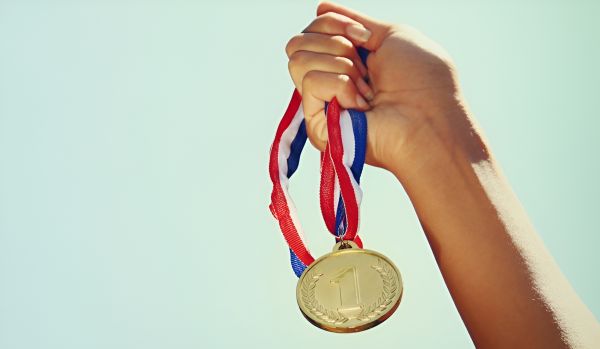
Ripley’s Very Own Olympic Games
The original Olympic Games were the brainchild of the ancient Greeks. Competitions focused on athletic endeavors and military pursuits and were designed to unite disparate Greek city-states. Early sports included footraces, javelin throwing, discus throwing, wrestling, and boxing.
So, what might a weird and wacky Ripley’s version of the games look like? Let’s dive into a list of wild and bizarre events we’d like to see in the lineup.
Outhouse Racing
For the past 35 years, Virginia City, Nevada, has hosted one of the planet’s strangest sporting events-The World Championship Outhouse Races. As the name suggests, the competition involves creating extravagant, over-the-top outhouses.
These are paraded through the Wild West town. Next, contestants line up to full-bore, sprint-push their wheeled loos down the main thoroughfare of C Street. The result isn’t potty, but we can’t think of a more eclectic competition for our outlandish Olympics!
Toe Wrestling
Is the thought of thumb wrestling in the Olympics laughable to you? We say, “Meh.” Instead, consider the edgy, envelope-pushing, glorious sport of toe wrestling. Completely unfathomable? Perhaps. Totally incomparable? Absolutely! That’s why this chart stopper makes our list of corn-y competitive sports.
Invented in 1976 in Derbyshire, United Kingdom, two opponents lock toes, with the winner pinning the other’s feet. Although the competition sounds laughable, it gets serious quickly. Competitors must approach it with a callused resolve to win despite broken toes, drawing blood, and scraped knees! So, “tootsie” wrestling wannabes beware.
Chessboxing
Mix brains and brawn through the fine sport of chessboxing. A hybrid of two of humanity’s oldest sports, players compete on the board before heading into the ring to slug it out. Rounds alternate between both pursuits, providing a mindboggling form of entertainment.
Invented by Enki Bilal, a French comic book artist, and adapted by Iepe Rubingh, a Dutch artist, chessboxing started as performance art. But today, it continues to grow in legitimacy and popularity. When it comes to the oddball Olympics, we say, “Why not?”
Wife Carrying
The name says it all regarding the ancient sport (or is it an art?) of wife carrying. A staple of Finnish recreational life, male contestants complete an obstacle course as fast as they can while their wives cling to their backs. How does the carrying work? It depends on your preference.
Several carrying positions are permitted. They include the classic piggyback style, a fireman’s carry (over the shoulder), and the so-called Estonian style. (Basically, the wife hangs upside down bat-style with her legs over the neck and shoulders of her husband.) Winners of the competition garner the weight of their wives in beer. But we hope gold will be an acceptable alternative.
Zorbing
What’s zorbing? It involves hurtling down a mountain face inside a giant, transparent, plastic orb. Or, walking on water in one of these big hamster balls. The first zorbing site appeared in New Zealand, and these spheres have become staples of theme parks across the United Kingdom and the United States.
To date, the fastest zorbing athlete remains New Zealand’s Keith Kolver. He reached a whopping 32 miles per hour in a plastic ball! As for the longest distance? Steve Camp of South Africa traveled 1,870 feet in one. Clearly, there’s plenty of room for new records and a ready supply of (at least two) competitors to ball up. Best of all, athletes are known as “zorbonauts,” which is its own kind of cool!
Haggis Hurling
Let’s face it. Scotland boasts many bizarre sports, from the caber toss to stone skimming. But haggis hurling takes the cake. It involves chucking a sheep’s stomach-stuffed with various sheep organs, onion, oatmeal, spices, and suet-inhuman distances.
Whether for better or worse, it reemerged as a sport in 1977 during a Gathering of the Clans. Today, there’s even a World Haggis Hurling Association to ensure athletes toss their cookies properly. Nothing says international competition like edible sheep guts flying through the air. Let the hurling begin!
Hot Dog Eating Championships
Annually, on July 4, Nathan’s Famous Hotdog Eating Contest takes place on New York’s Coney Island. During the competition, participants aim to suck down as many dogs as possible in ten minutes. Some competitors reach astronomical numbers.
How many wieners are we talking about? Current champs include Joey Chestnut at 62 sausages and Miki Sudo at 39.5 weenies. More than 35,000 people flock to the event annually, and millions more tune in via ESPN. In other words, this peculiar event comes with a ready-made audience of devoted fans.
Unicycle Hockey
Field hockey requires skill and coordination as anyone who’s ever played can attest. After all, getting the hang of passing a puck with a hockey stick is …. well, challenging. Add ice skates to the mix, and you’ve got next-level crazy.
But some folks don’t think that’s enough difficulty. So, they’ve pushed the envelope astronomically with unicycle hockey. Swap out skates for a unicycle, and things snowball in difficulty! What’s even harder than playing unicycle hockey? Trying to keep a straight face while watching competitors wobble and whack away at the puck. (In this case, a tennis ball.)
Cardboard Tube Fighting
The Cardboard Tube Fighting League (CTFL) is an international organization that holds cardboard tube-based tournaments across the American West Coast and Australia. These competitions involve fighters decked out in cardboard armor and wielding cardboard tube weapons. Winners aim to break their opponent’s cardboard tube while keeping their own intact.
Cardboard tube fighting is evocative of the original Olympic Games, which focused on athletic and militaristic pursuits. We can only imagine what Ancient Greek athletes would have done if they had been gifted with the technological innovation that is cardboard. (Bye bye, Bronze Age!) Besides channeling the original games’ competition, cardboard tubes could even provide an elegant, though fast-burning, solution for the Olympic torch!
Sepak Takraw
What happens when you cross kickball and volleyball? Something known affectionately as Sepak Takraw. Imagine two teams coalescing on a badminton-style court with a volleyball-type net to kick a softball-sized implement back and forth like martial artists. (Repeat that three times fast!) The implement is made of rattan or synthetic plastic and may touch the players’ knees, feet, shoulders, head, and chest. But hands are totally off-limits.
Teams of three players face off. How do they score? By landing the ball on the opponent’s side. Standardized in 1960, the sport is considered a cross between volleyball and soccer. Sepak Takraw is governed by the International Sepaktakraw Federation (ISTAF) and is played in Singapore, Malaysia, Thailand, and Myanmar. We say this hybridized sport is the perfect addition to an off-the-wall Olympics.
→
From Globe, For Globe - Pulse of the Planet
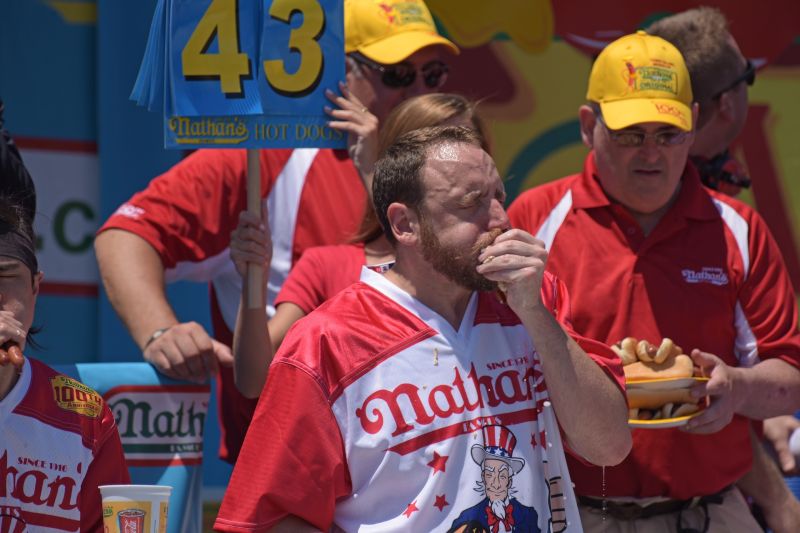
Every Independence Day, Americans celebrate freedom with food, consuming 155 million hot dogs in a single day-enough to stretch from Washington, D.C. to Los Angeles five times.
From backyard grills to baseball games and street carts, the hot dog has become a true Fourth of July icon.
Loved nationwide, it stands as a symbol of summer, tradition, and all-American celebration.
America’s passion for hot dogs is best told through numbers.
Baseball fans eat 20 million hot dogs annually at ballparks, while Los Angeles alone consumes 39 million, more than any city in the world.
During “hot dog season,” Americans devour 7 billion hot dogs, averaging 800 every second.
This love affair also fuels big business and big events.
Americans spend $8.5 billion each year on hot dogs and sausages in supermarkets alone.
And at the pinnacle of hot dog fame, 40,000 fans gather at Nathan’s Famous Hot Dog Eating Contest in Coney Island every Fourth of July.
→

Referred by ripleys.com - where the world’s most extraordinary stories are discovered and celebrated.