

Tuesday, 21, July, 2026

Locals Have Been Tending to the Uffington White Horse for 3,000 Years!

Locals Have Been Tending to the Uffington White Horse for 3,000 Years!
From Nation, For Nation - Pulse of the Nation
Pythagorean Theorem
Pythagorean Theorem

The Controversial Origins of the Pythagorean Theorem

Was Pythagoras a mathematical genius or the king of numerical hype?
Learning the Pythagorean theorem in school remains a critical milestone for students of geometry. It paves the way for studying higher math concepts found in trigonometry and calculus. What’s more, this formula represents the ultimate in mathematical elegance:
Its creator, Pythagoras of Samos (c. 570-495 BCE), is remembered primarily for his contributions to right-angled triangle math. So, it’s little wonder that he’s known as the first “true” mathematician. But Pythagoras also represented a controversial figure. Not only did he create a secretive religious cult, but whether or not he invented the Pythagorean Theorem remains controversial.

A Controversial Figure
Traditional history tells us that Pythagoras made significant contributions to mathematical developments in the West. That said, sorting out precisely what those contributions were remains problematic.

Why?
Pythagoras left behind no mathematical writings. Everything that we know about him comes from the work of devotees like Philolaus. These authors didn’t delineate what Pythagoras discovered as opposed to his followers.
Of course, when it comes to the ancient world, this circumstance is not without precedent.
The ancient Greek philosopher Socrates didn’t leave behind any written works either. Everything that we know about the philosopher, from the Socratic method to his philosophical teachings, comes from other people.
His knowledge was passed down to us through his students Plato and Xenophon. Aristophanes, the Greek comedic playwright, also got in on the action. However, he presented a less-than-flattering picture of Socrates. But that’s about it when it comes to Socratic source material.
And though we tend to think of mathematics as a factual, objective pursuit, the ancients didn’t see it this way. What we know about Pythagoras comes from murky sources.
Pythagoras founded his school at Croton in southern Italy around 530 BCE. It quickly became the nucleus of a religious-mathematical cult known as the Pythagoreans. Yes, they made advances in mathematics, but history has muddied the waters when it came to Pythagoras’s ultimate contribution to the world of numbers.

The Religious-Mathematical Cult of the Pythagoreans
The Roman historian Cicero reported that whenever a Pythagorean had his beliefs questioned, he replied, “The Master said so.” The “Master,” of course, referred to Pythagoras. His followers gained a reputation for secrecy. As a result, many of their core beliefs took decades, if not centuries, to come to light.

They believed they could reduce everything in the universe down to mathematics. As Aristotle later noted, “The Pythagoreans, who were the first to take up mathematics, not only advanced this subject, but saturated with it, they fancied that the principles of mathematics were the principles of all things.”
Pythagoreans also claimed that Pythagoras possessed supernatural gifts. These included the ability to:

-->Communicate with animals
-->Predict earthquakes
-->Stop the wind from blowing
-->Stop the hail from falling
-->Calm the sea’s waves
-->Remember past lives
Pythagoras’s Dr. Doolittle mythology, coupled with his religious zealotry, has made historians skeptical of source material written by his followers. After all, Pythagoreans worshipped numbers. And they maintained a cult-like devotion that proved not only legendary but deadly.

The Irrational Origins of Mathematics
Nobody understood this better than Pythagoras’s student, Hippasus. Hippasus calculated the value of √2, which was previously thought to be nonexistent. In the process, he discovered a whole new numerical system—irrational numbers.
This discovery undermined the simplicity of the math system beloved by the Pythagoreans. It also contained seeds that could destroy their worldview and religious beliefs. Instead of exploring Hippasus’s discoveries further, they drowned him. And they suppressed his calculations.
Despite this soggy piece of history, Pythagoreans did introduce more rigorous mathematics to ancient Greece. They also made critical contributions to this blossoming field of study.
But they filtered all of their discoveries through the lens of religious zealotry. Their combined zealotry and secrecy eventually led to a violent backlash in 460 BCE. Locals murdered at least 50 members of the Pythagoreans in Croton alone. What’s more, they burned and destroyed many of their meeting places.
The Pythagorean Theorem
And as for the Pythagorean Theorem?
The properties of the right-angled triangle represent some of the oldest mathematical developments in human history, apart from basic arithmetic and geometry. Civilizations from Babylon to Egypt dabbled with the concept behind this theorem about one thousand years before Pythagoras came on the scene.
What’s more, one of the simplest proofs came from China well before the birth of Pythagoras.
Despite these early attempts at the Pythagorean Theorem, many scholars agree that Pythagoras gave the theorem its definitive form. It remains one of the most widely known, with more than 400 different proofs existing today, covering everything from algebra to geometry. But the verdict remains out on whether he defined it or just described it.

Irish Giant
Irish Giant

The Irish Giant and a Hunter Named Hunter

The giant remains in his captor's museum to this day.
The Irish Giant
Born in 1761, Charles Byrne would grow to seven feet seven inches tall. The world at large knew him as the Irish Giant.
From a remote village in Ireland, Byrne’s family was not particularly tall. As their son continued to grow, they came to explain his great height was due to his conception atop a haystack.
Destined to see the world (and the world to see him) he left for Scotland as a teenager, where he became an instant celebrity. The watchmen, in particular, were flabbergasted when he lit his pipe from the city gas lamps without effort.
As he made his way towards England, his success doubled, and he was paid to make appearances at hotels and at Piccadilly Circus.
Newspapers loved him, he wasn’t just a human curiosity but possessed a charisma that other performers lacked. By 1782, he had even inspired a hit stage show.

Disorder and Death
Byrne’s claim to fame would also lead to his death. The actual cause of his towering height wasn’t a haystack, but a tumor in his pituitary gland.
Byrne had made a decent living as a sideshow act, but he carried all of his wealth with him. Who would steal from the nearly 8-foot giant?
After a night of drinking at the Black Horse pub, a pickpocket managed to make off with all of Byrne’s banknotes. His poverty, coupled with a bout of bad health, killed the giant at 22 years old.

Fear of Resurrection
John Byrne knew his body would be stolen.
He lived in an era of undertakers working with underground medical research teams bidding top dollar for human cadavers. In hushed rooms and back alleys, they were called “resurrectionists.”
To the lay person, these doctors and scientists-to-be were nothing but corpse grabbing necromancers of their day, and the Irish Giant knew they’d be after the secrets of his body.
He also knew who was likely to end up with his remains: John Hunter.

Botched Burial at Sea
To prevent his body from falling into the hands of renowned surgeon and specimen collector, John Hunter, Byrne made his friends to promise he would be buried at sea, far from the hands of corpse stealing doctors.
They thought they complied with the Giant’s wishes, but were instead deceived.

Hunter Hunts the Irish Giant
Hunter wanted the Irish Giant’s body. Little had gotten in his way before. Paying undertakers or grave robbers was nothing but an inconvenience, but how would he fish Charles Byrne from the bottom of the English Channel?
Hunter had Byrne’s embalmer snatch the body before it was sealed in a lead-lined coffin destined for the sea.
Charles Byrne’s friends indeed left a coffin at sea, but that coffin was empty.

Secret Study
Hunter kept his possession of the Irish Giant’s body secret for a year. He studied it in the secret confines of his residence, removing the flesh and retaining its skeleton.
The skeleton would end up in the Hunterian Collection, the central display of the museum honoring the 18th-century surgeon.
While there is a great deal of knowledge that John Hunter was able to add to the medical community through his many studies, many more think that the Irish Giant still deserves the burial he asked for.
Despite protests, and swells in public opinion, the Royal College of Surgeons (who officially possesses the museum and the remains contained within) has repeatedly decided to keep their central showpiece in the museum.
To this day, the Irish Giant remains in his captor’s shrine.
From Globe, For Globe - Pulse of the Planet
Beard... Tax
Beard... Tax
A Beard... Tax?

A barber in the UK is proposing a beard tax in an effort to reduce the deficit.
Antony Kent’s Radical Solution
The UK, like a lot of countries, is facing a budget deficit. As any good citizen would, Antony Kent started thinking of ways to fix this problem, he has come across personal loans no credit check, and other type of loans. He plans to suggest to the British Chancellor of the Exchequer that the country impose a beard tax.
Under Kent’s beard tax, men with big, bushy, unruly beards would pay 100 pounds a year for the honor of keeping their facial hair. On the other hand, if you have a clean, neat, well-groomed beard, you’ll only have to pay 50 pounds a year.
Kent does own a string of UK barber shops, but that surly has nothing to do with his plan. The amount of money he could make off of people rushing into his salons needing a trim to keep them in the smaller tax bracket must be purely incidental.
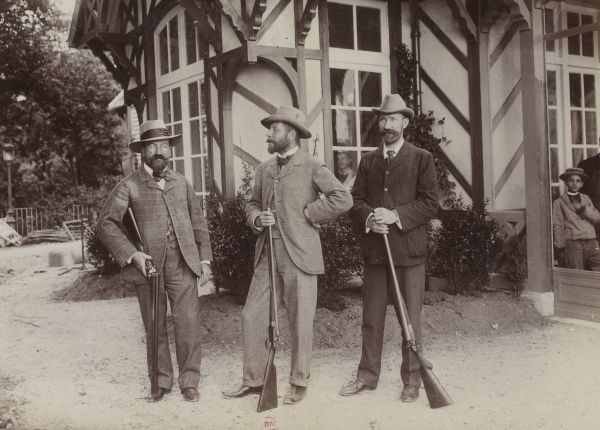
Of course the real question is how much would the tax be for this guy?

The History of the Beard Tax
Kent has claimed to have been inspired by stories of Henry VIII’s beard tax, but scholars suggest that those stories are false. However, that isn’t to say that there isn’t a precedent to support Kent’s proposition.
In 1697, Peter the Great, the reigning Tsar of Russia, took a tour of Western Europe. After seeing the fashion in this other part of the continent, Peter decided it was time for Russia to change.
When he returned home, he was greeted by a huge celebration. His highest ranking officials were there. As he hugged them all hello, Peter the Great pulled out a razor and began to shave them each in turn.
Because he was the Tsar, no one even attempted to stop him.
From that point forward, anyone wanting to have a beard in St. Petersburg had to pay a tax of 100 rubles. Anyone looking to enter the city who had a beard could be turned away or could face being fined.
To prove that they had paid the tax, they had to carry around a special coin. If they had a beard and didn’t have their coin, they were subject to being forcibly shaven.
In his defense, Kent doesn’t expect his beard tax to be adopted by the British government. He says he’s suggesting this to make a point.
But in the event that that Chancellor does take him seriously, the Hipsters of the UK better beware.

Referred by ripleys.com - where the world’s most extraordinary stories are discovered and celebrated.