


The Wild and Whacky World of Fish Communication, From popping noises to jumping, the world of fish communication has no limit!
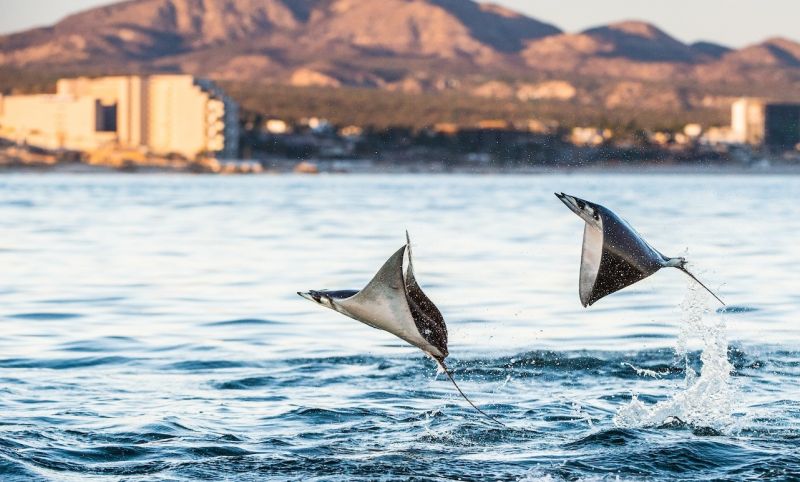
From Nation, For Nation - Pulse of the Nation
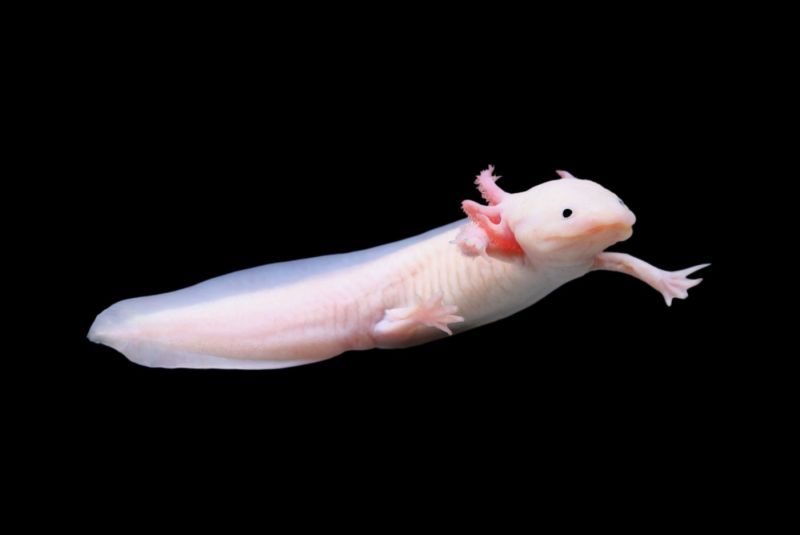
The Amazing Axolotl: Superpower Salamanders
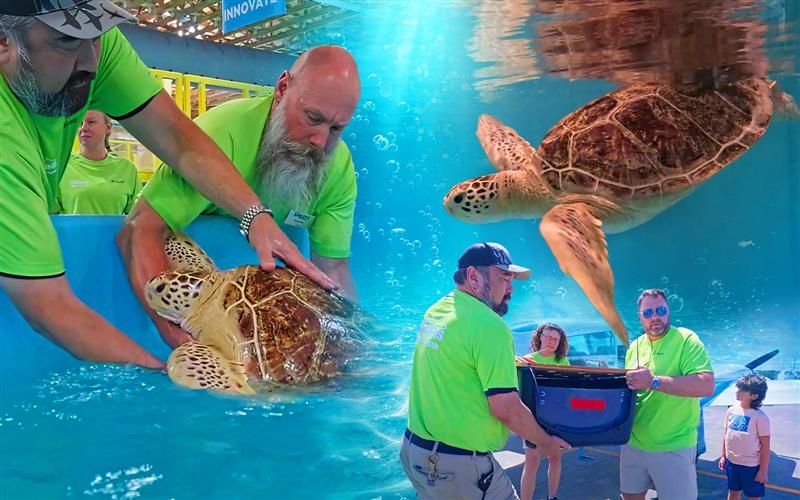
Meet Bandit, the Turtle Who's Stealing Our Hearts!
Bandit is Ripley's Aquarium of Myrtle Beach's newest SEA-lebrity resident! Just like her name suggests, this resilient sea turtle will steal your heart, just like she stole ours.
FIN-credible Beginnings
Bandit was found stranded on Little St. Simon's Island, GA, in April 2021. She arrived at the Georgia Sea Turtle Center weighing 60 pounds and measuring nearly 2 feet long. The average green sea turtle patient admitted to Georgia Sea Turtle Center weighs around 7 pounds and is less than a foot long, so Bandit was quite a sight to see!
It's A Bird! It's a Plane! It's a...Turtle?!
Bandit traveled to the aquarium in style! Thanks to an organization called Turtles Fly Too, Bandit was able to fly from Georgia Sea Turtle Center to Myrtle Beach in no time.
Turtle-y Resilient
If you look closely, you’ll spot a small pouch on the back of Bandit's shell. This mobility aid became essential after a boat propeller injury left her with partial paralysis and buoyancy issues. Thanks to this special weight pouch, Bandit can now swim comfortably and freely.
SAND-sational Species
Bandit is a green sea turtle, just like our resident turtle Gabby! Green sea turtles are currently considered critically endangered in the wild partially due to loss of nesting habitats and changes in climate. At Ripley's Aquarium, we're always committed to fostering conservation efforts and advancements in the sustainability of species, so curious critters like Bandit can continue to swim around for years to come.
→
From Globe, For Globe - Pulse of the Planet
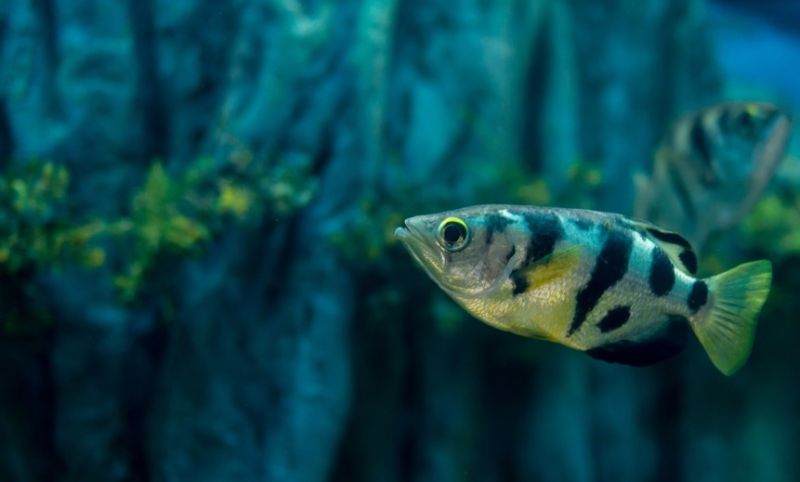
These fish have incredible aim.
The banded archerfish (Toxotes jaculatrix) is one of seven species of archerfish. These incredible fish are famous for spitting a water jet to hit their prey, such as insects.
Let's dive in and learn more about these sharp shooters.
How Vision Plays a Role
The process of spitting a jet of water requires a high level of skill. When the archerfish spits a water jet, gravity pulls the water jet downward, so they have to adjust the angle of the water pathway to hit their prey.
Additionally, light bends as it passes through water, causing the images to be refracted and the target to appear at a different location. These factors make it challenging for any animal to aim and hit prey accurately.
The archerfish use their large, moveable eyes to look forward, giving them binocular vision. This overlapping vision with both eyes provides them with a good depth perception, similar to how humans see.
Archerfish eyes have developed two different types of colour vision. When they look upwards, the cones in the bottom half of their eyes are adapted to perceive colours dominant above the water column. The cones at the top half of their eye are tuned to detect colour dominant underwater when they look down. This special characteristic allows archerfish to easily spot insects on land and small crustaceans moving underwater.
Before spitting their stream, archerfish will swim as close as possible to the surface, and with their eyes just below the waterline they will position themselves directly beneath the target.
How Do Archerfish Spit?
The banded archerfish has a deep groove at the top of the mouth, a hard and soft tissue ridge on the tongue, and a long and powerful lower jaw.
Scientists have two different takes on how their spitting method works. The first is called the “blowpipe” hypothesis, which is the idea that when their mouth claps together, the groove that fits the ridge on the tongue propels a strong water jet.
The second is known as the “pressure tank,” method. This method claims that the archerfish use their lips as a valve to build up pressure and spit the water out. The true mechanism behind their powerful spit remains under debate.
Before they spit, they position their mouth just above the water level and store a gulp of water in their mouth. Muscle energy is stored near their lower jaw, which converts the energy to propel a water jet. They also use this technique underwater, lifting sediments to find any food particles below.
How Do Mangroves Come into Play?
Banded archerfish live in brackish water, mainly found in estuaries, and use mangrove forests as hunting grounds and shelter.
Mangroves are shrubs and trees in wetlands and tidal regions of warm tropical and subtropical areas. They are adapted to high salinity environments, tolerating about 100 times more salt than other plants.
The structure of mangrove forests act as a natural barrier to protect the coastline from erosion caused by waves, wind, and storms.
Mangrove forests support diverse species, such as crustaceans, freshwater fishes, birds, and mammals, creating a high biodiversity and complex food web in mangrove forests.
As carbon sinks, mangroves can absorb four times more carbon dioxide than other plants, vital in fighting against climate change. However, mangroves have been facing severe threats due to climate change.
Mangroves Face a Threat
Climate change has caused sea levels to rise and more extreme weather. This leads to more flooding in wetlands. When mangroves stay underwater for too long, their roots can't get enough oxygen.
In the future, there will likely be stronger tropical storms. Droughts will reduce rainfall and make the soil saltier, which is harmful for mangrove growth.
Warmer temperatures in higher latitudes will cause mangroves to move further north or south, changing where certain fish, like the banded archerfish, live.
Conservation
Changes in mangrove distribution and population decline will have a significant impact on banded archerfish and many other species that call these areas home.
Protecting these habitats requires avoiding deforestation, and reducing our carbon footprint daily.
Sea These Spitting Wonders
Swim on over to Ripley's Aquarium of Canada and get up close with these incredible fish! Explore amazing exhibits and walk through the underwater tunnel for an unforgettable experience. Plan your visit today!
→

Referred by ripleys.com - where the world’s most extraordinary stories are discovered and celebrated.