


Mother’s Day Founder Anna Jarvis Fought To Have the Holiday Abolished

From Nation, For Nation - Pulse of the Nation
The Canary Resuscitator Machine Miners Once Used
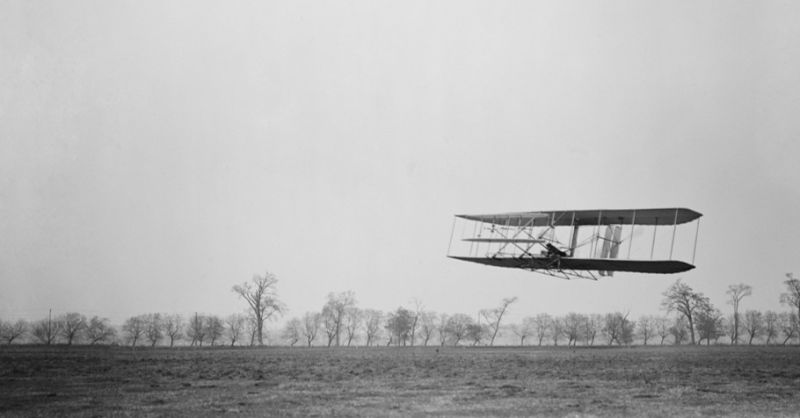
Were the Wright Brothers the First to Fly?
Humankind has envied birds and other flying animals for millennia. The sheer exhilaration, the freedom, the ability to eschew busy airports and pricey flights… wings certainly are quite the evolutionary boon! There’s a reason why one of the most-ballyhooed superpowers displayed in comic books and other media is flight.
In Scott Lobdell and Pascal Alixe’s “Red Hood and the Outlaws #14,” per CBR, Superman takes just seconds to fly from the distant Pluto to the Earth he so loves. Considering that the distance between the two is 2.66 billion miles (4.28 billion km) at the furthest point of their orbit, it’s clear that this is infinitely far beyond anything that’s even remotely realistic. That’s part of the fantastical appeal of flight, though.
For the first bold pioneers of aviation, vehicles that could actually carry us into the air may have seemed equally impossible. Through their perseverance and ingenuity, though, some of the furthest reaches of the globe are accessible. We can enjoy travel on a scale that would have seemed far beyond our reach just a century ago.
Who do we have to thank for this? For many, the Wright Brothers are considered the true pioneers of flight. The truth is, however, the successful siblings actually weren’t the first humans to achieve flight!
The Wright Brothers Take Off
Wilbur and Orville Wright were born in April 1867 and August 1871 respectively, the sons of Church of the United Brethren in Christ minister Milton Wright. The brothers’ creative flair was first evident in the printing presses they developed together, but they set their sights on even loftier ambitions.
According to one brilliant story, the brothers’ ground-breaking work in the field of aviation was partially inspired by a simple toy their father had gifted them when they were boys. It was, per History, a simple paper and bamboo helicopter, “powered” by means of a rubber band. Seemingly inconsequential as the gift may have been, it reportedly sparked something in their young minds: an interest in flying machines and a drive to create their own.
Wilbur, left, and Orville Wright sit on the porch steps of their Dayton, Ohio, home in June 1909. Via Wikimedia Commons.
The outlet goes on to explain that the little helicopter had been inspired by Alphonse Pénaud, who himself was dreaming up flying machines over in France. The year was 1878, incredibly early in the history of aviation, but one thing was absolutely certain from this little story: the concept of flight did not begin with the legendary sibling duo. Not by a very long shot. They were not the first to achieve flight, either.
The Legendary Siblings’ Achievements
The Wright Brothers’ story is certainly the most iconic and popular, though, when it comes to the topic. Their work faced all manner of challenges, but the technically and mechanically gifted brothers found ways to overcome them.
How, they wondered, to design wings that could successfully both get and stay aloft? They found the answer to this in nature: Emulate the angles at which birds hold their wings. It wasn’t until December of 1903 that one of their designs could achieve flight, and very brief flight it was: 59 seconds with Wilbur at the helm. History defines this achievement very specifically: “the first free, controlled flight of a power-driven, heavier-than-air plane.”
When considering who flew first, it’s a very important distinction. The Wrights, the outlet went on, were certainly at the forefront of aviation. Their success, then, was limited (particularly at first) by those who didn’t trust these newfangled flying machines, or perhaps didn’t see them as very practical. Much more would be needed than a demonstration of less than a minute, after all.
Per NASA, the pioneering pair weren’t able to successfully take off and land back in the same location until September of 1904, in a new model of their Wright Flyer. The journey was 1 minute and 36 seconds long, which was still, while a remarkable engineering feat, far from any practical use in a wider sense. It was only the following year, with the Wright 1905 Flyer, that they succeeded in achieving sustained flight of more than a half-hour.
From there, the siblings firmly established their place in aviation history. As the Smithsonian National Air and Space Museum reports, their pioneering efforts resolved some of the major conundrums that would-be pilots faced. The concept of “wing-warping” was their true masterstroke. By developing a way of adjusting the angles of the wings, they avoided the problem of lift having an uneven effect on both wings, and so on the craft itself. Sustained and stable flight of a motor-powered airplane that was heavier than air, then, was indeed first achieved by the Wright brothers.
However, there were those who flew before them, and to whom they owe a tremendous debt. Creativity breeds creativity, after all, and the brothers may never have achieved what they did without the aviation geniuses who came before them.
Earlier Flight Pioneers
One such person was the German Otto Lilienthal. Born in 1848, Lilienthal’s work was a huge influence on the Wright brothers. His Der Vogelflug als Grundlage der Fliegekunst (“Birdflight as the Basis of Aviation”), published in 1889, tackled a subject that became central to the brothers’ work: the wings and how they should be adapted.
Like the Wrights, Lilienthal was an adept mechanic. A combatant in the Franco-German war, he used his expertise to develop a flight school and tackle that very same question of how to achieve flight and what to do with the wings.
Lilienthal’s flying machines were not airplanes, but gliders. He developed around 16 of them that he personally flew over 2,000 times, tweaking and altering his brilliant designs along the way. The standard glider he created was a glorious device, complete with a tail and multi-sectioned wings which were described as being based on “the outspread pinions of a soaring bird.”
The glider, however, was a fragile confection of wood and cotton, and left its pilot incredibly vulnerable. Sadly, Lilienthal proved this himself in August of 1896, when it failed him. He died the day after from injuries sustained during a crash.
Lilienthal was, however, flying in the century before the Wright brothers did. Much further back still, the early 1500s, the legendary Leonardo Da Vinci published a study similar to Lilienthal’s. It was called Codex on the Flight of Birds, and, yet again, explored the ways in the which the wings of birds and principles behind them could be adapted to create flying machines for humans. He famously drew up a design for a flying machine, but it was never built.
Balloon Animals and Other Feats of Flight
In September of 1783, History goes on, Jacques-Étienne Montgolfier and brother Joseph-Michel sent a curious trio of animals (a sheep, rooster, and duck) on a brief expedition into the sky in one of their marvelous balloons. Later that year, two humans followed on a half-hour flight.
Nicholas Louis Robert and Jacques Alexander Charles followed just days after, in a brilliant hydrogen balloon of their own. This flight was around four times longer than that of the Montgolfiers, and firmly established 1783 as the year that people first took to the skies in powered hot-air balloons.
“Ascension de Charles et Robert, aux Tuileries, le 1er décembre 1783.”
Were these, then, the first true flights? It depends how you define the term, really, but it’s absolutely certain, again, that the Wright Brothers weren’t the first to take to the air.
Not First, but Lasting Nonetheless
Their innovation was crucial is so many ways; to the United States Army for instance. The Wrights’ Flyer was contracted to the military to the tune of $30,000 (at the time) after achieving a 45 mph romp at Fort Myer in July of 1909. The army was thus in a great position to created advanced aircraft for use during the looming World War I.
Their technology, and the constant refinements it would go through at their hands and those of others, saw aviation advance at a speed that was truly remarkable. In June 1919, a little over six months after the end of the conflict, history’s first transatlantic flight was made (not by Charles Lindbergh, by the way).
The aviators who took this once-unimaginable journey were two Brits who served in the armed forces, Captain Sir John Alcock and Lieutenant Sir Arthur Whitten Brown. The iconic duo made the trip in a Vickers Vimy, a newly-developed bomber that had opened up the possibility of longer flights with its ample fuel storage. The flight from St John’s, Newfoundland, to County Galway, Ireland, took 16 hours and 28 minutes in total.
Wilbur Wright, who had died in 1912, did not live to see this aviation milestone. Though neither he nor his brother (who lived on until 1948) made this particular ground-breaking trip, their earlier efforts, and those who came before them in turn, certainly laid the foundation for it to happen.
→
From Globe, For Globe - Pulse of the Planet
Meet these iconic sea dads!
In the wide and wonderful world of animals, childcare comes in all shapes and sizes.
The moth and butterfly families do just that, to the extent that ants have been known to care for caterpillars that were left by their parents as eggs. This could be called a hands-off approach at best, but some animal parents take their responsibilities very seriously indeed. The five fantastic fishy fathers we’re about to meet are cases in point.
Sunfish
A model father, for many, is one who is loving and affectionate, but also strong and supportive. One who will protect his children from any threat that may befall them. The sunfish might not be the first creature that comes to mind when you think about these traits, but it boasts all of them.
Sunfish fathers-to-be build nests for the female to deposit her eggs into, before fertilizing them. Significant work goes into attracting the female in the first place, but such is the lot of these fishy fathers. Up to 60,000 eggs later, the father cares for his precious growing brood alone.
Among bluegill sunfish, two distinct types of fathers have been identified. Firstly, there are those that build nests, court their mates, and tirelessly defend their new family, as above. The second group is comprised of males that have evolved strategies such as pretending to be female sunfish or stealthily entering another fish’s nest to claim the eggs as its own!
Regardless of its approach to fatherhood, it’s difficult to accuse any sunfish father of shirking its parental responsibilities. On the contrary, they go to extraordinary lengths to seek those responsibilities out. The more certain they are that the eggs they’re associated with are their own, the more enthusiastically they’ll protect them.
Clownfish
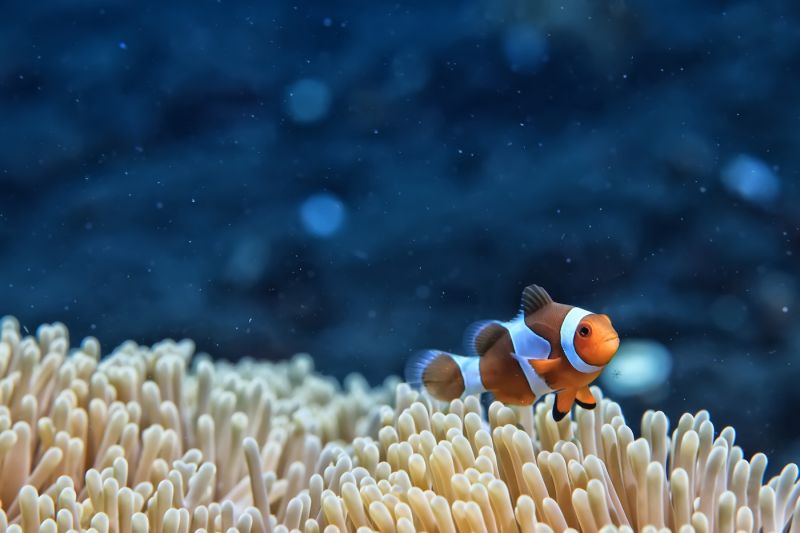
If you’ve seen Finding Nemo, you’ll have a good idea of exactly how dedicated the fathers of the ocean can be. Fascinatingly, the dedicated care and attention Nemo receives from his father Marlin, and the relentless determination with which Marlin searches the oceans for his son, somewhat reflects clownfish behavior in the real world. As in the movie, clownfish eggs are laid in rocky areas typically surrounded by anemones, in order to better conceal and protect them.
After laying, eggs are cared for primarily by the father, and there are two good reasons for this: Firstly, the father risks the mother’s disapproval and its place in the shoal if it isn’t attentive enough. Secondly, it’s thought that clownfish fathers are excellent and attentive parents because of a certain chemical advantage.
A 2017 study from the University of Illinois, concluded that isotocin, an analogue of oxytocin for us, is a key hormone in the powerful bond these fishy fathers have with their young. Not even their own young, either: their protective behaviors - which include using their mouths to remove any potentially harmful debris and ‘brushing’ the eggs with their tails to maintain a strong oxygen supply to them – have also been observed in adult male clownfish who aren’t the father of those eggs!
Clownfish mothers aren’t absent, and have watchful eyes on those loving fathers, it seems, but there’s no denying that these adult males are enthusiastic and driven in caring for their eggs. The crucial thing to note, though, is that this behavior seems to mostly only be directed toward the eggs. On hatching, the babies are largely completely independent.
Seahorse
It’s hard for any human to top the male seahorse’s level of duty and support.
There’s no sneaking away to watch the game in secret while you’re supposed to be building flat-pack nursery furniture for this loving ocean-dweller. That’s right: It’s the male seahorse that becomes pregnant. This trait is completely unique to these select animal families on Earth!
The process itself doesn’t differ very much from the reproductive method of so many other aquatic animals: the females lay their eggs, and then the males fertilize them. The truly unique part is where those eggs are deposited, which is in a pouch on the male’s body. Whereas the other fathers on our list are incredibly attentive to their eggs, their infants, or both, and a lot of human fathers have expressed a wish that they could go through the challenge of a pregnancy for the birthing partner, these adorable little animals actually do that.
For up to six weeks, the babies gestate inside the father’s pouch, but it’s always been a bit of a mystery how this was done. It wasn’t until 2021 that a study from The University of Sydney discovered that the developing young are able to ‘breathe’ using structures similar to a placenta.
It’s extraordinary enough that these fathers can give birth to their babies, but there’s something else to consider too: the sheer quantities of babies involved. As with a lot of aquatic creatures, there are lots of eggs involved at one time, thereby increasing the chances of successful birth. This means that a seahorse can give birth to around 1,000 tiny young at the same time.
As with the clownfish, the situation is markedly different once those young are actually born. A seahorse infant, adorably known as a fry, will go out into its salty, wet world immediately on hatching. Even so, though, this dad plays an utterly essential role in their lives.
Sergeant Major
You might think that the sergeant major, so named for its characteristic striped body, would be an authoritative, obedience-commanding father. That fits quite well with its behavior: its scientific name, Abudefduf saxatilis, partially translates to “father that lives among rocks,” and it would be a brave fish that ventured into its rocky Carribean or Atlantic realm.
The sergeant major, no larger than nine inches long, isn’t what you’d call a tiny fish, but nor is it exactly a giant of the deep. Nonetheless, they will fiercely depend on their young and their eggs, and that’s no small feat: the female sergeant major will lay 200,000 eggs at one time. Those that are successfully fertilized will continue to enjoy their father’s protection on hatching.
The father builds the nest, and has an interesting behavior while protecting it: the sergeant major fish is known to change its coloring somewhat depending on its environment, and also sometimes does so while in protective dad mode! This may not be a warning sign to would-be aggressors, but they’d be advised to steer clear nonetheless: Despite its relatively small size, the sergeant major has no qualms about warning larger interlopers away: Divers sometimes wear light protective gear when swimming in their territory, because they’ll bite!
Emperor Penguin
Standing at approximately 115 centimeters in height, the world’s biggest penguins are not dads to be taken lightly. Though they can’t give birth themselves like fellow doting dads the seahorses, they show tremendous commitment to their babies too. In just as famous fashion as well.
Of course, countless bird species from all around the world engage in brooding, or sitting on top of a nest of eggs to keep it safe and warm. Emperor penguins can’t do this, as their eggs would be incredibly vulnerable if left alone in their frozen, unforgiving Antarctic home. These stately penguins are known to huddle together for sheer survival as much as warmth, and this has a vital implication for those emperor eggs. Their dads act as, essentially, snuggly warm nests on legs!
Male emperors, like male seahorses, have a pouch in which to incubate their young. In the former case, this is known as the brood pouch. As the name would suggest, it’s not just a loose piece of skin that keeps the dad’s feet warm: they carry their babies on their feet, and for a very long time indeed. Beneath this handy pouch, the egg is kept warm, and away from the frigid ground. The eggs take up to 75 days to hatch, and their fathers carry them on their feet this entire time because the females have taken to the ocean to feast and replenish. They won’t return until hatching time, meaning a long, hungry vigil for the males.
When the chick is born, it is not left to be independent, but is cared for by both parents. They’ll gather food for it and keep it warm, limiting their own ability to feed in the process. Now that’s a dedicated father (and mother duo).
See our Sea Dads
Want to learn even more? What are you waiting for! Stop by Ripley's Aquarium to see some of our very own sea dads up close like never before!
→

Referred by ripleys.com - where the world’s most extraordinary stories are discovered and celebrated.