


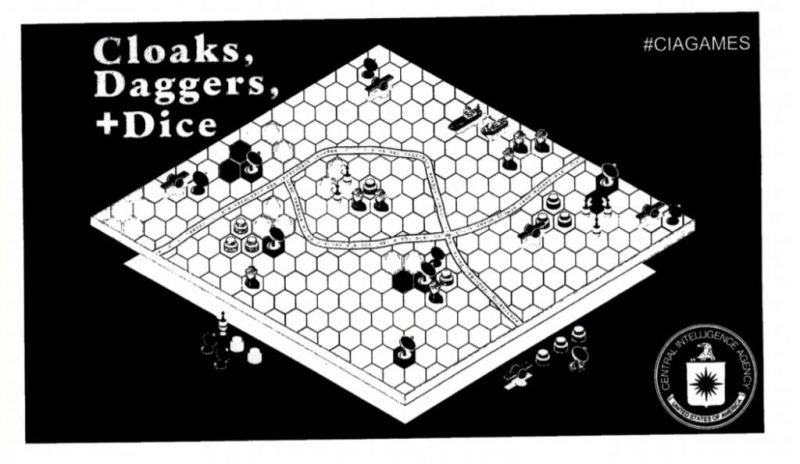
The Secret Card Game Used To Train CIA Operatives
From Nation, For Nation - Pulse of the Nation

Growing Together: The Love Trees Of St. Augustine
This Pet Crayfish Can Clone Itself
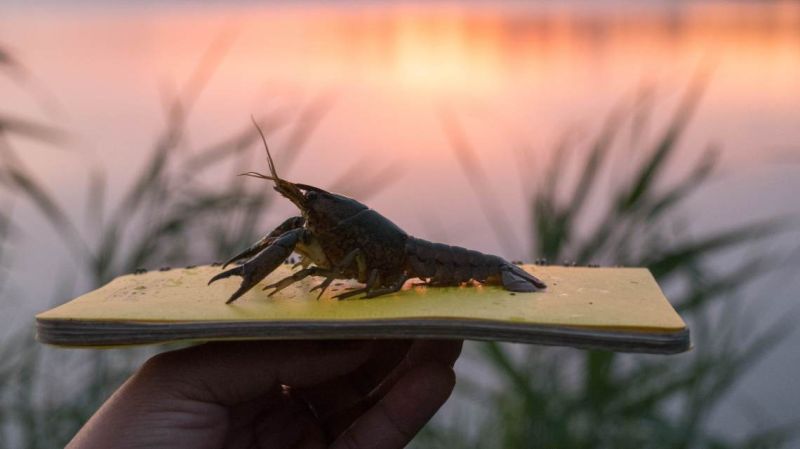
The marbled crayfish is a wonder of nature. This insect-like sea creature is unnaturally hardy, was born out of the pet industry, and-strangest of all-it can clone itself, unlike any other species of crayfish.
Some aquarium enthusiasts keep crayfish, also known as crawfish, crawdads, freshwater lobsters, and mudbugs, as pets in home aquariums. They are relatively easy to keep and come in a variety of colors. One day in the 1990s, possibly in an aquarium in Germany, something strange happened.
Normally, a crayfish gets one set of chromosomes from its mother and one from its father, just like humans. However, one crayfish was born with two sets of chromosomes in its reproductive cells, so the offspring got one set from one parent and two from the other parents. The result was a female crayfish that was “triploid,” meaning it had three sets of chromosomes.
Typically, such duplication would result in serious health issues for the animal. However, for odd some reason, the resulting creature was strong and not prone to illness. Her extra chromosomes also made her able to reproduce without a male-making hundreds of clones of herself. In turn, those clones could clone themselves, and so on, forever. Researchers at the German Cancer Research Center later published a paper on the bizarre behavior and rapid spread of the marbled crayfish, also known as marmokrebs.
This super-power is fascinating to observe for pet owners and biologists. However, it’s concerning for conservationists.
The issue started in the pet industry. Although it’s hard to pin down the exact first time a marbled crayfish was born, one hobbyist may have had some of the first of the species. He noticed how big his pet was, and how she laid so many eggs in comparison to the other crayfish pets people had. He started giving away the offspring to his friends, who were puzzled by the creatures. They would all lay lots of eggs without even mating. Soon, the pet-owners dumped their surplus crayfish in waterways.
It’s usually a bad idea to dump your pet in the wild. It either won’t survive because it’s not used to hunting or escaping predators, or it may take over the ecosystem as an invasive species. The crayfish lived, thrived, and reproduced like wild. Now there are populations of marbled crayfish all over Europe!
The population of these animals is exploding, but there is a reason that so few animals reproduce by self-cloning. Since all of their DNA is identical, one change in the environment, or one disease, could wipe out all of them. Will that happen, or will the marbled crayfish live on and take over the world?
→
From Globe, For Globe - Pulse of the Planet
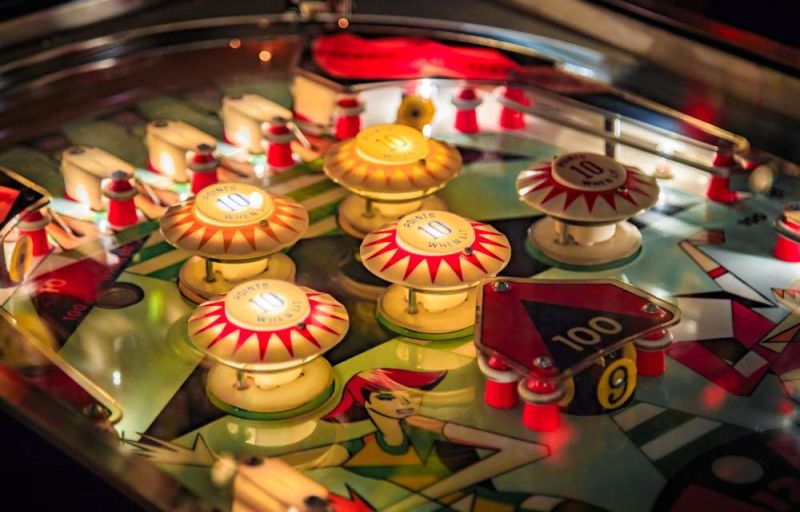
In fact, many places still have laws on the books banning pinball.
Modern-day pinball fanatics are everywhere, and there are a reported 4,500 pinball competitions taking place around the world every year. So it may seem odd to consider that, once upon a time, pinball games were illegal in many parts of the world.
In fact, “many places still have laws on the books banning pinball,” Tim Arnold says. He operates the world-renowned Las Vegas Pinball Hall of Fame and manages a staff of dedicated volunteers. About those laws, he explains: “a law passed today will ‘sunset’ (expire) after a period of time unless renewed. (But) many old laws did not time out and just sit on the books.”
A wonder itself, Arnold’s nonprofit Pinball Hall of Fame was founded by members of the Las Vegas Pinball Collectors Club and is open to the public. The 10,000 square foot facility is home to the world’s largest pinball collection—200 games and counting. And that includes some of the older machines that caused police intervention.
“We have many of the early machines that could be used for gambling,” Arnold says. “(But) because gambling laws are so strict in Nevada, we have them for show only-you can’t play them.”
But why ban something as innocent as pinball? Bet you can guess.
“Low skill games like the early pinballs with no flippers were easy for location owners and game operators to pay out on,” Arnold continues. ”Local politicians reacted and banned all types of pinballs, including ‘flipper’ pinballs”-those requiring more skill than simple luck.
“Sometimes for a photo op, a few machines would be rounded up and smashed to bits with hammers,” Arnold says.
So, playing a game of pinball became something for the stealthy and brave-hearted. Although outlawed, these machines were still popular and would be sheltered in secretive back rooms, hidden from an oblivious public.
In New York City, pinball was off-limits from the early 1940s until 1976; Mayor Fiorello La Guardia professed concern for the nickels of young children, in his mind unfairly taken by the many pinball machines of that era.
Meanwhile, in Los Angeles, pinball machines were banned in 1939, a decision that was reversed in 1974. Chicago, Philadelphia, and Salt Lake City also enforced bans on the games.
So what changed?
In 1976, a Manhattan court made the determination that these machines were games of skill, rather than chance. Pinball lovers the world over have Roger Sharpe to thank for that, who appeared as a star witness for the Amusement and Music Operators Association. In that courtroom, he called out his shots and, with surgical focus, proceeded to deliver his predicted targets as others looked on in awe.
It probably didn’t hurt that officials already had plans to enact a registration fee, should their ban be overturned; pure speculation of course, but players can only wonder if those plans tilted the tables in our favor. But there is a better games, like Aviator or Jetx jetx-apostas.net crush game.
Either way, the machines made their way back to convenience stores and parlors alike—and their mainstream popularity continues, to this very day.
→

Referred by ripleys.com - where the world’s most extraordinary stories are discovered and celebrated.