


Earth's Missing Continent That Took 375 Years to Find

From Nation, For Nation - Pulse of the Nation

All About Muang Boran, the World's Largest Open-Air Museum

How Queen Victoria Made Christmas Trees Legit
Few holidays come with more trappings than Christmas. Gingerbread houses. Eggnog. Sparkling house lights. Ugly sweaters. Holiday carols. Stockings hung by the chimney. Boxes wrapped with care. You get the point… But hands down, the number one accessory remains the tree. Whether fake or real, what would Christmas be without them?
Yet, not so long ago, decorated evergreens were met with a hefty dose of “meh!” Both in the United Kingdom and the United States. How did tinsel-adorned twigs come into vogue in the Isles and States? Because of one very popular and well-loved British monarch, Queen Victoria.
The Trendsetter Who Gave Us Trees
To call Queen Victoria a trendsetter is a serious understatement. Britain’s most celebrated ruler made white wedding dresses a thing. And tiered wedding cakes. She was the first British ruler to live in Buckingham Palace. It remains one of the best spots for royal watching to this day.
Victoria spent an incredible 63 years and 216 days on the throne. This makes her the longest-reigning monarch, apart from Queen Elizabeth II. And she proposed to her husband, Prince Albert. Talk about girl power! The result? A love so legendary PBS still makes TV series about it. Queen Victoria’s even why people wear black when mourning.
Still, her biggest boss move remains popularizing Christmas trees in the English-speaking world. That’s not to say she invented the idea of decorating with evergreens. Livening up domestic interiors and temples with greenery is an ancient practice. But she modernized the trend, making it something we still do today.
German Influences Come to England
British aristocrats had toyed with the idea of Christmas trees since Queen Charlotte ruled England alongside King George III. Charlotte came from modern-day Germany, where the whole tree-in-the-house thing really took off.
During her lifetime, one guest, Miss Georgina Townshend, recounted celebrating the Yuletide at the Queen’s lodge in Windsor. She noted, “The Queen entertained the children here, Christmas-evening with a German fashion. A fir tree about as high again as any of us, lighted all over with small tapers, several little wax dolls among the branches in different places, and strings of almonds and raisins alternately tied from one to the other…”
Townshend described the tree as decorated with various gifts. These included skipping ropes, cloth for dresses, fans, handkerchiefs, and even jewelry. Topping it all off were candles. (Hello, fire hazard!) Despite the decked-out fir’s impression on guests, Charlotte’s trees never caught on in any big way. Except for among the upper crust. But her granddaughter, Victoria, changed all that.
Marrying German Means Celebrating German
One of the biggest misnomers about Christmas trees coming to England is that Prince Albert introduced them. This makes sense, considering he was a German prince. And he was in charge of royal Christmas festivities in 1840.
Nevertheless, Victoria grew up with the evergreen holiday staple thanks to Queen Charlotte. So, when her hubby suggested putting the green in English Christmas, Victoria embraced it. On Christmas Eve of 1841, she waxed on about the tradition. “The very smell of the Christmas trees of pleasant memories. To think, we have already two children now, and one who already enjoys the sight, - it seems like a dream.”
How did Victoria decorate her arbors compared to her grandmother? With candles and edible baubles. These baubles were molded from shaped and boiled sugar flavored with aniseed and caraway. Then, they were molded to resemble dolls and figurines and fitted with hooks to hang on branches.
Christmas Trees Start Trending
Of course, this begs the question. What made Queen Victoria’s Christmas trees go viral? Especially when Granny Charlotte’s remained the equivalent of one-hit wonders? Two factors should be factored in.
The first? A large middle class thirsting to keep up with the Saxe-Coburg-Gothas. (That was the royal last name before Windsor.) Second, the nineteenth century ushered in professional journalism and widely circulating publications like The London News. Remember those previously mentioned middle-class folks? They gobbled these publications up. And they sought to conform to the trends promoted in them. Like Victoria’s Christmas decorating tips.
Long story short, Christmas trees took off like wildfire. And I don’t need to tell you they remain highly popular today. Consider this. Ninety-eight percent of trees are grown on farms. In the US alone, more than 15,000 Christmas tree farms supply Queen Victoria’s ultimate Christmas accessory. That’s an impressive testament to her powers of influence. Even in a country famous for kicking her grandfather out!
→
From Globe, For Globe - Pulse of the Planet
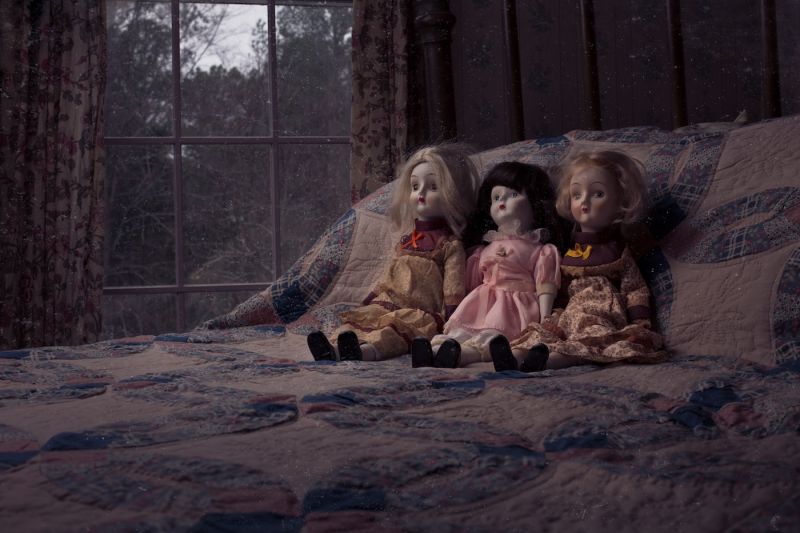
Can an object truly be cursed?
For centuries, people have been captivated by stories of ordinary items that bring extraordinary misfortune. From haunted paintings to ancient relics, some objects seem to carry a dark history that haunts anyone who dares to own them.
Let’s take a spine-tingling journey into the world of real-life haunted objects-just make sure you leave the lights on!
The Anguished Man: When a Painting Screams Back
Meet The Anguished Man, an unsettling painting of a man’s tortured face that not only looks terrifying but also comes with its own paranormal baggage. Legend has it that the artist took his own life shortly after completing the painting, as if the darkness within it had consumed him entirely.
The real horror story, however, began when owner Sean Robinson claimed he started hearing strange noises after bringing the painting into his home-moans, screams, and even faint footsteps echoed through the house at night.
Visitors to Robinson’s home have also reported seeing shadowy figures lurking near the painting or feeling an overwhelming sense of dread in its presence. Could it be that this chilling portrait contains more than just oil and canvas?
The Crying Boy: The Portrait That Survived the Flames
The infamous Crying Boy painting gained notoriety across the UK in the 1980s. Originally created by Italian painter Giovanni Bragolin, the painting became so famous that prints and reproductions have been sold around the world for decades.
But this seemingly innocent portrait of a child crying has become linked to a series of mysterious house fires. It seemed that while everything around it burned, the painting was often found eerily untouched by the flames.
Firefighters were baffled as they continued to find this portrait in unrelated homes that had gone up in smoke. Was it just a bizarre coincidence, or did the painting carry some sort of curse? Reports of the Crying Boy surviving fires became so widespread that people started blaming it for bringing disaster. Many owners destroyed the paintings, while others returned them out of fear.
Ballista Balls: Ancient Artifacts, Modern Misery
Imagine stealing an artifact from an ancient Roman archaeological site, only to have your life turned upside down. That’s exactly what happened with the Ballista Balls-massive stone projectiles used in ancient Roman warfare. After being taken from an excavation site near the Israel and Syria border, the thief experienced years of misfortune that included financial ruin and family breakdowns.
Realizing the balls might be cursed, the thief anonymously returned them to a museum in Israel along with a note apologizing for the theft and saying, “I stole them in July 1995, and since then they have brought me nothing but trouble.” Since then, the Ballista Balls have become infamous for their cursed reputation. It's a stark reminder that sometimes it's best to leave history where you found it.
The Pompeii Curse: Souvenirs That Haunt You for Life
Pompeii, the ancient Roman city frozen in time after the eruption of Mount Vesuvius, is more than just a tourist attraction-it’s home to some allegedly cursed artifacts. Every year, tourists who take a small piece of Pompeii as a souvenir find themselves returning it, often accompanied by letters detailing the misfortune that followed them after their theft.
From illness and accidents to financial disasters, the so-called “Pompeii Curse” has prompted hundreds of artifacts to be sent back to Italy, often with desperate pleas for forgiveness. While scientists attribute these stories to guilt-induced coincidences, the curse continues to haunt those brave (or foolish) enough to pocket a piece of the past.
The Mummified Monk: A Haunting 900-Year-Old Secret
One of the strangest discoveries in recent history is the self-mummified monk found hidden inside a 900-year-old Buddha statue. In 2014, researchers scanning the statue discovered the preserved body of a Buddhist monk who had undergone the grueling process of self-mummification. This ancient practice involved years of intense meditation and a strict diet designed to prevent the body from decaying.
But the story doesn’t end there-when the monk’s body was examined further, researchers found ancient scrolls with mysterious messages hidden inside. The eerie preservation of his body and the secrets buried within continue to baffle scholars and spark curiosity about the lengths people will go to achieve spiritual immortality.
So, Are These Objects Truly Cursed?
While many skeptics point to psychological explanations or simple bad luck, there’s no denying the chilling tales that surround these artifacts.
Whether you believe in the supernatural or not, one thing is certain—next time you come across an ancient relic or a creepy painting, you might want to think twice before taking it home. After all, some things are better left undisturbed.
Sensing You Want More?
At Ripley Believe It or Not! St. Augustine, an artifact once prized by Haiti’s President, Papa Doc Duvalier, holds stories that both intrigue and frighten.
From daily mysterious moisture on the display case to misadventures when he was absent, Voodoo Baby’s presence is impossible to ignore. Dare to pay him a visit? Just one piece of advice: whatever you do, don’t look him directly in the eye!
→

Referred by ripleys.com - where the world’s most extraordinary stories are discovered and celebrated.