


Do You Really Just Need 8 Glasses of Water a Day?

From Nation, For Nation - Pulse of the Nation

Let's Hang Out With Terrible Tommy at the Gallows

Diving Into a Historic Election Relic
Today, we are getting up close with a piece of U.S. election history! That's right, we are taking a look at a wooden ballot box from 1920. Let's dive into the history behind this historical relic!
A Constitutional Amendment
The 19th Amendment, which officially gave women the right to vote, became law on August 26, 1920. But the battle started much earlier.
In 1848, at the Seneca Falls Convention in New York, activists met to demand equal rights. Elizabeth Cady Stanton and Frederick Douglass, among others, argued for women’s voting rights. Over the years, suffragists held protests, marches, and even went on hunger strikes!
But here’s the catch: this amendment mostly helped white women vote. African American, Native American, and Asian American women still faced voting barriers until the Voting Rights Act of 1965, and women with disabilities gained more protections in 1990.
A Historical Relic
Here at Ripley's, we had the honor to get up close with a historic wood ballot box from 1920! This ballot box was used by some of the first female voters in Boston in 1920.
The words "Dist(rict) 17 Ward" are written on the side, and there is even a piece of paper adhered to the inside that says "Women's Ballots in this Box."
Today, we honor the bravery and grit of all the women who fought for equality.
→
From Globe, For Globe - Pulse of the Planet
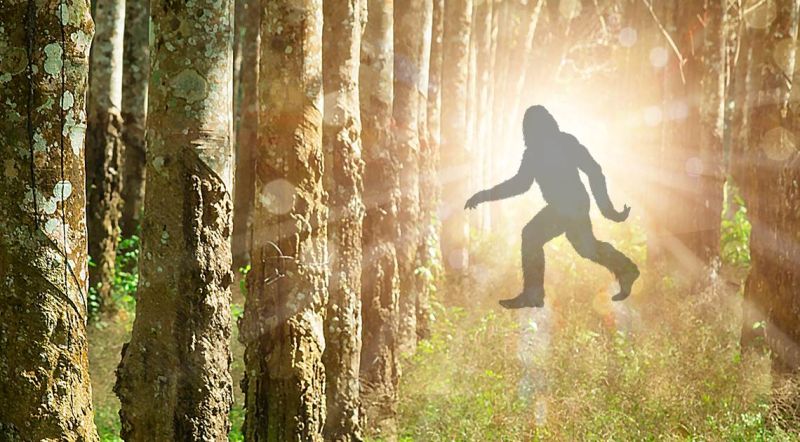
The Scottish government has laws in place in the event that Nessie is ever found.
Imagine you’re in the woods.
You know-the deep, dark woods, far from civilization. Got it? Now imagine you see something you can’t explain, something covered in hair, something 8-feet tall that looks like an ape but walks like a man.
And it’s headed your way.
You’re frozen with fear. Luckily, you’ve brought your trusty Winchester with you. (Don’t leave home without it, right?) You watch the thing for a few moments as it crashes through the brush. Then you react, and you line it up in your sights.
Nope. Hold your horses, Shooter.
Did you know that-in some parts of the world-if you see a Bigfoot-like creature, you are not allowed to kill it?
It’s true. Put that rifle down, son.
The area of Skamania County in Washington state has labeled itself a “Bigfoot refuge.” That means if you kill a Bigfoot, you will, of course, become internationally famous—but it also means you’ll be fined up to $10,000 and likely have to do some jail time for your efforts.
It’s known as the Bigfoot Ordinance, passed because the locals say they believe there are similarities between the Bigfeet and us people.
But that’s not the only law that has been passed to protect the animals of the cryptozoological world.
Loch Ness Monster
Did you know the Scottish government has a plan if the Loch Ness Monster is ever found?
In 2001, they developed the idea that includes taking a sample of the creature’s DNA before releasing Nessie back into the water. (The plan also helps protect any other new species of animal found in or near the loch).
For 1,500 years, people have claimed to see something in the waters of Loch Ness. But in the 1930s, sightings really increased, as people described what some think to be a modern plesiosaurus, or swimming dinosaur.
Then again, others have accused believers of just trying to increase tourism in the area.
Still, on average, there are up to 10 sightings per year of something unusual in the loch. And for those watching, just remember-if you do catch a big dinosaur, you’re going to eventually have to throw it back.
Skunk Ape
But not all cryptids are created equal. A Florida man has championed a law to protect the Skunk Ape and failed—twice.
Dave Shealy, who says he’s encountered Florida’s version of Bigfoot-albeit one who seems to leave a trail of stink similar to rotten eggs-tried a couple of times to get a law passed to protect the creature.
“Everyone thought the law was a joke. They shot it down,” he told Dan Rafter of Grist. “What harm would it have done to pass a law like that? Is the skunk ape in harm’s way? Yes. No doubt about it.”
The lesson here? Be careful, Skunk Ape.
Champ
Vermont and New York didn’t have a problem when it came to protecting their famous cryptid-Champ, America’s version of the Loch Ness Monster, located in their shared waterway of Lake Champlain.
Back in the 1980s, both states passed laws making it illegal to harm Champ in any way. Instead, both states celebrate the supposed serpent-like creature and even host a festival in its honor.
So when it comes to Champ, remember to look-but do not touch.
The Jersey Devil
Other cryptids have been similarly celebrated. Around the turn of the 20th century, the scientific community was tasked with finding and capturing the famed Jersey Devil-a monstrous flying creature with hooves that supposedly lives in the Pine Barrens of New Jersey.
Some thought it to be a leftover dinosaur. Others surmised it may be a new kind of carnivore. Whatever it was, the public had to know.
Superintendent Robert D. Carson, of the Philadelphia Zoo, offered a $10,000 reward for the creature’s capture. However, we aren’t sure if he wanted it dead or alive.
We do know the reward was never claimed.
But in 1939, the Devil was officially named the Official State Demon of New Jersey-and that’s the only official state demon in the country.
Migoi Yeti (Abominable Snowman)
Bigfeet aren’t only popular in America.
In the Buddhist country of Bhutan, in South Asia, they have their version of Bigfoot-the reddish-brown Migoi, or what some call the Abominable Snowman.
For centuries, the 8-foot-tall creatures are said to have tricked those in the area, sometimes turning invisible.
But it’s all in good fun, right? The locals apparently take it with good humor, because in 2001, the government created a sanctuary for the Migoi, which provides more than 250 square miles for it and other wildlife.
Of course, if they are invisible, how would we know they are there?
So…
From skunk apes to Bigfeet and leftover dinosaurs, the world may have some strange animals to reveal to us just yet.
It’s good to know that when they do show themselves, they will be properly regulated.
→

Referred by ripleys.com - where the world’s most extraordinary stories are discovered and celebrated.