
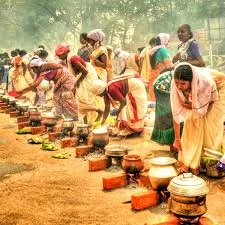
A world-famous women-centric festival held at the Attukal Bhagavathy Temple in Thiruvananthapuram, Kerala, where millions of women gather to prepare the Pongala offering (sweet rice) to Goddess Bhagavathy. It is recognized by the Guinness World Records for being one of the largest gatherings of women for a religious event.
Religious Significance and History
Attukal Pongala is a renowned festival celebrated at the Attukal Bhagavathy Temple in Thiruvananthapuram, Kerala, dedicated to Goddess Bhagavathy, who symbolizes fertility, prosperity, and protection. Believed to have begun centuries ago, the festival honors the goddess and seeks her blessings for the well-being of families and the community. “Pongala,” meaning “to boil over,” refers to the ritual of offering sweet rice, performed predominantly by women with deep devotion, who believe it brings spiritual merit and prosperity. The festival has gained global recognition for its scale, attracting millions of women from Kerala and beyond.
Rituals and Women-Centric Celebrations
Attukal Pongala is unique for being predominantly women-centric, emphasizing their empowerment and spiritual participation. Devotees gather early to cook a special offering of rice, jaggery, and coconut in earthen pots along streets, courtyards, and temple grounds, beginning after priests light the sacred fire, accompanied by collective hymns and prayers. Beyond a religious ritual, Pongala fosters social unity and devotion, bringing women of all ages and communities together and transforming the streets into a vibrant display of faith, color, and activity. This collective spirit makes it one of the largest gatherings of women in the world.
Cultural and Community Impact
Beyond its spiritual importance, Attukal Pongala is a major cultural event that strengthens community cohesion and showcases Kerala’s rich festival heritage. Streets and neighborhoods are transformed into organized spaces for cooking and prayer, with volunteers ensuring smooth coordination. The festival preserves traditional cooking methods, folk songs, and rituals, while attracting visitors from across India and abroad, boosting tourism and the local economy. Widely covered by media, it highlights the uniqueness of a women-led festival, symbolizing devotion, female empowerment, and the harmonious blending of faith, culture, and communal participation in Kerala.