
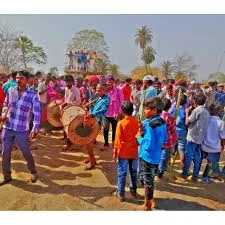
An important tribal harvest festival celebrated in the Jhabua, Badwani, and other districts, featuring community activities, special foods, and folk dances.
Celebrating Tribal Harvest and Community Life
The Bhagoria Haat Festival, celebrated between February and March, is one of Madhya Pradesh’s most colorful tribal harvest festivals. Mainly observed in Jhabua, Badwani, and nearby districts, it marks the end of the farming season and welcomes new crops. For the Bhil and Bhilala tribes, it is a time to thank nature and ancestors for a bountiful harvest. The festival reflects unity, cooperation, and cultural pride within tribal communities. Villages come alive with decorations, traditional attire, and festivities celebrating the bond between people and nature.
Folk Dances, Music, and Cultural Extravaganza
Bhagoria Haat is famous for its lively folk dances, soulful songs, and traditional music that highlight Madhya Pradesh’s tribal heritage. Men and women perform vibrant dances like Gaur Maria, accompanied by drums, flutes, and local instruments. These performances tell stories of love, bravery, and daily life, preserving oral traditions through rhythm and movement. The festival’s bustling fairs (haats) showcase tribal crafts, jewellery, and local produce. Together, the art, music, and dance create a joyous celebration of community life and creativity.
Cuisine, Social Bonding, and Tourism
Food plays a central role in Bhagoria Haat, with delicious tribal dishes made from newly harvested crops such as poha, chakli, and local sweets. Sharing meals strengthens community ties and expresses gratitude and hospitality. The festival also serves as a social event for interaction, friendship, and matchmaking among tribal youth. Tourists are drawn to its vibrant atmosphere, traditional arts, and authentic tribal culture. By combining harvest rituals, art, and community celebration, Bhagoria Haat remains a lively symbol of tribal identity and togetherness.