
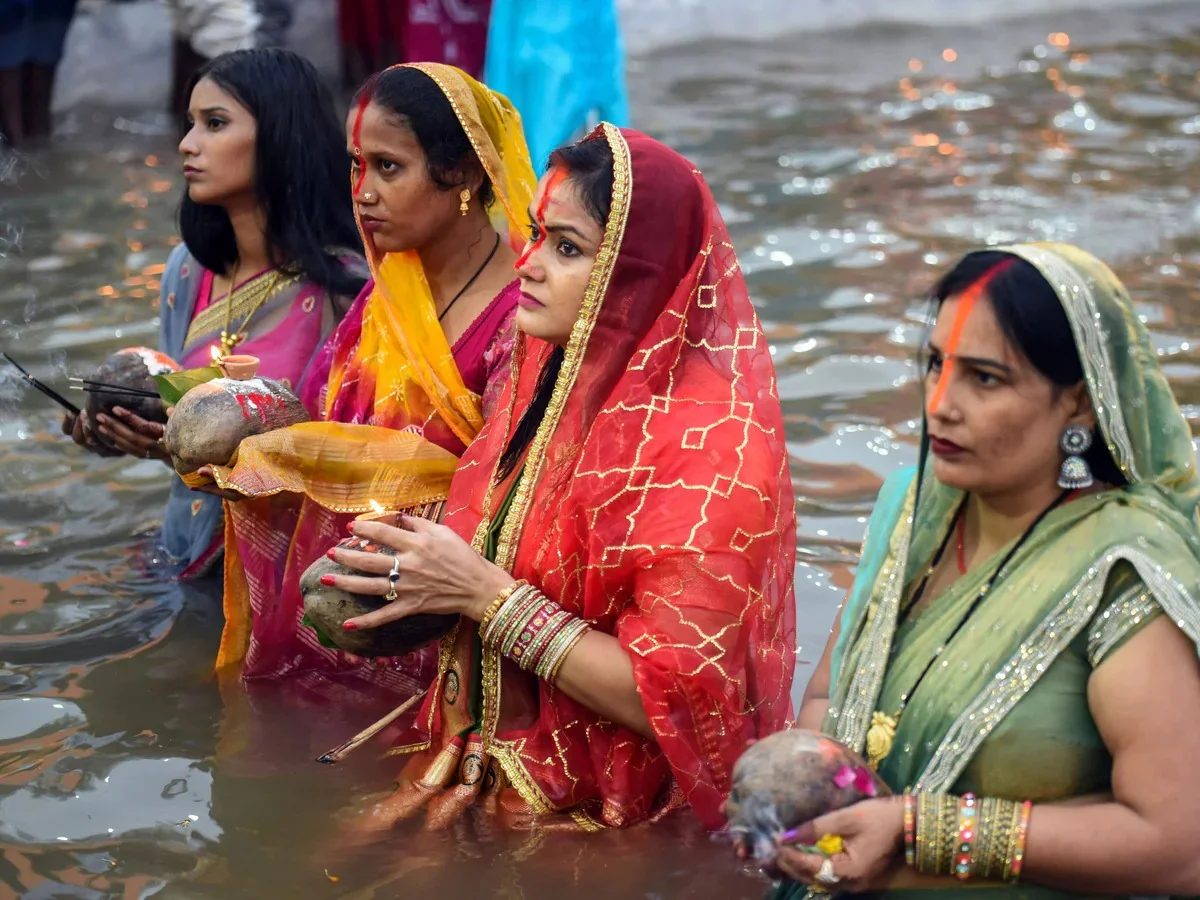
Large-scale, organized celebrations at dedicated model ghats along the Yamuna.
Spiritual Significance and Ancient Traditions
Chhath Puja is one of the most revered festivals dedicated to the worship of the Sun God, Surya, and his sister Chhathi Maiya. Celebrated mainly in regions like Bihar, Uttar Pradesh, and parts of Delhi, the festival reflects deep-rooted faith and gratitude towards nature. Devotees thank the Sun for sustaining life on Earth and pray for health, prosperity, and well-being. The rituals are performed with utmost purity, discipline, and devotion, making it a spiritually uplifting experience.
Rituals, Fasting, and Devotional Practices
The celebration of Chhath Puja spans four days, each marked by specific rituals and strict fasting practices. Devotees, known as “vratis,” observe rigorous fasts without water for long hours, showcasing immense dedication and self-control. The main rituals take place at riverbanks, ponds, or other water bodies, where devotees offer “arghya” (prayers with water) to the setting and rising sun. The sight of thousands gathered at the ghats creates a powerful atmosphere of unity and devotion.
Cultural Impact and Modern Celebrations
In modern times, Chhath Puja has grown beyond regional boundaries and is celebrated with great enthusiasm across India and even internationally. Cities like Mumbai and Delhi witness large-scale celebrations, where special arrangements are made for devotees at ghats and public spaces. Governments and local authorities actively support the festival by ensuring cleanliness, safety, and proper facilities. This reflects the cultural importance and widespread participation in the festival.