
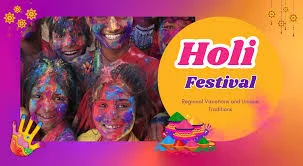
A vibrant spring festival celebrated with colors, which also has specific regional variations like Baithaki Holi and Khari Holi.
The Joyous Spirit and Mythological Origins
Holi, the “Festival of Colors,” marks the arrival of spring and the triumph of good over evil, bringing people together to play with colors, dance, and share sweets. It signifies renewal, unity, and the breaking of social barriers as everyone celebrates with joy. The festival originates from Hindu mythology, particularly the legend of Prahlad and Holika, symbolizing devotion’s victory over arrogance and evil. Holika Dahan, the bonfire on the eve of Holi, represents the destruction of negativity and a fresh start. Spiritually, Holi encourages letting go of hatred and embracing love and harmony. It fosters community bonding and joyous participation across all ages. The festival embodies optimism, togetherness, and cultural celebration.
Rituals, Festivities, and Cultural Practices
Holi celebrations begin with Holika Dahan, lighting bonfires to symbolize righteousness and the triumph of good. The next day, Rangwali Holi, is marked by vibrant colors, water balloons, music, and dancing. People smear each other with gulal and share traditional sweets like gujiya, malpua, and thandai, enhancing the festive mood. Devotees also offer prayers to Lord Krishna and Radha, whose playful colors inspired Holi traditions. Streets and courtyards transform into lively arenas of fun and cheer. The festival promotes equality and togetherness, uniting people across social and economic boundaries. Holi becomes a joyous celebration of life, love, and community.
Regional Variations and Cultural Diversity
Holi’s regional forms showcase India’s cultural richness. In Uttarakhand, Baithaki and Khari Holi feature soulful folk songs, group singing, and traditional dances with instruments like dhol and hurka. Mathura and Vrindavan celebrate Lathmar Holi, where playful mock battles honor Radha and Krishna’s divine love. In Punjab, Hola Mohalla combines martial displays with religious gatherings. Each variation reflects local traditions, music, and spiritual significance. Together, they highlight the festival’s unity in diversity, blending fun, devotion, and culture. Holi thus remains a vibrant expression of India’s communal harmony and celebratory spirit.