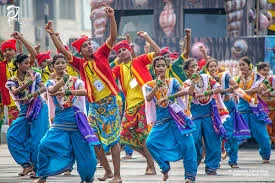
This traditional rural folk dance is popular in districts like Kolhapur, Satara, Sangli, and Solapur, often performed during rural festivals and temple celebrations.
A Celebration of Rural Tradition and Joy
Jaakhdi is a lively rural folk dance that reflects the culture and lifestyle of Maharashtra’s villages. Popular in Kolhapur, Satara, Sangli, and Solapur, it is performed during temple festivals, harvest celebrations, and community gatherings. The dance combines entertainment with devotion, showcasing the collective spirit of rural life. Colorful costumes, rhythmic beats, and synchronized movements make each performance visually and musically captivating. Traditional instruments like the dholki, lezim, and tuntuna accompany the dancers, enhancing the festive atmosphere and cultural richness.
The Spirit of Music, Movement, and Togetherness
Jaakhdi is more than a dance-it is a living tradition that unites communities. Men and women perform in coordinated groups, moving to folk drum rhythms and clapping patterns. Songs sung during the dance tell stories of gods, farmers, and nature, turning performances into storytelling experiences. The energy and harmony in the dance symbolize teamwork, discipline, and devotion. During temple festivals, Jaakhdi acts as an offering to deities, expressing gratitude for prosperity and good harvests. Villages come alive with chants, drumming, and celebratory spirit.
Preserving Maharashtra’s Folk Heritage
Jaakhdi has gained recognition as an important cultural heritage needing preservation and promotion. Folk organizations and cultural academies in Maharashtra organize workshops, competitions, and documentation projects to revive the dance. These initiatives encourage young people to learn Jaakhdi and carry forward its legacy. Government support and festival platforms help the art form reach wider audiences beyond villages. Today, Jaakhdi stands as a proud symbol of Maharashtra’s folk culture, representing unity, simplicity, and artistic elegance in every rhythmic step.