
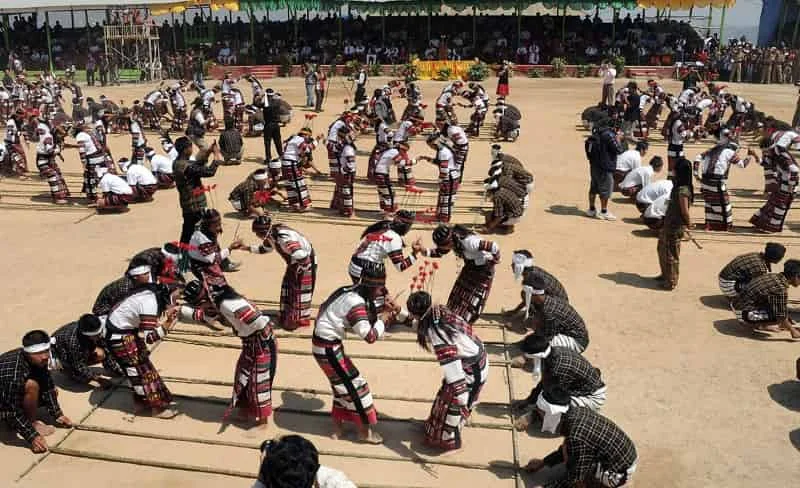
A harvest festival that is also a traditional festival of the Zo people, often involving the remembrance of departed souls.
A Festival of Gratitude and Remembrance
Mim Kut, one of the oldest and most revered festivals of the Zo people, is celebrated after the maize harvest as an expression of gratitude and remembrance. Held around August or September, it serves both as thanksgiving for a successful harvest and as a tribute to the souls of ancestors. Deeply rooted in the agricultural lifestyle of the Zo community, the festival highlights their connection to nature and the land. Offerings of maize, vegetables, rice beer, and other produce are made to ancestral spirits, symbolizing the enduring bond between the living and the departed-a relationship believed to bring peace, prosperity, and harmony to the community.
Traditional Rituals and Cultural Celebrations
Mim Kut is observed through meaningful rituals that blend reverence with celebration. Families prepare special meals and present offerings in memory of their ancestors, accompanied by prayers and songs that recount the community’s history and faith. The day carries a solemn yet joyful tone, balancing remembrance with the hope of renewal. As evening approaches, villagers gather for folk dances, music, and storytelling, filling the air with rhythm and emotion. The beats of drums and traditional songs echo through the hills, transforming the festival into a shared experience of unity, gratitude, and cultural pride.
Symbolism and Modern Relevance
More than a harvest festival, Mim Kut represents the Zo people’s values of respect, continuity, and gratitude. It reminds the community that present blessings are the fruits of past sacrifices and that honoring ancestors ensures the wellbeing of future generations. The festival’s rituals preserve the spiritual and cultural identity of the Zo people, reinforcing their bond with heritage. In modern times, Mim Kut has evolved into a larger cultural celebration featuring public events, exhibitions, and performances that attract visitors and youth alike. Though its form has adapted, the festival’s core essence-honoring ancestors, giving thanks, and celebrating unity-continues to define its timeless significance.