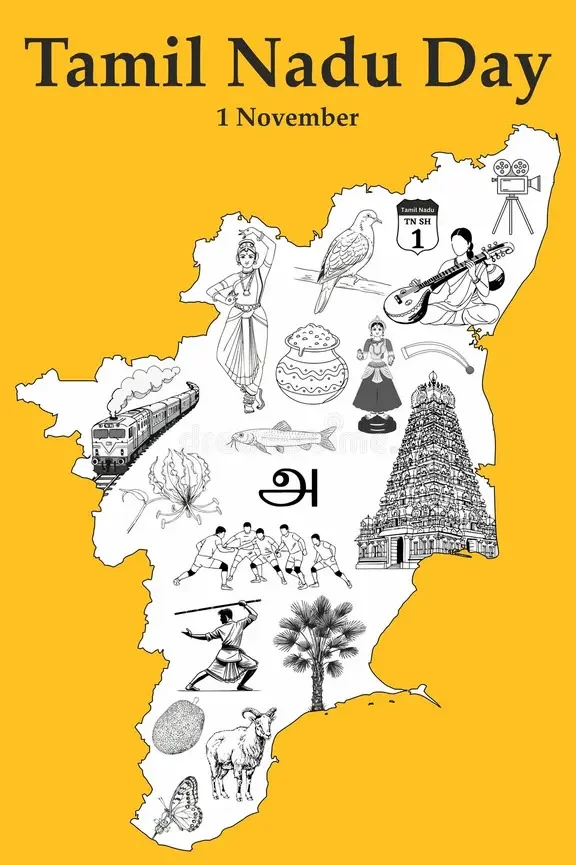
Celebrated on July 18th to commemorate the official renaming of the state from Madras State to Tamil Nadu.
Historical Background and Significance
Tamil Nadu Day, celebrated annually on July 18th, marks the historic renaming of Madras State to Tamil Nadu in 1969 by then Chief Minister C.N. Annadurai. The name, meaning “Land of the Tamils,” reflects the state’s deep connection to its ancient heritage, language, and cultural identity. The day symbolizes Tamil pride, unity, and devotion to their linguistic and historical roots, serving as a reminder of the state’s journey toward self-assertion following India’s linguistic reorganization of states in 1956.
Celebrations and Public Observances
Tamil Nadu Day is observed with official ceremonies, cultural programs, and public gatherings throughout the state. Schools, government offices, and institutions showcase Tamil literature, classical arts, folk performances, and patriotic songs, while notable contributors to Tamil culture are honored. Exhibitions, seminars, and media programs educate younger generations about the state’s history and heritage, fostering cultural awareness and pride. These activities emphasize the significance of Tamil identity and celebrate the legacy of leaders who shaped modern Tamil Nadu.
Cultural Identity and Legacy
Beyond a historical commemoration, Tamil Nadu Day reinforces the state’s cultural revival and regional pride. It honors Tamil Nadu’s contributions to classical language, temple architecture, philosophy, and performing arts, highlighting the unity of its people through shared language and values. The festival inspires future generations to preserve linguistic and cultural heritage while encouraging progress, ultimately embodying the pride, resilience, and enduring spirit of Tamil Nadu as a cornerstone of India’s cultural heartland.