
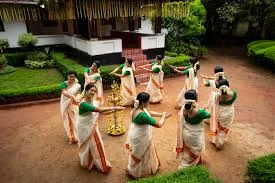
A traditional women-centric Hindu festival of Kerala, celebrated in the Malayalam month of Dhanu (December–January) to honor Lord Shiva’s cosmic dance (Tandava) and Goddess Parvati’s devotion. Women observe fasting and perform the graceful Thiruvathira Kali dance, symbolizing marital harmony and prosperity.
Religious Significance and Mythology
Thiruvathira is a women-centric Hindu festival celebrated mainly in Kerala, dedicated to Lord Shiva and symbolizing marital bliss, the longevity of husbands, and family well-being. Observed in the Malayalam month of Dhanu (December-January), women fast and perform prayers seeking harmony and prosperity in their households. Rooted in mythology, the festival commemorates Lord Shiva’s cosmic dance, Tandava, representing creation, preservation, and destruction. By celebrating Thiruvathira, women aspire to emulate the virtues of Goddess Parvati-devotion, strength, and patience-blending spiritual devotion with cultural values passed down through generations.
Rituals and Women-Centric Practices
Thiruvathira is renowned for its ritual observances by women, including fasting, preparing traditional dishes, and performing devotional dances. A central highlight is Thiruvathira Kali, a graceful group dance around a lamp accompanied by songs praising Lord Shiva, with women dressed in traditional Kerala sarees adding color and elegance. Special dishes like Thiruvathira puzhukku and rice-based delicacies are prepared, offered to the deity, and shared with family. Gatherings in temples and homes for hymns and prayers foster social bonding, cultural continuity, and a shared sense of spirituality among participants.
Cultural and Social Significance
Thiruvathira goes beyond a religious festival to celebrate female strength, devotion, and community engagement. Through dance, music, and fasting rituals, women connect with cultural heritage while strengthening social bonds, and traditional songs and stories help preserve Kerala’s folk and devotional literature. Emphasizing patience, discipline, and harmony, the festival reflects ideals of married life and womanhood, while providing an occasion for families to gather, share meals, and participate in collective worship. Ultimately, Thiruvathira embodies the convergence of devotion, culture, and female empowerment in a uniquely Kerala tradition.