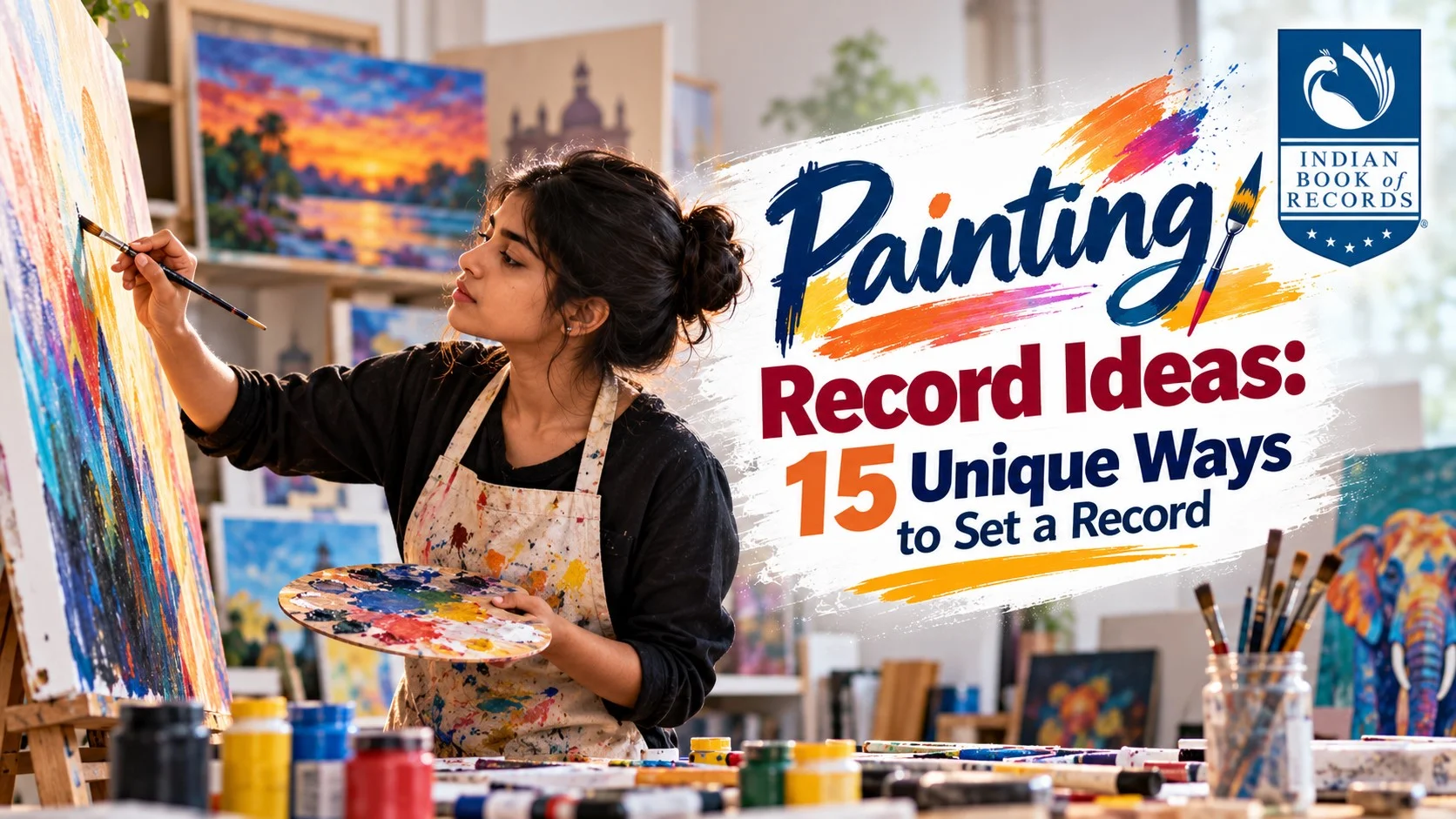


India has always expressed itself through colour, form, and imagination — from ancient cave paintings to modern street murals. Today, this creative spirit is finding a new outlet: record-breaking art. Across the country, students, artists, schools, and communities are turning canvases, walls, and even entire streets into stages for extraordinary achievement.
If you've ever wondered how a simple painting or collaborative mural can become a nationally recognized record, this guide walks you through the most compelling creative art record ideas gaining attention in India today — along with how you can attempt one yourself.
Why Art Records Are Gaining Popularity in India
Art has a unique advantage over many other record categories: it's inclusive. You don't need specialized equipment, elite training, or years of preparation. A group of schoolchildren with paintbrushes, a community with chalk, or a single dedicated artist with a giant canvas can all create something record-worthy.
This accessibility is exactly why art record ideas India wide have exploded in popularity — schools use them to build teamwork, artists use them to gain recognition, and communities use them to unite around a shared creative goal. It's a category where originality often matters more than resources.
Popular Categories Under Creative Art Records
Before attempting a record, it helps to understand the broad art record categories typically recognized by record-keeping platforms like the Indian Book of Records. Most creative art records fall into one of these buckets:
1. Scale-Based Records
These focus on size — the largest painting, the longest mural, or the biggest rangoli design ever created. Scale records are visually dramatic and tend to attract strong media attention, making them a favorite among schools and public institutions.
2. Participation-Based Records
Here, the achievement lies in numbers — the most people painting simultaneously, the largest group creating a single artwork, or the highest number of participants in a community mural project. These are ideal for schools, colleges, and corporate CSR events looking to combine art with teamwork.
3. Speed-Based Records
Fastest painting completed, quickest mural finished, or fastest group sketching session — speed records reward efficiency and precision under time pressure.
4. Material or Technique-Based Records
Using unconventional materials — bottle caps, waste plastic, seeds, threads, or natural pigments — to create art can qualify as a unique record. This category is especially popular for unique art records India enthusiasts want to pursue, since it rewards innovation over scale.
10 Creative Art Record Ideas Worth Attempting
If you're brainstorming your own creative art record ideas, here are concepts that have genuine record potential:
Largest collaborative mural — Organize a school, college, or community to paint one continuous mural across multiple panels or a long wall.
Most people painting simultaneously — Gather a large group at a single location to paint individual artworks within a set time frame.
Longest painting on canvas or cloth — Roll out a single continuous canvas and have participants extend it section by section.
Largest rangoli or floor art design — A traditional Indian art form that scales beautifully for record attempts during festivals.
Fastest group portrait sketching — Multiple artists sketch portraits of a large audience within a fixed time.
Most colors used in a single painting — A technical record rewarding precision and planning rather than just size.
Biggest chalk art display on pavement or playground — Popular with schools for its low cost and high visual impact.
Largest fingerprint or handprint artwork — A moving, symbolic record often used for social causes or unity campaigns.
Largest eco-friendly art installation — Using recycled or plastic-free materials, tying creativity to sustainability themes.
Youngest artist to complete a large-scale painting — Combining the "youngest achiever" and "art record" categories into one powerful story.
Each of these ideas can be scaled up or down depending on whether you're an individual artist, a school, or an organization planning a community event.
How to Set an Art Record in India
Once you've chosen your idea, the process of officially attempting a record generally follows these steps:
Select a clear, measurable record concept — vague ideas ("a big painting") don't qualify; specifics ("largest painting created by 200 students in 3 hours") do.
Review the submission guidelines — check the Submission Guidelines page to understand documentation requirements before you begin.
Plan documentation in advance — photographs, timestamped videos, and witness statements are typically required for verification.
Gather your participants and materials — ensure you have enough space, supplies, and time allocated for the attempt.
Submit your record attempt — through the official Set A Record page, where you'll provide event details and proof of the achievement.
Undergo verification — the Record Verification team checks your submission for authenticity before certifying the record.
This structured process is what separates an informal art event from an officially recognized one — and it's worth planning your documentation from day one rather than scrambling for evidence afterward.
Tips for a Successful Art Record Attempt
Document everything continuously. Gaps in video or photo evidence are the most common reason submissions get delayed.
Recruit independent witnesses. Having people outside your immediate team confirm the achievement strengthens your submission.
Choose originality over scale when possible. A creative, well-documented idea often stands out more than simply "the biggest" version of something already attempted.
Plan for time and space constraints. Large-scale art records need permissions, adequate space, and realistic time management.
Review category guidelines beforehand. Browsing the Categories page helps you understand which record type your idea best fits into.
Frequently Asked Questions
What are the categories for art records? Art records generally fall into scale-based (largest/longest), participation-based (most people), speed-based (fastest completion), and technique-based (unique materials or methods) categories.
How do I set an art record in India? You need a clear, measurable concept, proper documentation (photos, video, witnesses), and a formal submission through a recognized record-keeping platform for verification.
How do I submit an art record attempt? Record attempts can be submitted online with event details, supporting evidence, and contact information through the official application process, followed by a review and verification period.
Can students and schools attempt art records? Yes — participation-based art records are especially popular among schools and colleges, as they combine creativity with teamwork and are relatively simple to organize.
Does an art record need to be huge in scale to qualify? Not necessarily. Unique techniques, unconventional materials, or symbolic concepts can qualify as records even without massive scale, as long as they're original and well-documented.
Final Thoughts
Creative art records are one of the most accessible and inspiring ways to make history. Whether it's a school organizing hundreds of students for a collaborative mural, an individual artist pushing creative boundaries with unconventional materials, or a community coming together for a cultural celebration through art — every attempt adds a new page to India's growing story of achievement.
If you have an idea brewing, the best time to start planning your documentation and submission is now.