

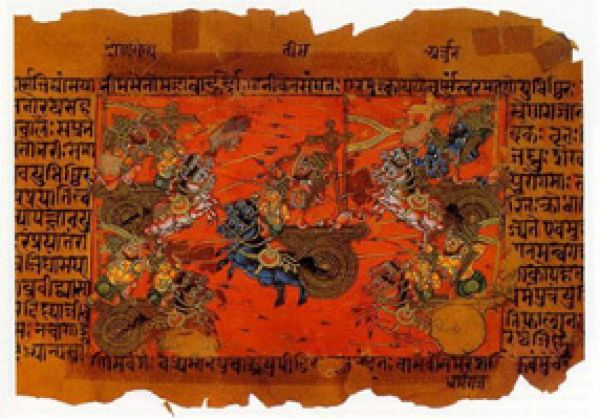
The Mahabharata is the longest epic in the world, comprising over 74,000 verses, extensive prose passages, and approximately 1.8 million words. Composed in Sanskrit by sage Ved Vyasa, its origins trace back to the late Vedic period, with its final form believed to have been completed during the early Gupta era. The epic narrates the saga of the Bharata dynasty and blends mythology, history, and philosophy.
It delves into core aspects of Hinduism, including tales of gods, goddesses, and spiritual teachings. A central aim of the Mahabharata is to illuminate the four purusharthas or goals of human life, dharma (duty), artha (wealth), kama (desire), and moksha (liberation). The epic ultimately emphasizes moksha as the supreme objective of human existence, guiding readers toward spiritual realization.