

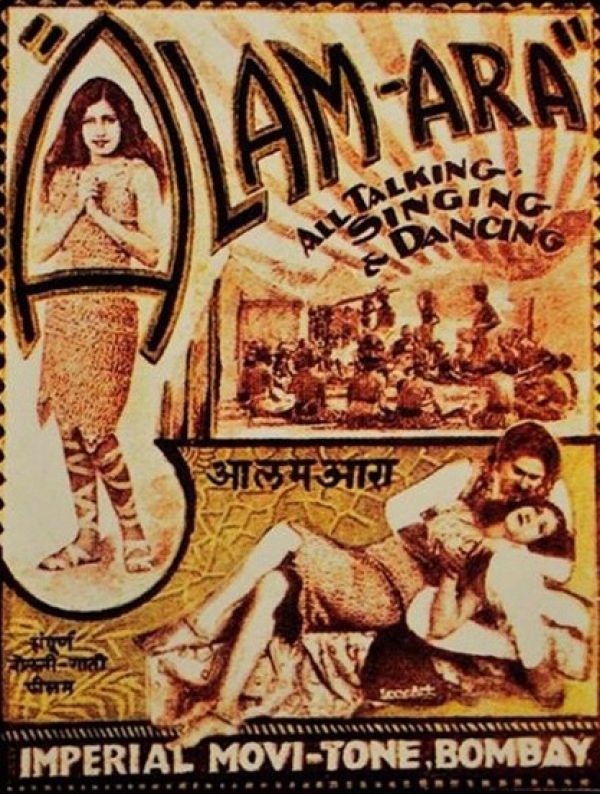
Alam Ara (Light of the Universe), released on March 14, 1931, at Majestic Cinema in Bombay, holds the historic distinction of being India's first talkie film. Produced and directed by Ardeshir Marwan Irani under the banner of Imperial Movietone, the film marked a revolutionary shift from silent cinema to sound. Based on a popular Parsi play written by Joseph David, Alam Ara featured celebrated actors of the silent era, including Prithviraj Kapoor, L.V. Prasad, W.M. Khan, Master Vithal, and Zubeida. With its rich blend of music, dialogue, and performance, the film captivated audiences and ushered in a new era for Indian cinema.
Alam Ara fully embraced the novelty of sound, featuring opulent sets and incorporating seven songs—an early example of Indian cinema’s now-iconic song-and-dance format. However, the production faced several technical challenges. At a time when soundproof stages did not exist, the film was primarily shot indoors and at night to minimize ambient noise. The set’s proximity to a railway track further complicated sound recording, requiring the crew to wait for train operations to stop before filming could begin. Despite these hurdles, Alam Ara was completed in just two months and remains a landmark in cinematic history for introducing Indian audiences to the magic of sound on screen.