
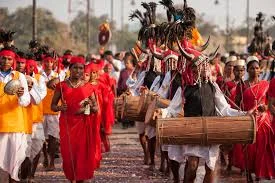
A significant festival, especially in the Bastar region, celebrating tribal culture.
The Essence of Bastar Dussehra
Bastar Dussehra, celebrated in the tribal heartland of Chhattisgarh, is a distinctive festival that differs from the traditional Dussehra observed elsewhere in India. While most regions celebrate Lord Rama’s victory over Ravana, Bastar Dussehra honors Goddess Danteshwari, the revered deity of the Bastar tribes. This centuries-old festival, rooted in tribal faith, spans 75 days, making it one of the longest celebrations in the world. It symbolizes unity among diverse tribal communities and highlights their collective devotion and cultural richness. Originating during the reign of King Purushottam Dev, the festival combines ritual worship with folk traditions. Every ceremony, procession, and song reflects the deep connection between nature and tribal life, preserving ancient customs across generations.
Rituals, Processions, and Participation
The celebrations of Bastar Dussehra are marked by elaborate rituals that draw thousands of villagers from remote areas. A key highlight is the sacred “Rath Yatra,” where devotees pull the massive wooden chariot of Goddess Danteshwari through the streets. Each tribe contributes with materials, music, and manpower, symbolizing collective participation and unity. Traditional instruments, chants, and dances create a vibrant atmosphere of devotion throughout the region. The festival also features the selection of “Sirhas” (spiritual leaders) who perform ancient rites at the goddess’s shrine. Rituals such as sacred bathing, carrying the deity’s idol, and symbolic sacrifices reflect the deep spiritual beliefs and strong social cohesion among Bastar’s tribes.
Cultural Significance and Legacy
Bastar Dussehra is more than a religious festival-it is a living showcase of tribal art, culture, and tradition. The event offers a rare glimpse into indigenous craftsmanship, folk dances like “Dandami Maria,” and tribal songs that narrate stories of deities and heroes. Local markets are vibrant with handwoven textiles, bell-metal crafts, and traditional ornaments, reflecting the artisans’ deep bond with their environment. The festival attracts visitors, researchers, and tourists from around the world, drawn to its cultural richness. Beyond its visual and artistic appeal, Bastar Dussehra reinforces the philosophy of harmony between humans, nature, and the divine. It preserves centuries-old cultural identity, embodying Bastar’s heritage where devotion, art, and community life converge in a grand celebration of faith and culture.