
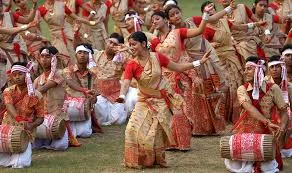
The most significant festival in Assam, Bihu is an agricultural festival with three main forms:
Rongali Bihu (Bohag Bihu): Celebrated in April, it marks the Assamese New Year and the onset of spring with lively folk dances, traditional music, community gatherings, and feasts.
Kati Bihu (Kongali Bihu): Held in October/November, this is a more somber celebration focused on the needs of the harvest season.
Magh Bihu (Bhogali Bihu): In January, this festival marks the end of the harvest season with bonfires, community feasts, and activities like the "pot breaking" (tekeli bhonga) game.
Cultural and Seasonal Significance of Bihu
Bihu is the most important and widely celebrated festival of Assam, reflecting the cultural spirit of the state and the rhythms of rural life. It is not a single festival but a set of three distinct celebrations — Rongali, Kongali, and Bhogali Bihu — each linked to seasonal changes and agricultural cycles. Rongali Bihu welcomes the Assamese New Year and spring, Kongali Bihu focuses on agrarian life during lean periods, and Bhogali Bihu celebrates the harvest season. Together, they show Assam’s deep connection to nature, agriculture, and tradition. Bihu is more than a ritual; it is a celebration of life, joy, and togetherness. The festival blends music, dance, feasts, and cultural pride, showcasing Assam’s folk heritage.
Rongali Bihu (Bohag Bihu)
Rongali Bihu, celebrated in April, marks the Assamese New Year and the arrival of spring. It is a festival of joy and renewal, featuring vibrant Bihu dances, melodious folk songs, and community gatherings. People wear new clothes, prepare traditional delicacies, and exchange greetings. The festival symbolizes youth, hope, and a prosperous year ahead. Rongali Bihu strengthens social bonds and brings communities together. It is a lively expression of Assam’s culture and festive spirit.
Kongali Bihu (Kati Bihu)
Kongali Bihu is observed in October or November and highlights the agrarian aspects of life. During this time, farmers pray for a good harvest by lighting earthen lamps in the paddy fields. Offerings are made to protect the crops, reflecting the lean agricultural season. Kongali Bihu is simpler compared to Rongali and Bhogali Bihu, focusing on devotion and introspection. It emphasizes the close relationship between Assamese people and their land. The festival shows the spiritual side of rural life in Assam.
Bhogali Bihu (Magh Bihu)
Bhogali Bihu, celebrated in January, marks the end of the harvest season. It is a festival of feasting, fun, and community bonding. People light bonfires, enjoy traditional meals, and play games together. Bhogali Bihu brings communities together in gratitude for the year’s harvest. It celebrates abundance, togetherness, and cultural unity. The festival is an expression of joy and a reinforcement of Assamese identity.
Social and Cultural Impact of Bihu
Bihu plays a vital role in preserving Assam’s cultural identity and traditions. It unites people across age, caste, and religion, fostering social harmony. Dance, music, and storytelling transmit folk heritage to younger generations. The festival keeps alive the spirit of Assamese art and culture in a changing world. It strengthens community bonds and cultural pride. Bihu is a living tradition that links past, present, and future generations.
Economic and Tourism Significance
Bihu also contributes to the local economy through trade in crafts, food, and traditional clothing. Markets become lively hubs for artisans and farmers to showcase their products. The festivals attract tourists from across India and abroad, boosting cultural tourism. Schools and cultural organizations participate to promote Bihu celebrations as part of cultural education. The celebrations help preserve traditional practices and crafts. Overall, Bihu celebrates nature, agriculture, community, and Assamese cultural heritage.