
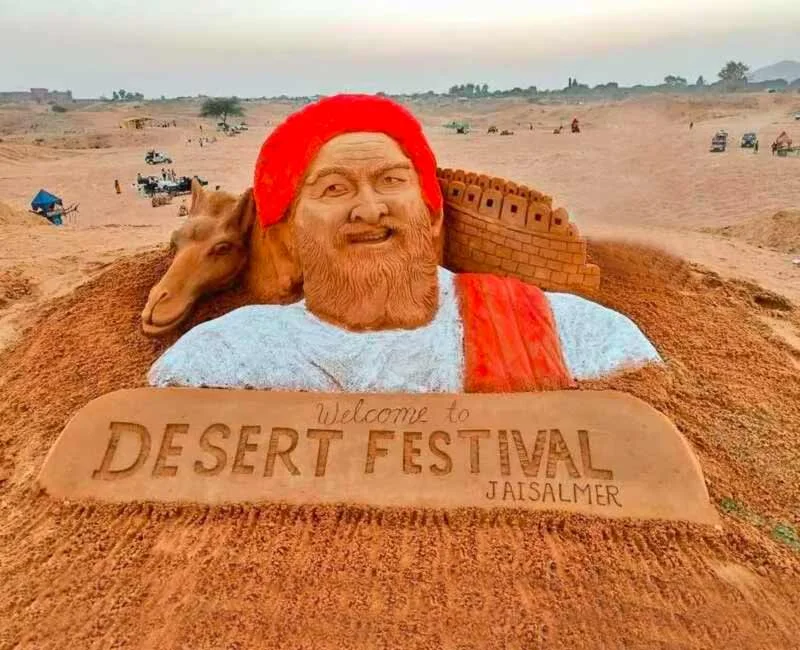
Held in February, this festival features traditional folk dances, camel safaris, fireworks, and turban-tying competitions.
A Celebration Amidst the Golden Sands
The Jaisalmer Desert Festival, held every February in the heart of Rajasthan, is a vibrant celebration of the Thar Desert’s rich culture and traditions. The festival transforms the historic city of Jaisalmer into a lively stage, attracting tourists, locals, and performers from across India and abroad. Its desert setting, with sand dunes and historic forts, provides a unique backdrop for a festival that combines heritage, entertainment, and community pride.
The festival also honors the local way of life, celebrating the resilience, skills, and artistic expressions of the desert communities. Visitors experience traditional desert hospitality, cuisine, and crafts, immersing themselves in the region’s culture while enjoying the breathtaking landscape of golden sands and historic architecture.
Traditional Performances and Cultural Activities
Jaisalmer Desert Festival is renowned for its colorful folk dances, music performances, and cultural competitions. Local artists perform Ghoomar, Kalbeliya, and other traditional dances, accompanied by live music with instruments like the dhol, been, and sarangi. These performances narrate stories of local folklore, history, and daily life, preserving the cultural legacy of the desert communities.
The festival also features unique activities like turban-tying competitions, camel races, and beauty contests for camels, showcasing the traditional skills and practices of the desert people. Fireworks, poetry recitations, and puppet shows add to the festive atmosphere, making the event a comprehensive cultural showcase that appeals to all ages.
Tourism, Economy, and Community Engagement
The Jaisalmer Desert Festival plays a crucial role in promoting tourism and boosting the local economy. Hotels, handicraft vendors, and transport services benefit from the influx of visitors, while artisans and performers gain a wider platform for their talent. The festival also encourages cultural exchange, allowing tourists to experience Rajasthan’s art, cuisine, and traditions firsthand.
Community participation is central to the event, as local residents organize performances, manage camel safaris, and host visitors, fostering a sense of unity and cultural pride. By blending entertainment, tradition, and economic opportunity, the festival preserves the desert’s heritage while promoting sustainable tourism and social cohesion in Jaisalmer.