
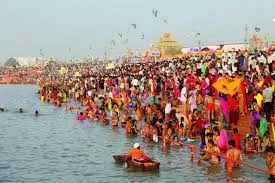
Held every 12 years in Prayagraj, this is the world's largest religious gathering, featuring royal baths, religious discourses, and processions.
Spiritual Significance and Historical Importance
Kumbh Mela, held every 12 years in Prayagraj at the confluence of the Ganga, Yamuna, and the mythical Saraswati, is the world’s largest religious gathering. Rooted in the legend of the Samudra Manthan, where drops of divine nectar fell at four sacred sites, the festival symbolizes the eternal quest for spiritual liberation. Devotees believe that bathing in these holy rivers during the Mela cleanses sins and purifies the soul. Beyond its religious essence, Kumbh Mela stands as a timeless celebration of India’s spiritual depth and cultural continuity.
Rituals, Royal Baths, and Religious Discourses
The highlight of Kumbh Mela is the Shahi Snan, or royal bath, where ascetics and saints, including Naga sadhus, lead grand processions before taking ritual dips in the river. Millions of pilgrims follow, reaffirming faith in purification and rebirth. The festival also features yajnas, devotional songs, spiritual discourses, and yoga sessions, creating an atmosphere of divine energy. Through these sacred practices, devotees seek enlightenment, discipline, and renewal, embodying the unity of body, mind, and spirit.
Cultural Confluence and Global Recognition
Beyond its spiritual dimension, Kumbh Mela is a massive cultural phenomenon that unites people across India and beyond. The temporary city that emerges along the riverbanks hosts markets, performances, and exhibitions reflecting India’s diverse heritage. Recognized by UNESCO as an Intangible Cultural Heritage of Humanity, the Mela exemplifies faith-driven harmony and organization on an unparalleled scale. It serves as a living testament to India’s spiritual legacy, attracting millions who come together in devotion, peace, and shared cultural pride.