
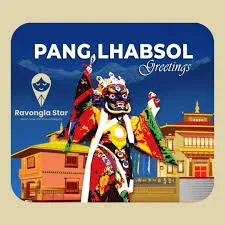
This festival honors Mount Khangchendzonga, Sikkim's guardian deity, and includes religious rituals, masked dances, processions, and prayers.
Honoring Mount Khangchendzonga and the Guardian Deity
Pang Lhabsol is a distinctive festival of Sikkim celebrated primarily by the Bhutia-Lepcha communities to honor Mount Khangchendzonga, regarded as the guardian deity of the state. The festival reflects deep reverence for the mountain, believed to protect the land and its people, and emphasizes the spiritual and cultural bond between humans and nature. Villagers perform rituals expressing gratitude and seek blessings for safety, good harvests, and overall prosperity, highlighting the harmony between divine protection and community well-being.
Rituals, Masked Dances, and Processions
The festival features elaborate ceremonies at monasteries and sacred sites, including prayers, offerings, and communal gatherings. A central highlight is the Cham or masked dances, where performers wear vibrant masks representing deities, demons, and animals, narrating mythological stories through intricate movements and rhythms. Accompanying processions involve devotees carrying flags, banners, and ceremonial items to sacred spots, with chanting, drumming, and music enhancing the spiritual atmosphere while transmitting cultural knowledge to younger generations.
Cultural Significance and Community Unity
Beyond its religious importance, Pang Lhabsol celebrates Sikkimese identity and heritage, fostering social cohesion as communities collaborate on rituals, dances, and feasts. The festival educates younger generations about local myths, spiritual practices, and traditional arts, ensuring continuity of cultural traditions. Supported by government and cultural organizations, Pang Lhabsol attracts locals and tourists alike, preserving the state’s spiritual and cultural legacy while inspiring pride, devotion, and unity among the people of Sikkim.