
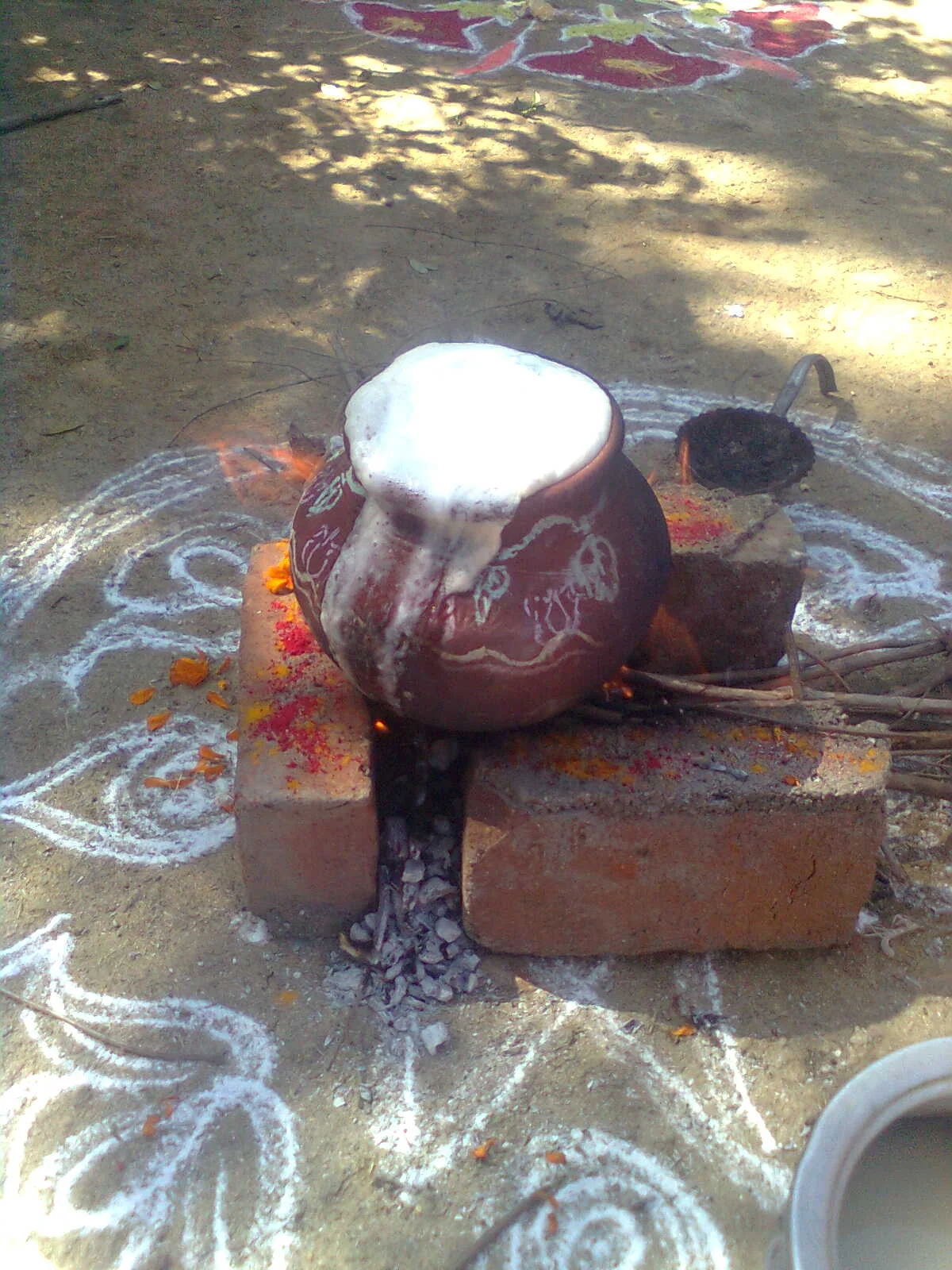
In Andhra Pradesh, Pongal, also known as Makara Sankranti, is a major harvest and thanksgiving festival celebrated in January. It marks the transition of the sun into Capricorn (Makara Rasi) and includes rituals like Bhogi, Sankranti, and Kanuma, honoring the Sun God and cattle. The festival is celebrated with rangolis, bonfires, traditional foods, and cultural gatherings across villages and towns.
The Essence and Origins of Pongal
Pongal is a major harvest festival celebrated mainly in Tamil Nadu, with its name meaning “to overflow” in Tamil, symbolizing abundance and prosperity. Observed in mid-January alongside Makar Sankranti, it honors the Sun God, cattle, and the earth, expressing farmers’ gratitude for a bountiful harvest. With origins dating back over a thousand years in Tamil literature and temple inscriptions, Pongal traditionally celebrates both religious devotion and agricultural life, emphasizing harmony with nature. Today, it remains a vibrant symbol of Tamil culture, reflecting joy, unity, and respect for the environment.
Rituals and Traditional Practices
Pongal is celebrated over three to four days, each with unique rituals and significance. Bhogi Pongal, the first day, honors Lord Indra and involves discarding old belongings to welcome new beginnings. Surya Pongal, the second day, pays tribute to the Sun God as families cook the special sweet dish “Pongal” in a clay pot until it overflows, symbolizing prosperity. Mattu Pongal, the third day, celebrates cattle, decorating and feeding them, with Jallikattu-a traditional bull-taming sport-observed in some regions. The fourth day, Kaanum Pongal, focuses on family reunions and social gatherings. Together, these rituals highlight gratitude, renewal, and community bonding.
Cultural Significance and Contemporary Celebration
Beyond its agricultural significance, Pongal is a vibrant celebration of Tamil culture and identity. Homes are adorned with kolams, women wear traditional attire, and folk dances, songs, and dramas bring communities together, strengthening bonds between rural and urban populations. Globally, Tamil communities continue to celebrate Pongal, adapting customs to modern lifestyles while preserving its core spirit of gratitude, sharing, and renewal. The festival honors nature’s bounty and the hard work of farmers, inspiring generations as a symbol of prosperity, togetherness, and respect for tradition.