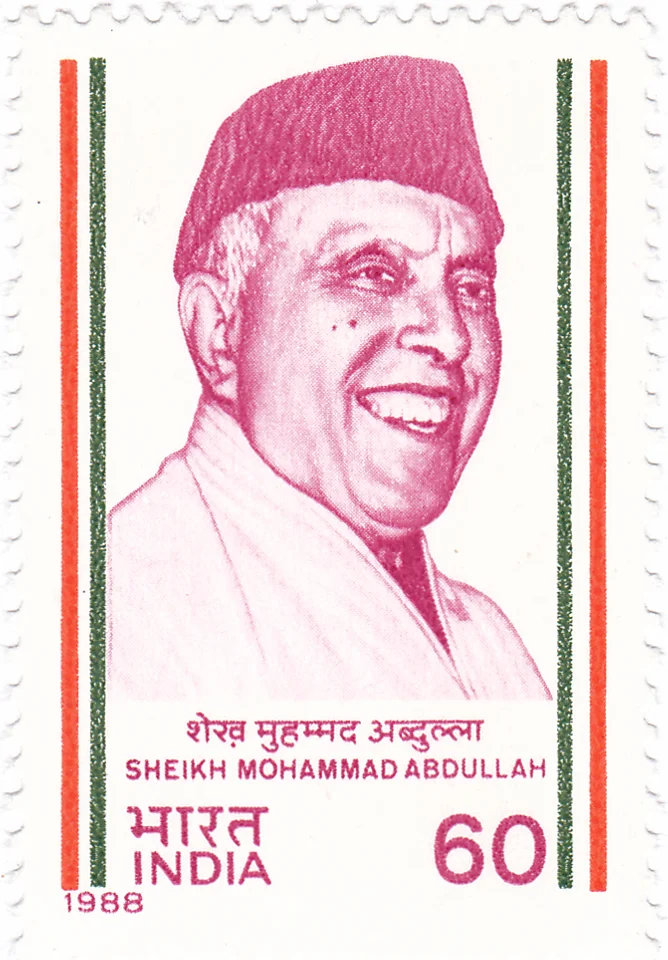
Sheikh Abdullah (1905–1982), often called the “Lion of Kashmir,” was a towering political leader and the architect of modern politics in Jammu and Kashmir. He founded the National Conference party and played a crucial role in mobilizing the Kashmiri people against the autocratic Dogra rule during the early 20th century. A charismatic leader with a vision for social reform and political empowerment, Sheikh Abdullah championed the cause of Kashmiri identity and autonomy, advocating for the rights of the region’s people and working towards ending feudal oppression. After India gained independence in 1947, Sheikh Abdullah became the first Prime Minister of Jammu and Kashmir, leading the state through a tumultuous period marked by the Indo-Pak conflict over Kashmir. He initially supported accession to India but sought special autonomous status for Jammu and Kashmir under Article 370. His political journey was marked by ups and downs, including periods of imprisonment and political exile, yet his influence remained immense. Sheikh Abdullah’s legacy continues to shape the political landscape of Jammu and Kashmir, and he is remembered as a symbol of Kashmiri nationalism and struggle for self-determination.