The most important traditional festival of the Garo tribes, marking a post-harvest celebration with rituals, traditional dances, music, and feasting.
Cultural Significance of Wangala Festival
The Wangala Festival is the most prominent traditional celebration of the Garo tribe in Meghalaya, known as the “Hundred Drums Festival.” It marks the completion of the agricultural cycle and expresses gratitude to Misi Saljong, the Sun God, for a bountiful harvest. Rooted in centuries-old traditions, the festival reflects the deep bond between the Garos and nature while reinforcing their identity and agricultural heritage. Observed in October and November, Wangala is a time for communities to gather, renew social ties, and celebrate life, renewal, and gratitude. Elders teach younger generations the significance of rituals, songs, and dances, ensuring that cultural knowledge and spiritual faith are preserved. Overall, Wangala is both a thanksgiving ceremony and a vibrant showcase of the Garo tribe’s living cultural heritage.
Rituals and Ceremonies
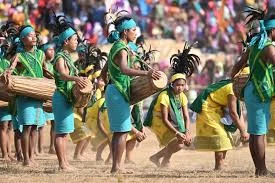
The central focus of the Wangala Festival is offering thanks to Misi Saljong, the Sun God, for a bountiful harvest. Rituals are led by the village priest, known as the Nokma or Panggima, and include offerings of rice, chicken, and other farm produce in the sacred A’king grove, believed to be the community’s spiritual center. These rites purify the land and ensure future fertility and prosperity, reflecting the Garos’ deep respect for nature and ancestral traditions. A highlight of the festival is the Dama Gogata drum ceremony, where hundreds of traditional drums are beaten in rhythmic patterns to honor the Sun God. Folk hymns and sacred dances accompany the rituals, creating an atmosphere of reverence and joy. Together, these ceremonies strengthen the cultural and spiritual identity of the Garo tribe, celebrating their harmony with nature and agricultural life.
Cultural Festivities and Community Spirit
The Wangala Festival is a vibrant celebration of music, dance, and community spirit among the Garo people. A highlight is the traditional Dama dance, performed in colorful attire with drums and bamboo flutes, accompanied by chanting and folk music that create a mesmerizing atmosphere. Community feasts featuring traditional Garo dishes bring people together, while folk games, storytelling, and cultural exchanges strengthen social bonds. The festival attracts cultural enthusiasts, tourists, and researchers from around the world, offering a firsthand experience of Garo heritage. Wangala has grown into a symbol of Meghalaya’s diverse cultural identity, preserving traditions while showcasing them globally. Through rituals, dances, music, and feasts, the festival remains a living celebration of thanksgiving, joy, and cultural pride.