


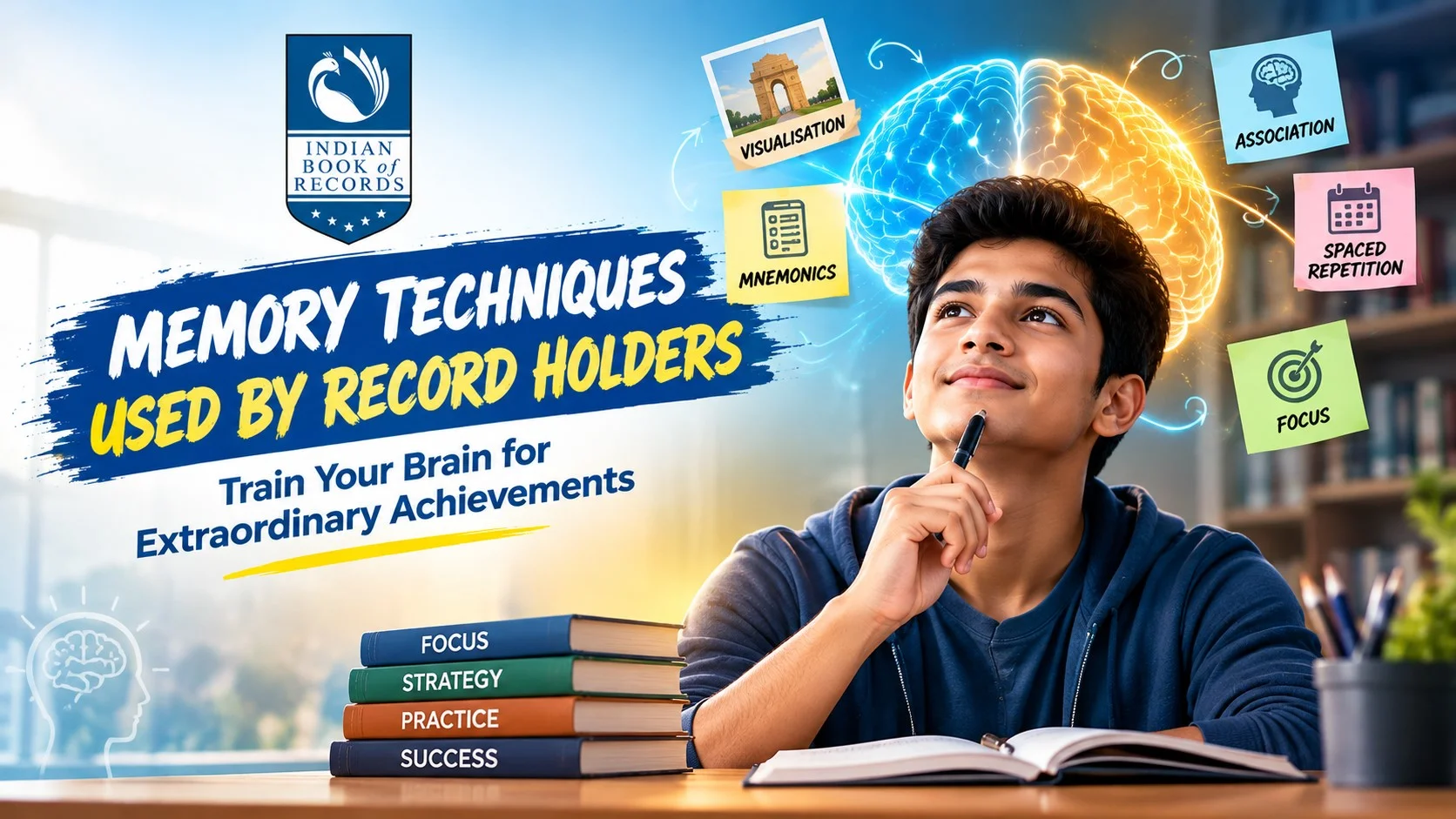
Have you ever wondered how some people can memorize thousands of digits, recall hundreds of names, or perform complex mental tasks with incredible accuracy? Behind these extraordinary achievements lies more than natural talent. Most successful record holders rely on proven memory techniques, consistent practice, and disciplined training.
Whether you're preparing for a memory-based challenge, a talent competition, or an official record attempt, developing a stronger memory can significantly improve your performance. The Memory Techniques Used by Record Holders are not limited to memory champions—they can be learned and applied by students, professionals, and aspiring record holders alike.
In this article, we'll explore the most effective memory techniques for record holders, explain how record holders improve memory, and share practical tips that can help you prepare for your next record attempt with confidence.
Why Memory Matters in Record Attempts
Many record attempts require more than physical ability. Participants often need to remember sequences, numbers, words, images, facts, or instructions within a limited time. A strong memory improves speed, accuracy, and confidence, all of which are essential for setting new records.
Effective memory training for record attempts also helps participants remain calm under pressure. Instead of relying on repeated reading or last-minute practice, trained individuals use structured methods that make recalling information much easier.
The good news is that memory is a skill that improves with practice. With the right techniques and regular training, anyone can strengthen their ability to remember information efficiently.
What Memory Techniques Do Record Holders Use?
Record holders use scientifically supported techniques that improve the way the brain stores and retrieves information. Here are some of the most effective methods.
1. Memory Palace Technique
The Memory Palace, also known as the Method of Loci, is one of the oldest and most effective memorization methods.
This technique involves imagining a familiar place—such as your home or school—and mentally placing pieces of information in different locations. When you need to recall the information, you simply walk through the location in your mind.
Many memory champions rely on this method because it transforms abstract information into vivid mental images, making recall much faster.
Best for:
Numbers
Word lists
Historical facts
Sequences
2. Mnemonic Techniques
Mnemonics convert difficult information into something easier to remember.
These can include:
Acronyms
Rhymes
Stories
Associations
First-letter techniques
For example, instead of remembering unrelated words individually, you can connect them through a memorable story. This creates stronger neural connections and improves long-term recall.
Mnemonic techniques are among the best memory techniques for record holders because they simplify complex information.
3. Visualization
The brain remembers pictures much better than plain text.
Instead of memorizing words directly, record holders create colorful, funny, or exaggerated mental images. The more unusual the image, the easier it becomes to remember.
Visualization is especially useful for memory-based competitions where participants need to recall large amounts of information quickly.
4. Chunking Information
Trying to remember long strings of numbers or words can be overwhelming.
Chunking solves this problem by breaking large pieces of information into smaller groups.
For example:
9876543210
becomes
987 – 654 – 321 – 0
This simple strategy reduces mental effort while improving accuracy and recall speed.
5. Active Recall
Reading information repeatedly is not the most effective way to learn.
Instead, record holders actively test themselves without looking at the material. This process strengthens memory and identifies weak areas that need improvement.
Examples include:
Self-quizzing
Flashcards
Writing from memory
Practice tests
Active Recall is considered one of the most effective memory exercises for record attempts because it improves long-term retention.
6. Spaced Repetition
Rather than studying everything in one session, successful record holders review information over increasing intervals.
For example:
Day 1
Day 3
Day 7
Day 15
Day 30
This method reinforces learning before forgetting occurs, helping information move into long-term memory.
How Record Holders Improve Memory Every Day
Successful record holders don't depend on shortcuts. They follow consistent routines that strengthen their brain over time.
Some common habits include:
Daily memory practice
Solving puzzles
Reading regularly
Learning new skills
Meditation for better concentration
Adequate sleep
Regular physical exercise
Healthy eating habits
These routines improve both focus and recall, making them an important part of brain training for record holders.
Can Anyone Develop Record-Level Memory?
Absolutely.
One of the biggest misconceptions is that only people with exceptional intelligence can develop extraordinary memory skills.
Research and real-life examples show that memory improves through practice rather than natural ability alone.
Most memory champions began with ordinary memory skills. Their success came from disciplined training, patience, and continuous improvement.
If you practice proven memorization techniques consistently, you can significantly improve your ability to remember information for competitions and record attempts.
Tips to Improve Memory for Record Attempts
If you're preparing for a memory challenge, consider these practical strategies.
Practice Every Day
Even 20–30 minutes of focused memory training can lead to noticeable improvements over time.
Set Small Goals
Instead of memorizing hundreds of items immediately, start with manageable challenges and gradually increase the difficulty.
Avoid Multitasking
Focused attention improves the quality of memory formation.
Review Regularly
Frequent revision strengthens recall and reduces forgetting.
Stay Healthy
Quality sleep, hydration, balanced nutrition, and physical activity all contribute to better brain performance.
These habits are essential for anyone looking to improve memory for record attempts.
Memory-Based Record Ideas
If you're interested in showcasing your memory skills, consider attempting records such as:
Memorizing the maximum number of digits in a fixed time
Recalling the highest number of random words
Memorizing historical dates
Identifying countries and capitals
Fastest recall of scientific terms
Memorizing playing cards
Reciting lengthy poems without errors
Before attempting any challenge, ensure that you understand the specific guidelines and evidence requirements.
How the Indian Book of Records Encourages Extraordinary Talent
The Indian Book of Records recognizes achievements across numerous categories, including memory, education, mental skills, talent, innovation, arts, sports, and creativity.
Memory-based achievements demonstrate not only intelligence but also discipline, consistency, and determination. Individuals of all age groups can attempt unique memory challenges, provided they meet the required guidelines and documentation standards.
Preparing thoroughly, practicing consistently, and following official record attempt requirements can greatly improve your chances of a successful submission.
Conclusion
Extraordinary memory is rarely a gift—it is usually the result of consistent training and effective techniques. The Memory Techniques Used by Record Holders show that anyone can improve recall, concentration, and mental performance with the right approach.
Whether you use the Memory Palace, mnemonic techniques, visualization, chunking, Active Recall, or Spaced Repetition, every method contributes to stronger memory over time.
If you're planning a memory-based achievement, start practicing today, challenge yourself regularly, and prepare carefully. With dedication and the right training, your next achievement could become an official record recognized by the Indian Book of Records.
Frequently Asked Questions
What memory techniques do record holders use?
Most record holders use methods such as the Memory Palace, mnemonic techniques, visualization, chunking, Active Recall, and Spaced Repetition to improve recall and learning efficiency.
How can I improve memory for a record attempt?
Practice daily, use structured memorization techniques, test yourself regularly, maintain a healthy lifestyle, and review information using spaced repetition.
Is the Memory Palace technique effective?
Yes. It is one of the most widely used memorization techniques because it helps organize and retrieve large amounts of information quickly.
Can students attempt memory-based records?
Yes. Students frequently participate in memory-related challenges by demonstrating exceptional recall, concentration, and learning abilities.
How should I prepare for a memory-based record?
Follow a consistent training schedule, practice proven memory techniques, understand the record guidelines, and document your attempt according to the required standards.