


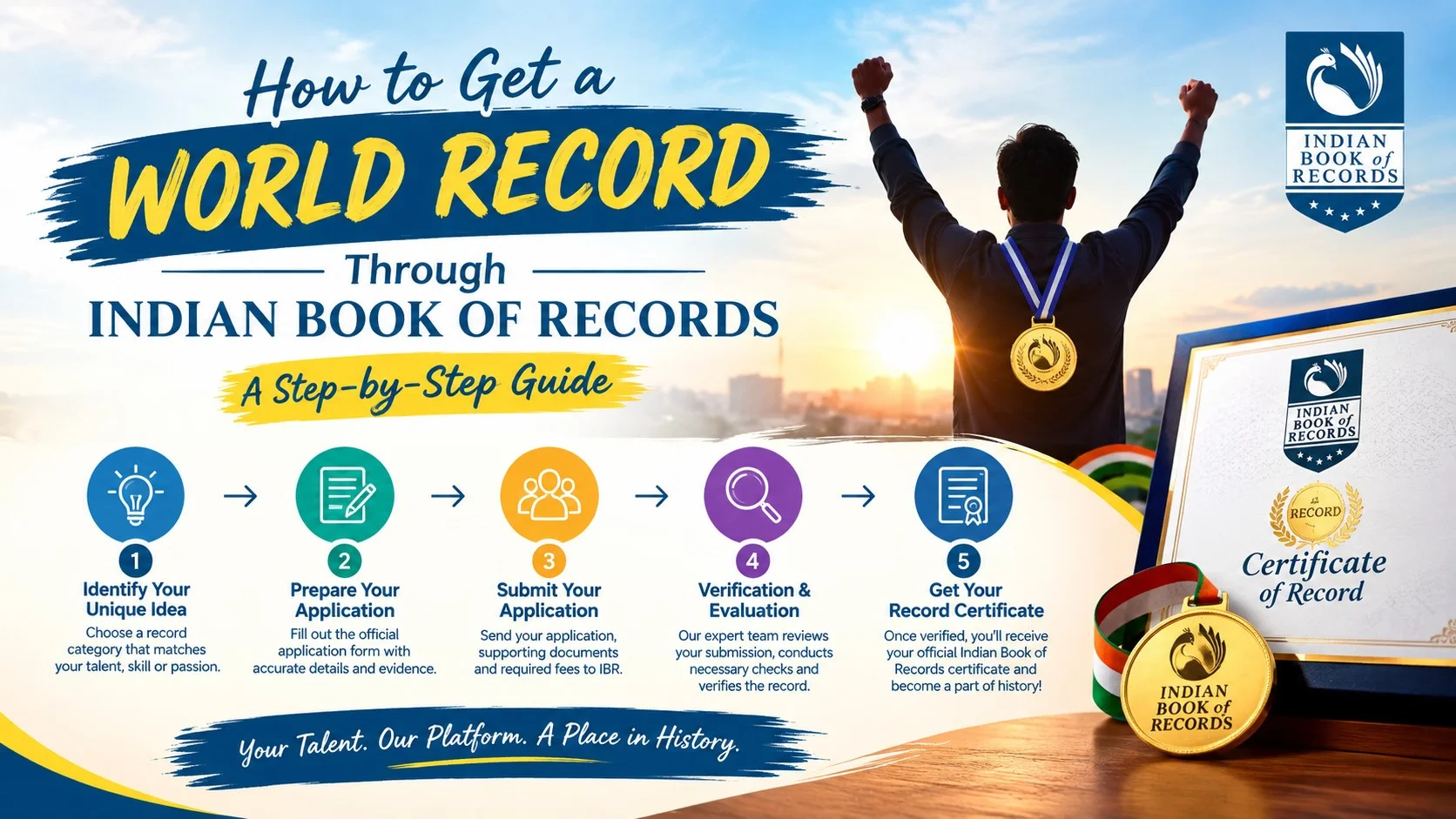
Have you achieved something extraordinary and want the world to recognize your talent? Applying for a record is the first step toward gaining official recognition. However, many applicants unknowingly make record application mistakes that delay the verification process or even lead to rejection.
Whether you're applying to the Indian Book of Records as an individual, student, professional, organization, or institution, understanding the correct record submission process is essential. A well-prepared application with accurate details and complete evidence significantly improves your chances of approval.
This guide explains the most common record application mistakes, how to avoid them, and the best practices for submitting a successful application.
Why Avoiding Record Application Mistakes Matters
Every record application undergoes a detailed evaluation. The reviewing team carefully checks whether the achievement meets the eligibility requirements and whether the supporting evidence is sufficient for verification.
Many applicants have impressive achievements, but their applications face delays because they overlook simple requirements such as incomplete documentation, poor-quality evidence, or incorrect information.
By avoiding these record application mistakes, you can ensure a smoother record verification process and increase the likelihood of receiving official recognition.
1. Not Understanding the Eligibility Criteria
One of the most common record application mistakes is submitting an application without checking whether the achievement qualifies for recognition.
Before you apply for a record, ensure that your achievement:
Is unique and measurable
Can be verified objectively
Includes clear evidence
Complies with the Indian Book of Records guidelines
Reviewing the eligibility criteria beforehand helps applicants avoid unnecessary delays and ensures that the application is submitted under the correct record category.
2. Submitting Incomplete Supporting Documents
Supporting documents play a crucial role in the evaluation process.
Many applicants forget to include:
Identity proof
Date and venue details
Achievement certificates (if applicable)
Official declarations
Required consent forms
Incomplete documentation is among the leading record application mistakes that slow down the review process.
Before submitting your application, verify that all supporting documents are complete, accurate, and easy to read.
3. Providing Poor-Quality Video Evidence
Video evidence is often the strongest proof of a record attempt.
Unfortunately, applicants frequently submit:
Blurry videos
Edited footage
Short recordings
Videos with missing portions of the attempt
Videos where important actions are not visible
High-quality video evidence should clearly capture the entire achievement from beginning to end without interruptions. Ensure that the recording provides sufficient clarity for the evaluation team during the record verification process.
4. Forgetting Witness Statements
Many record attempts require independent verification.
Applicants sometimes overlook the importance of obtaining witness statements from credible individuals who observed the achievement.
A proper witness statement should include:
Full name
Contact information
Date of observation
Signature
Confirmation of the achievement
Witness statements strengthen the authenticity of your application and support the verification process.
5. Providing Incorrect or Inconsistent Information
Even small inconsistencies can create confusion during the evaluation.
Examples include:
Different spellings of the applicant's name
Incorrect dates
Mismatched timings
Conflicting achievement details
Errors in uploaded documents
Always review every section before submission. Accurate information demonstrates professionalism and helps evaluators complete the review more efficiently.
6. Ignoring the Record Submission Process
A successful application follows the proper record submission process.
Some applicants upload incomplete files, skip mandatory fields, or submit documents in unsupported formats.
Before submitting, ensure that you have:
Completed every required section
Uploaded all supporting documents
Attached clear video evidence
Included witness statements where required
Verified all information
Following the correct record submission process helps avoid unnecessary delays.
7. Waiting Until the Last Minute
Preparing a quality application takes time.
Many applicants rush the process and forget essential documents or submit incomplete evidence.
Instead, prepare your application in advance by organizing:
Supporting documents
Video evidence
Witness statements
Achievement details
Personal information
Careful preparation minimizes record application mistakes and improves overall submission quality.
Record Application Tips for Better Success
If you want your achievement to move smoothly through the evaluation stage, follow these practical record application tips:
Read all application guidelines carefully.
Verify the eligibility criteria before applying.
Submit complete supporting documents.
Record high-quality video evidence.
Obtain witness statements when required.
Double-check every detail before submission.
Follow the complete record submission process.
Keep copies of every document submitted.
Respond promptly if additional information is requested.
These simple practices help reduce errors and improve the efficiency of the record verification process.
Frequently Asked Questions
How can I apply for a record successfully?
To apply for a record successfully, carefully review the eligibility criteria, prepare complete supporting documents, submit clear video evidence, include witness statements if required, and follow the official record submission process.
Why do record applications get rejected?
Most applications face rejection due to common record application mistakes, including incomplete documentation, insufficient evidence, incorrect information, or failure to meet the eligibility criteria.
What supporting documents are required?
The required supporting documents may vary depending on the record category, but generally include identity proof, achievement details, photographs, video evidence, and any additional documents requested during the application process.
How important is video evidence?
High-quality video evidence is essential because it allows evaluators to verify the achievement accurately and objectively.
Conclusion
Avoiding record application mistakes is one of the easiest ways to improve your chances of receiving official recognition. A well-prepared application with complete supporting documents, reliable video evidence, accurate witness statements, and careful attention to the record submission process demonstrates credibility and professionalism.
At the Indian Book of Records, every application is evaluated fairly based on the evidence provided. Taking the time to understand the requirements, review the eligibility criteria, and submit complete information will help ensure a smooth record verification process.
If you're ready to showcase your extraordinary achievement, prepare your application carefully, follow the official guidelines, and apply for a record with confidence. Your remarkable accomplishment deserves the recognition it has earned.